


Key Takeaways
- Parket is transforming from a parking payment app to a key digital infrastructure provider for smart cities.
- The app uses real-time data to optimize parking space usage, enabling dynamic billing for tenants based on demand.
- Parket prioritizes user security and privacy, maintaining strict data protection standards without monetizing user information.
Parket’s Innovative Model
Parket is undergoing a significant transformation, evolving from a parking payment app to a central player in urban innovation by focusing on digital infrastructure for smart cities. The founder, Joshua Raphael, asserts that Parket’s turnkey system fits within the Internet of Things (IoT) framework, offering valuable insights into parking occupancy and usage patterns.
Earlier this year, Parket was implemented at Riverlands, a complex in Cape Town with multiple interconnected parking lots serving both residents and commercial tenants. To manage the high demand for parking, Parket introduced a dynamic bay pool model that automatically charges tenants for hourly sessions exceeding their allocated spaces. This system optimizes space usage by incentivizing turnover during off-peak hours.
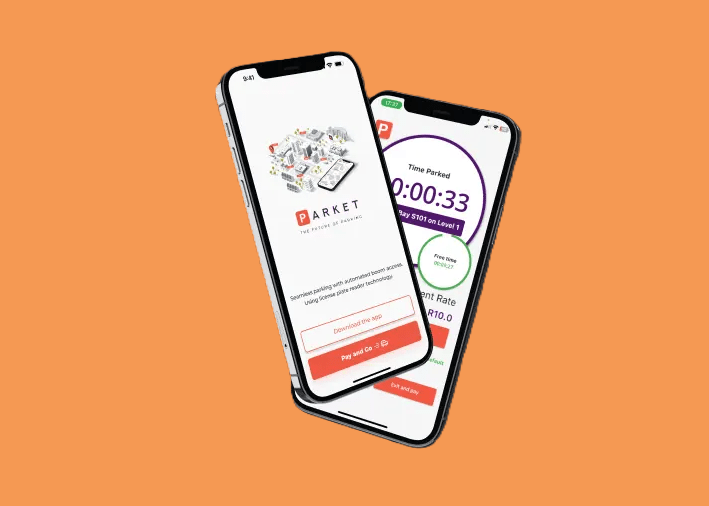
Parket’s app allows users to book parking in various ways—daily, monthly, or hourly—enhancing accessibility. For instance, tenants who work remotely can reserve parking for select days and easily access their spots by license plate recognition.
Parket is also in talks to expand its services to additional open parking areas, and is considering a potential street parking solution that aligns with broader smart city initiatives.
Commitment to Security and User Privacy
Parket places significant emphasis on user safety and data privacy. Instead of resorting to aggressive data monetization, the company maintains a sustainable and privacy-conscious approach, verified by compliance with the Protection of Personal Information Act (POPIA). Raphael highlights that the company is privately funded, which allows it to prioritize user trust without external corporate pressures.
While parking lots are technically private property, Parket respects user privacy and is committed to stringent security measures. The management believes that user data protection is a fundamental responsibility, even with publicly visible license plates captured by surveillance systems.
User Experience and Engagement
In developing its functionalities, Parket has targeted a diverse user base. For example, a deployment near a retirement village witnessed about 30% of users aged around 70.
The introduction of a new system often presents challenges due to users’ established habits, similar to how consumers adjusted to bringing reusable bags. Raphael acknowledges that while initial confusion may occur, the team has focused on facilitating user adaptability.
The rapid launch of Parket’s kiosk system showed promise, as users quickly learned to navigate the new interface. Feedback has led to ongoing improvements, crucial for refining the user experience. Observing users, including older adults, successfully engage with the system has validated Parket’s innovative model.
The content above is a summary. For more details, see the source article.









