


Key Takeaways
- The UK is set to permit residential plug-in solar systems through new legislation effective August 27, 2026, benefiting millions of renters and flat dwellers.
- Germany’s successful model of balcony solar installations reflects the potential for similar adoption in the UK, although there are limitations on battery storage in initial implementations.
- Consumers can save between £70 to £155 annually on energy costs, and systems may pay for themselves in as little as two to five years despite some regulatory constraints.
The focus on residential solar power in the UK has historically been on large installations. As of 2025, there are approximately 1.7 million rooftop solar setups, yet many individuals remain unable to access this technology due to costs or logistical constraints, especially those living in flats or renting. This situation is poised to improve with the introduction of new legislation under Statutory Instrument 2026/848, which commences on August 27, 2026. This law removes previous barriers to self-installing ‘plug-in’ solar systems, allowing millions of residents in flats to harness solar energy affordably.
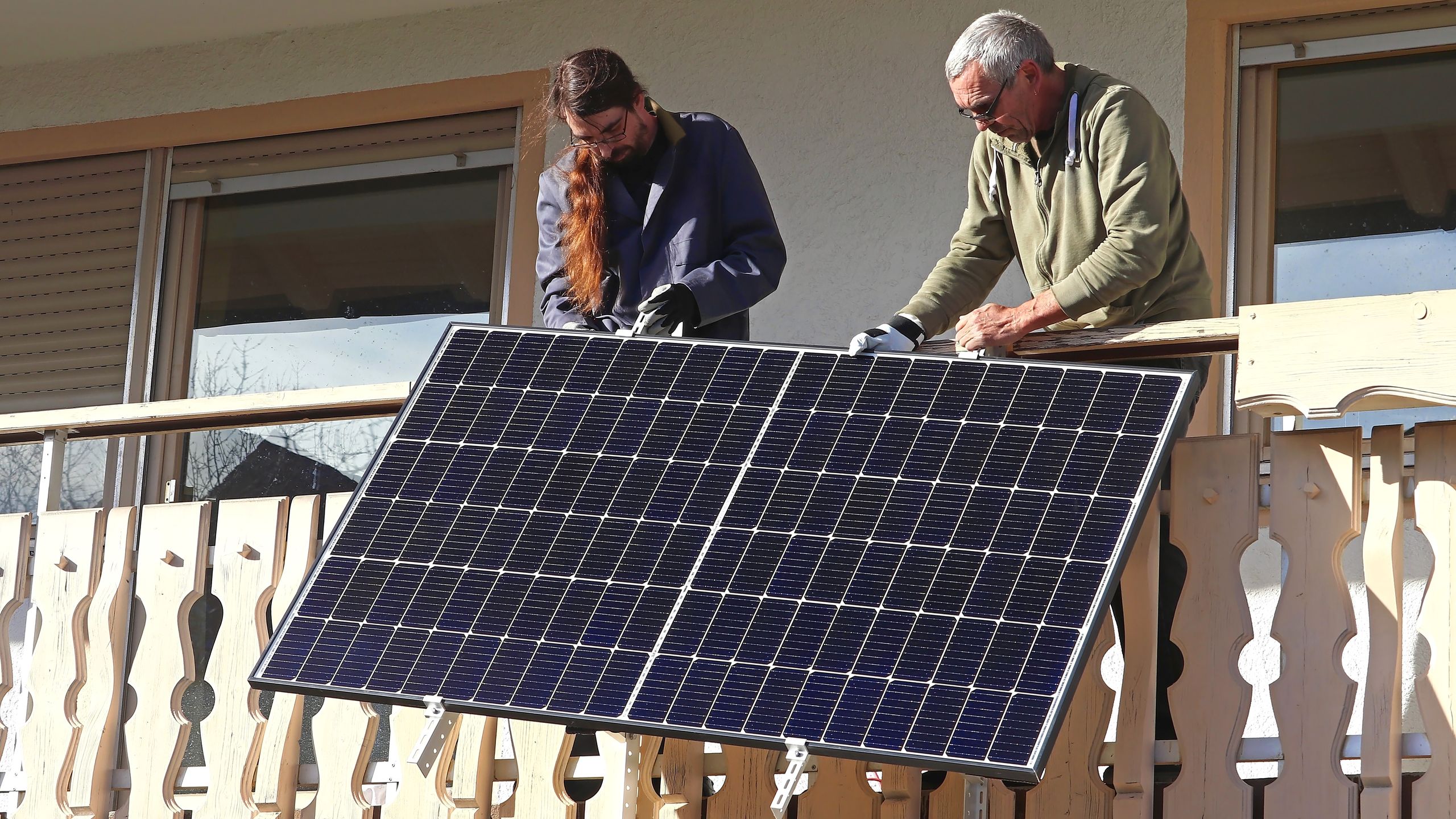
The legislation officially categorizes ‘plug-in microgenerators’, enabling users to connect solar panels directly to standard UK sockets using a BS 1363 plug. With this new framework, individuals can now install plug-in solar kits, offering an accessible route to generate clean electricity without the prohibitive costs associated with traditional setups.
Meanwhile, these kinds of installations are prevalent across Europe, notably in Germany where they are referred to as Balkonkraftwerk (balcony power plants). Here, an estimated 1.2 million registered balcony installations exist, with actual numbers possibly reaching 1.5 million due to unregistered systems. Recent regulatory changes in Germany have also made it easier for renters to set up their own balcony solar systems.
In contrast to the UK’s initial rollout, the German experience highlights the benefits of allowing renters to install balcony panels without requiring landlord permission. This has led to increased demand for equipment in major cities. Meanwhile, Spain has seen similar enthusiasm, where households can save up to 30% on electricity bills with balcony solar setups.
With the UK government backing this initiative through engagement with retailers and energy companies, the market for plug-in solar panels is expected to thrive. Industry leaders, including representatives from Amazon and Currys, have expressed excitement about making renewable energy accessible to a broader audience.
The Department for Energy Security and Net Zero has stipulated stringent specifications for compliant solar consumer kits, including limitations on power output and installation practices to ensure safety. Most kits available will hold two panels rated at about 400W each, and though the capacity is capped, the additional panels can still generate power when sunlight is weaker.
Despite the anticipated savings of up to £155 annually, the initial framework does have drawbacks. Notably, the absence of integrated battery storage means any electricity not consumed immediately is exported to the grid without compensation under the Smart Export Guarantee, effectively losing potential savings. Experts point out that while this limits financial benefits, households can still optimize power usage by shifting activities like dishwashing to daylight hours.
Moreover, practical installation concerns must be addressed, especially for renters requiring landlord approval and adherence to local regulations, including ensuring the compatibility of all components and avoiding high-risk setups on specific types of buildings.
Overall, while the legislation marks a marked shift toward empowering consumers to generate their own energy, it is an initial step that will likely evolve. Future expansions could introduce battery storage capabilities to enhance the efficiency and effectiveness of plug-in solar systems. As the energy landscape shifts, the potential for democratizing power generation could redefine urban resilience and household independence, signaling a progressive move towards a sustainable energy future.
The content above is a summary. For more details, see the source article.









