


Key Takeaways
- Prime Minister Modi encourages global investment in India’s energy sector, targeting 500 GW of renewable energy and 5 million tonnes of green hydrogen output by 2030.
- India aims to achieve significant milestones in the energy sector while focusing on local manufacturing and innovation.
- The government is implementing reforms to enhance hydrocarbon exploration and production, alongside expanding renewable energy capabilities.
Investment Opportunities in India’s Energy Sector
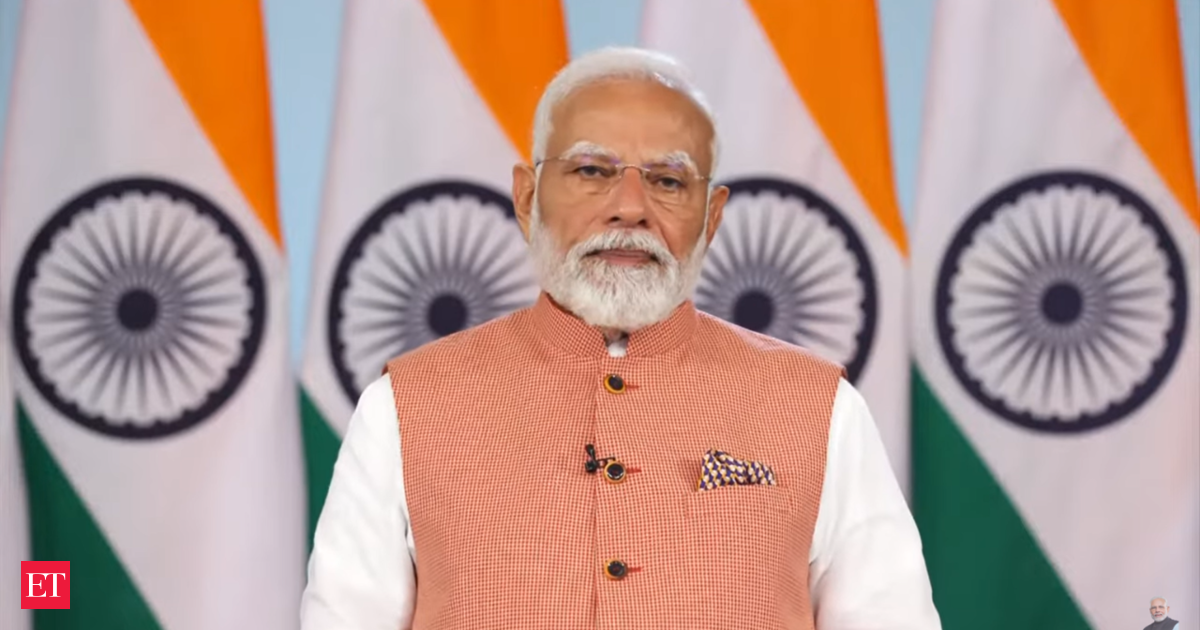
Prime Minister Narendra Modi has invited global investors to tap into the expanding opportunities within India’s energy sector, emphasizing the country’s ambitious targets for renewable energy in the upcoming five years. During his address at the virtually held India Energy Week 2025 (IEW’25), he highlighted India’s goal to achieve 500 GW of renewable energy capacity and produce 5 million tonnes of green hydrogen annually by 2030. He stated, “There are possibilities of new investments, and I hope that you explore all possibilities in India.”
Modi pointed out that India’s energy ambitions are built on five key pillars: resource harnessing, innovation, economic strength, political stability, and strategic geography, which facilitates energy trade. He expressed confidence in India’s trajectory, stating that the 21st century is indeed the century of India, which is not only embarking on its growth journey but also contributing to global progress.
India’s commitment to energy sustainability is part of its broader vision for a developed nation, or ‘Viksit Bharat’, over the next two decades. The Prime Minister reiterated that the coming five years are pivotal, with a focus on meeting the energy targets aligned with the 2030 deadline. The country aims to achieve net-zero emissions in Indian Railways by 2030, and Modi cited India’s track record over the past decade, during which the nation progressed from the 10th largest to the 5th largest economy globally. Solar energy generation has increased significantly, growing thirty-twofold within this period.
India has become the third-largest solar power producer and has tripled its non-fossil fuel capacity. In terms of climate goals, India has successfully met its carbon emission reduction targets set at the Paris climate conference, standing out among G20 nations. Modi also highlighted the country’s progress in ethanol blending, stating that India currently blends 19% ethanol with petrol and is on track to achieve the 20% target ahead of the 2025 deadline.
In addressing hydrocarbon development, Modi mentioned India’s status as the fourth-largest refining hub, stating that refining capacity will expand by 20%. Furthermore, he announced the introduction of new open licensing acreage policies to boost hydrocarbon exploration. The government is enhancing support for the energy sector through measures such as establishing exclusive economic zones and implementing a single-window clearance system.
The Prime Minister underscored India’s focus on local manufacturing under the ‘Make in India’ initiative, particularly in the production of photovoltaic modules, which have seen capacity growth from 2 GW to approximately 70 GW over the past decade. Innovations in battery storage for electric mobility are crucial as India advances in this arena.
Modi also pointed to key budget announcements aimed at bolstering green energy initiatives, emphasizing the significance of the National Critical Minerals Mission for strengthening supply chains. He noted the recent opening of the nuclear energy sector and mentioned that every investment in energy not only creates jobs but also enriches communities, referencing schemes like PM Suryaghar Free Electricity, which promotes skill development and eco-friendly investment opportunities.
With a persistent commitment to energizing growth while enriching the environment, Modi expressed optimism that the outcomes of this Energy Week will lead to tangible benefits and advancements in India’s energy landscape.
The content above is a summary. For more details, see the source article.









