


Key Takeaways
- Porsche’s 2025 Taycan model offers over 300 miles of range and faster charging times compared to previous versions.
- Improvements include enhanced thermal management and increased battery capacity, while reducing weight.
- Real-world tests show the Taycan significantly outperforms EPA estimates in range and charging efficiency.
Enhanced Performance through Engineering
Porsche continues to lead in electric vehicle performance with its 2025 Taycan, which boasts significant upgrades in range and charging efficiency. The model achieves over 300 miles of driving range, surpassing previous models, which had a maximum EPA range of 246 miles. Additionally, the Taycan’s peak charging rate has increased from 270 kilowatts to an impressive 320 kW, enabling a faster charging time of approximately 10-80% in just 18 minutes with a suitable DC fast charger.
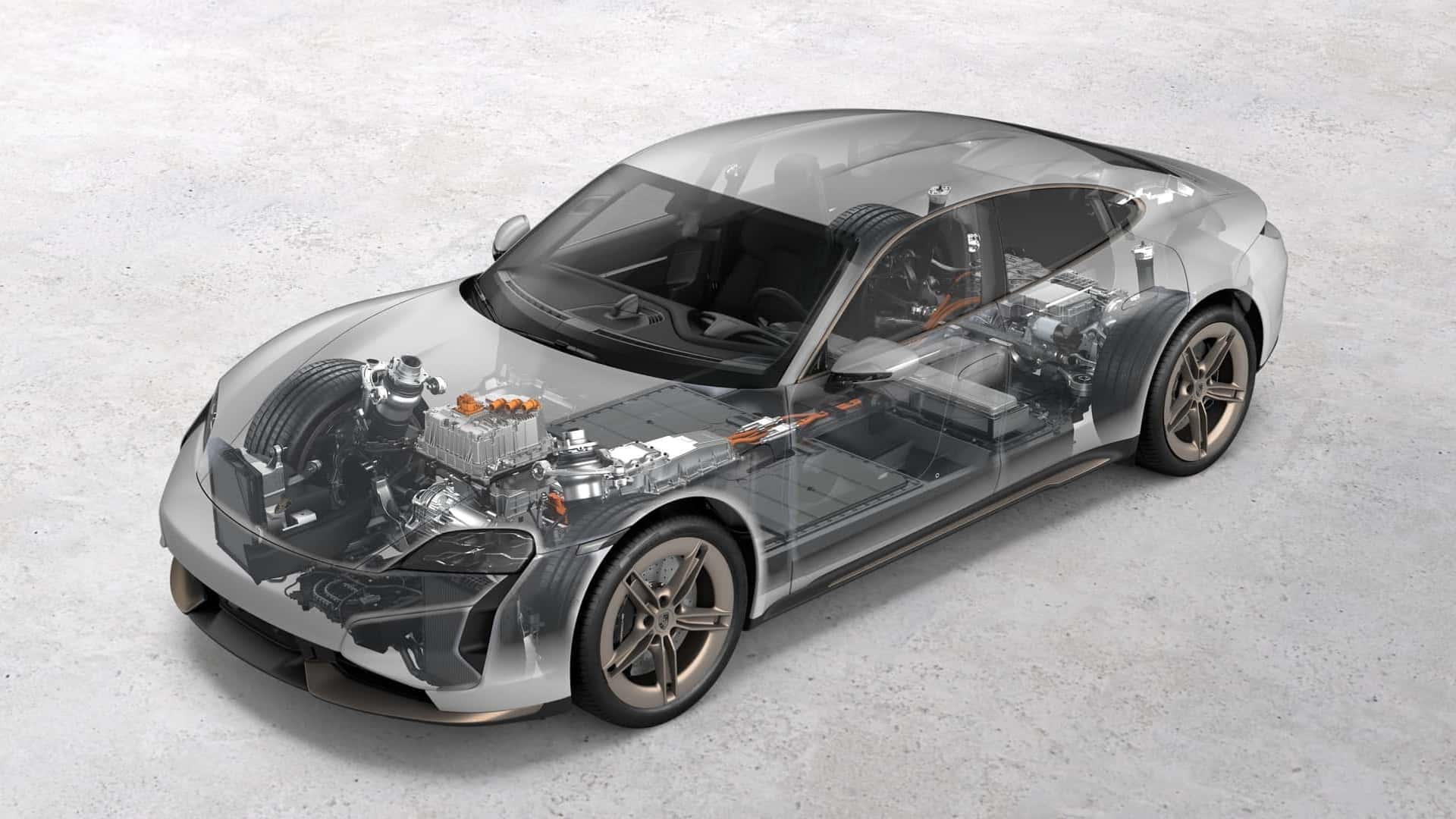
These advancements stem from several engineering enhancements. Porsche has improved the Taycan’s thermal management system, introducing passive cooling for cell modules that does not require pumping mechanisms. This allows for efficient heat control, boosting the cooling capability from 6 kilowatts to 10 kW, thus preventing overheating in high temperatures.
Charging speeds have also benefited from new bus bars that facilitate greater electrical flow, consequently reducing the time needed for rapid charging. The minimum battery temperature requirement for fast charging has been lowered from 77 degrees Fahrenheit to 59 degrees, enabling quicker charges in colder climates.
For the Performance Battery Plus, the gross battery capacity has increased from 93.4 kilowatt-hours to 105 kWh, yet the weight has dropped from 1,397 pounds to 1,377 pounds. This weight reduction, despite increased capacity, aligns with industry trends focused on enhancing battery efficiency while minimizing size and weight through innovative cell chemistry and design.
However, Porsche’s journey with battery reliability has not been flawless. In the previous year, the manufacturer recalled over 27,000 Taycans due to a potential risk of internal short circuits related to a manufacturing issue at LG Energy Solution. Owners were advised to limit their car’s charge to 80% until replacement batteries were installed.
The automaker has invested heavily in ensuring the durability of its battery systems. Despite fast charging being utilized only 15% of the time, extensive stress tests have been conducted simulating up to 300,000 kilometers of driving in extreme temperatures of 212 degrees Fahrenheit. Additional tests, such as water immersion and side-impact assessments, confirmed the structural integrity of the batteries remained intact.
These improvements have translated into impressive real-world performance. In independent testing, the rear-wheel-drive Taycan with the 105 kWh Performance Battery Plus achieved 367 miles in a highway range test at 70 miles per hour, outstripping the EPA’s 318-mile estimate. Similarly, the Taycan Cross Turismo demonstrated rapid charging capabilities, going from 15% to 70% in just 12 minutes while maintaining a charge rate exceeding 200 kilowatts.
The enhancements in the Porsche Taycan position it as a leading choice for driving enthusiasts looking for a premium electric sedan that offers both performance and range.
The content above is a summary. For more details, see the source article.









