


Key Takeaways
- India is focusing on battery storage, wind, and solar energy to enhance its renewable energy transition.
- The country’s first hydrogen-powered train signifies a commitment to clean transportation.
- Industry leaders emphasize the economic potential of clean energy and the importance of sustainable initiatives.
Renewable Energy Strategies and Future Directions
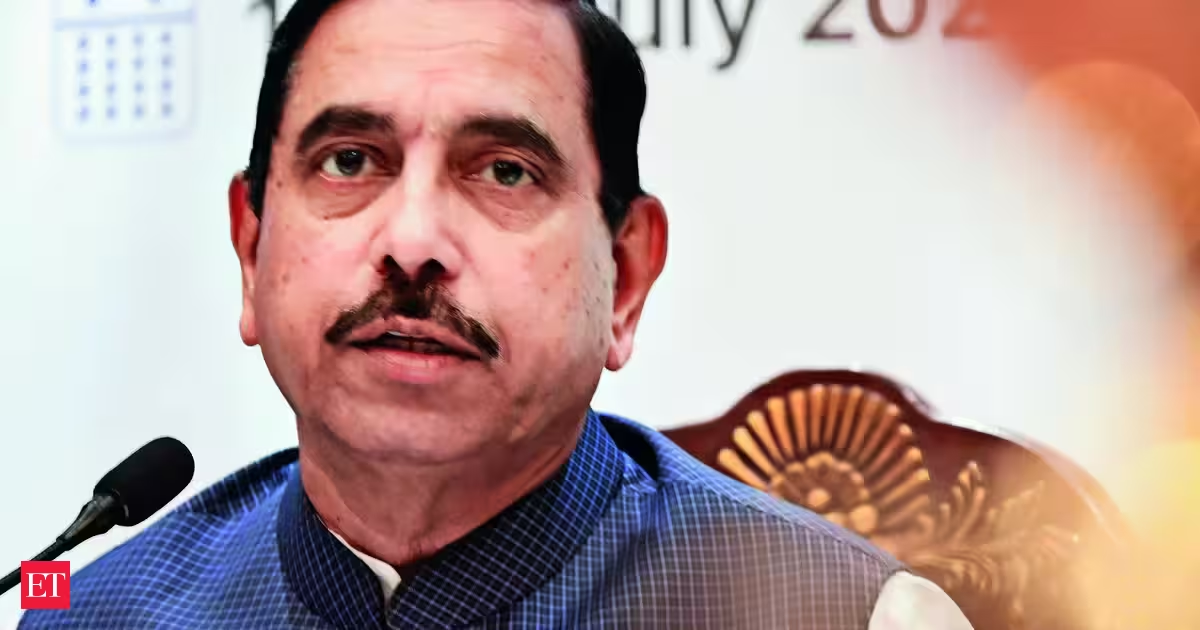
India’s Renewable Energy Minister Pralhad Joshi emphasized the crucial role of battery storage systems alongside the rapid expansion of wind and solar power in the nation’s clean energy transition. Speaking at the Adani Presents Times Network Sustainability Conclave 2026, he noted that these initiatives are expected to significantly lower electricity costs. “India was the second-largest in battery energy storage addition last year. We are investing heavily in these systems, particularly focusing on wind, solar, and storage. Results will emerge soon, bringing down the cost of electricity,” Joshi stated.
Highlighting India’s advancements in clean technologies, he proudly announced the operation of the country’s first hydrogen-powered train, placing India among a select group of nations pioneering in clean transportation technologies. The conclave gathered policymakers, industry leaders, financial experts, and climate advocates to explore India’s path towards sustainable development, climate resilience, and energy security.
Madhya Pradesh Chief Minister Mohan Yadav affirmed India’s leadership role in global climate action and the green economy, pointing to initiatives like Mission LiFE and the Ek Ped Maa Ke Naam campaign as examples of sustainability. Yadav also mentioned the state’s initiatives in afforestation and water conservation.
Industry leaders underscored the strategic economic opportunities presented by clean energy. ReNew founder Sumant Sinha remarked on the impact of clean energy on the future economy, stating, “If there are two things that are going to impact the future of any economy, one is artificial intelligence, the second is energy. Clean energy can be produced domestically and is vital to our future.”
Discussions at the conclave also centered on financing India’s green aspirations. Joint Secretary of the Finance Ministry, Baldeo Purushartha, highlighted the impactful flagship programs like the Green Hydrogen Mission, PM Surya Ghar Yojana, and incentives for advanced battery manufacturing, which he says have accelerated the renewable energy transition in India.
Leaders from various sectors, including Tata Power’s Vaibhav Singh and Blue Star’s Vikas Bakshi, shared insights on how businesses are preparing for a low-carbon future and the rising significance of clean technologies, electric mobility, sustainable cooling solutions, and domestic manufacturing in enhancing India’s industrial competitiveness while reducing greenhouse gas emissions.
From a broader climate perspective, Sunita Narain, Director General of the Centre for Science and Environment, pointed out the alarming frequency of extreme weather events in India. She argued that climate action should extend beyond mere emission reduction to encompass resilient city planning, robust local environmental governance, and comprehensive sustainable development.
Looking forward, Ashish Khanna, Director General of the International Solar Alliance, revealed that rooftop solar adoption in India is predicted to more than double in the next five years, aiming to expand the nation’s clean energy footprint significantly. This collective movement indicates a robust commitment to renewable energy as a foundational element for India’s sustainable future.
The content above is a summary. For more details, see the source article.









