

Key Takeaways
- The House Committee on Energy and Commerce discussed a draft bill addressing autonomous vehicles, co-authored by Reps. Debbie Dingell and Bob Latta.
- Automakers will need to create and self-certify a “safety case” for automated driving systems, which will be submitted to the NHTSA.
- States and local governments would be restricted from regulating vehicles with an approved safety case, though existing vehicles might still be subject to regulation.
Discussion on Autonomous Vehicle Legislation
The House Committee on Energy and Commerce recently held a hearing regarding draft legislation aimed at establishing federal policies for autonomous vehicles, including robotaxis. The bill, co-authored by Representatives Debbie Dingell (D-Mich.) and Bob Latta (R-Ohio), obligates automakers to formulate a “safety case” for any automated driving system and submit it to the National Highway Traffic Safety Administration (NHTSA). Importantly, manufacturers will have the ability to self-certify these safety cases.
The draft incorporates provisions that would prevent state and local governments from imposing regulations on vehicles equipped with automated driving systems possessing an approved safety case. However, states might retain the authority to enforce rules pertaining to vehicles already in operation.
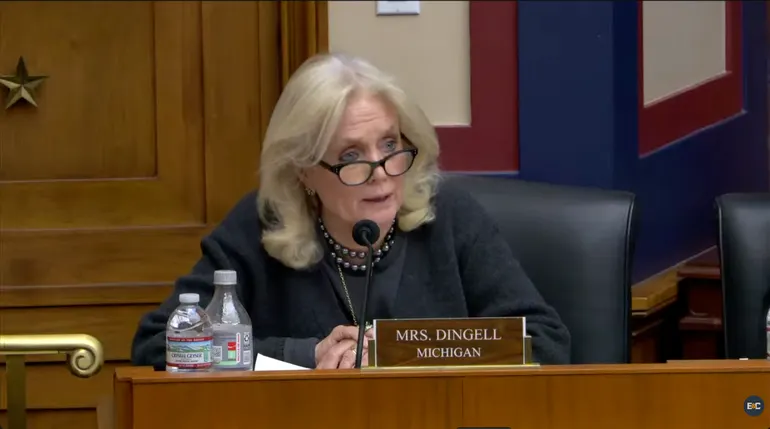
During the hearing, Dingell expressed her ongoing commitment to fostering bipartisan collaboration on autonomous vehicle legislation. She noted that while significant progress has been made on the draft, there are still concerns among various stakeholders that need to be addressed.
Rep. Lori Trahan (D-Mass.) emphasized the necessity for more data on autonomous vehicle operations, particularly regarding unexpected halts and their implications for first responders. She referenced a recent incident involving Waymo in San Francisco, where multiple autonomous vehicles halted and obstructed traffic due to a blackout that affected traffic signals.
Safety advocates voiced their apprehensions about the draft’s provisions. Michael Brooks, executive director of the Center for Auto Safety, criticized the safety case requirements as “problematic.” He pointed out that the draft does not mandate regular submissions of safety case reports to the Secretary of Transportation or NHTSA.
Advocates for autonomous vehicles remain optimistic. Hillary Cain, senior vice president of policy at the Alliance for Automotive Innovation, stated that autonomous vehicles could potentially reduce traffic accidents and congestion while providing essential transportation services to seniors and individuals with disabilities. She claimed that other countries are actively striving to lead in the autonomous vehicle sector, asserting that the U.S. must implement national standards to ensure the safe and swift deployment of these technologies.
Both Dingell and Latta are focused on finalizing the legislation, believing that the proposed structure offers a flexible and targeted approach to moving forward in this critical area of innovation.
The content above is a summary. For more details, see the source article.