Key Takeaways
- On May 10, 2024, Mexico experienced its first geomagnetic storm in over two decades, resulting in auroras visible across 18 states.
- This storm raised concerns about climate changes and infrastructure vulnerabilities, as it could disrupt satellite communications and power grids.
- Citizen scientists documented the auroras, assisting researchers in understanding the historical impact of solar activity on Earth.
Auroras Dazzle Mexico on Mother’s Day
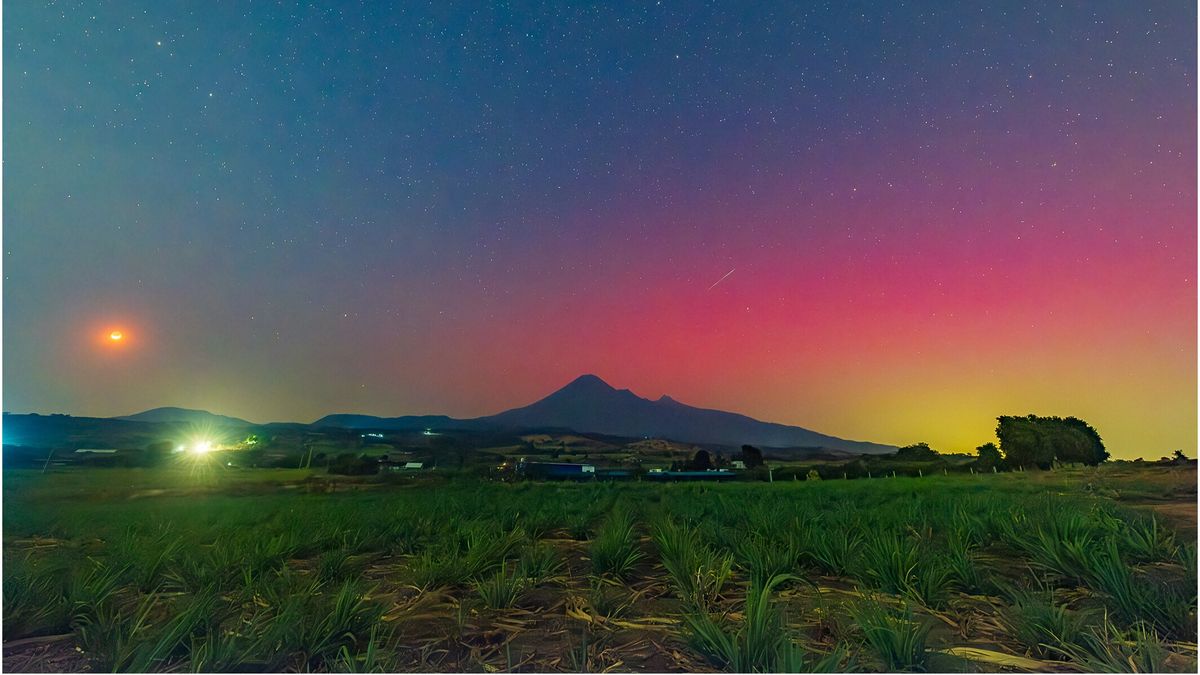
On May 10, 2024, while families in Mexico celebrated Mother’s Day with traditional morning serenades, the country was also graced with stunning auroras, an event not seen in more than 30 years. These natural light displays were the result of the most powerful geomagnetic storm to hit the region since 1989, enabling observers to witness the breathtaking phenomenon usually confined to polar regions. Auroras became visible as far south as Mazatlán, and social media buzzed with pictures taken across 18 of Mexico’s 32 states.
Geomagnetic storms arise from coronal mass ejections, where large bursts of plasma from the sun challenge Earth’s magnetic field. When solar particles collide with atoms in the atmosphere, they create a colorful spectacle known as auroras. While these displays enchant the eye, they also pose significant risks, such as threats to satellite communications and infrastructure due to fluctuations in the ionosphere.
The storm affected Mexico for over 40 hours, illuminating the night sky with hues of blue, red, and yellow. Notably, the ionosphere above Mexico is relatively more active due to a higher density of electrons, allowing these stunning light displays to reach lower latitudes than typically expected. According to Lika Guhathakurta, a solar scientist at NASA, the speed of solar particles can surpass 45 million miles per hour, intensifying the potential disruptions.
During the storm, Mexico’s Global Navigation Satellite System experienced brief delays, causing a sync error of nearly 80 nanoseconds. Although this disruption is minor, it highlights the vulnerability of modern technology relying heavily on satellite communications for various sectors. Researchers across Mexico and the United States measured the storm’s impact, looking at the ionosphere’s behavior and creating data to predict future geomagnetic events.
Efforts are underway to monitor coronal mass ejections, with researchers inviting citizen scientists to document auroras. Their photographs serve as valuable data points for understanding the history of solar storms and their effects on Earth. The recent storm, known as the “Gannon Storm” in honor of NASA scientist Jennifer Lea Gannon, is touted as one of the most notable occurrences in recent memory, similar to historic storms that prompted significant disruptions, such as the Great Quebec Blackout of 1989.
Despite Mexico’s resilience in maintaining its electrical grid during the recent storm, experts warn that the frequency of these geomagnetic storms may increase as the sun approaches its solar maximum, a phase marked by heightened activity. The famed auroras are often an indication of the volatile conditions in space weather and the growing risks they pose to modern infrastructure.
While the recent auroras exceeded anything previously documented in Mexico, they also remind us of the potential consequences of geomagnetic storms. Stakeholders are considering how best to prepare for and mitigate such events, ensuring that these breathtaking visuals do not come at the cost of technological stability. The public’s enthusiasm, spurred by social media, underscores the importance of recognizing both the beauty and the potential dangers of cosmic occurrences in our evolving digital age.
The content above is a summary. For more details, see the source article.