


Key Takeaways
- Clean energy advocates urged Maine lawmakers to support crucial renewable energy bills.
- Proposed legislation includes 90% renewable electricity by 2040 and consumer protections for vulnerable households.
- Local businesses emphasize the economic benefits of stable clean energy policies.
Clean Energy Advocacy in Maine
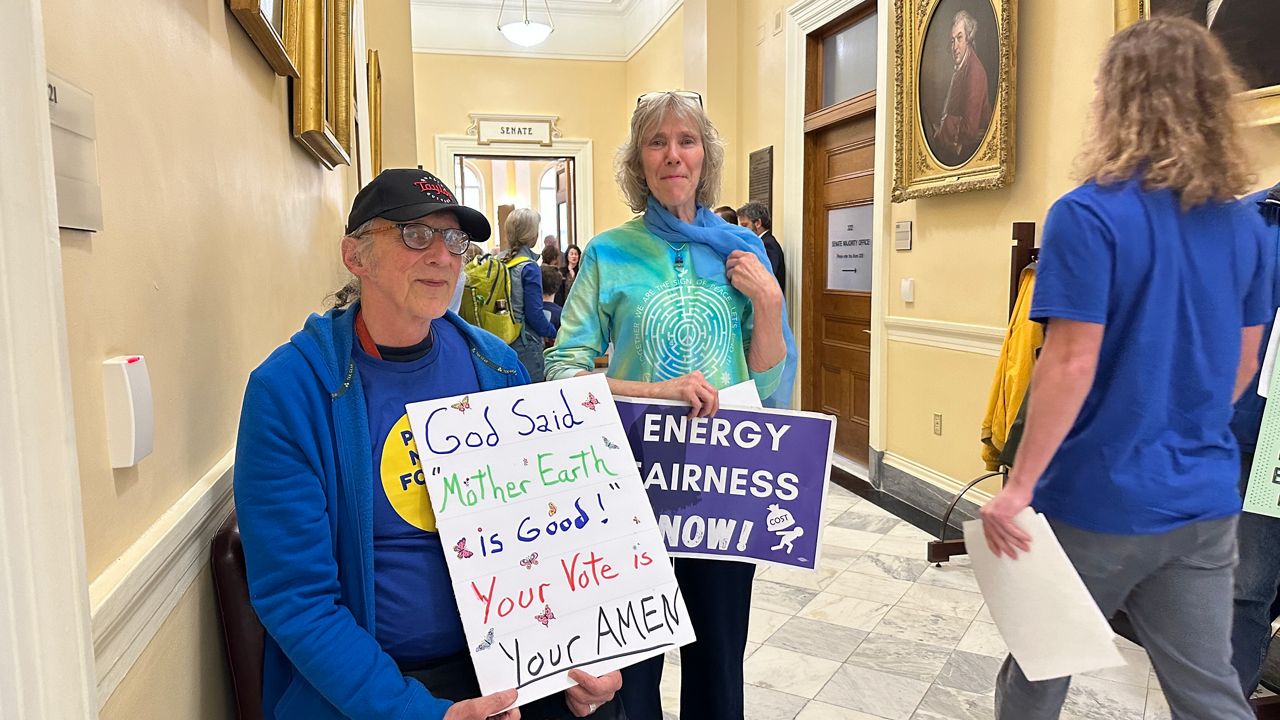
Clean energy supporters rallied at the State House in Augusta, pressing lawmakers to support significant legislation aimed at advancing renewable energy initiatives and enhancing consumer protections. Brayden House, a solar electrician apprentice, highlighted the uncertainty surrounding federal tax credits, noting its impact on union workers who depend on new projects for sustainable employment opportunities. He asserted, “Green energy and solar aren’t just jobs; they are the foundation of a lifelong career for hundreds if not thousands of Mainers.”
As the Legislature convened, over 100 advocates demonstrated their support throughout the halls, holding signs and engaging in chants. The Power Maine Forward coalition is advocating for three pertinent bills currently under review by the Legislature’s Energy, Utilities and Technology Committee:
– LD 1868 aims to establish a target where 90% of Maine’s electricity will derive from renewable sources by 2040.
– LD 1270 proposes the creation of a cabinet-level Department of Energy in the state.
– LD 1949 seeks to implement regulations prohibiting utilities from disconnecting residential customers for nonpayment, specifically when those customers are either over 65 or under one year of age and are engaged with assistance programs.
The Power Maine Forward coalition comprises various organizations, including the Maine Renewable Energy Association, the Natural Resources Council of Maine, Maine Audubon, the Sierra Club, Maine Conservation Voters, and the Maine People’s Alliance.
Dale Knapp of Walden Renewables shared insights regarding his company’s ongoing project in Sanford, a 20-megawatt solar farm that currently employs 125 individuals. He detailed how the benefits of such projects extend beyond direct employment, benefiting local economies, as workers contribute to businesses like gas stations and hardware stores in their communities.
Knapp emphasized the critical need for consistent state policies, stating, “The policy signals we send right now to the industry will determine whether Maine remains a place where clean energy companies like ours continue to want to invest.” The collaboration between advocates, lawmakers, and businesses aims to pave the way for a sustainable and economically beneficial future in renewable energy for Maine.
The content above is a summary. For more details, see the source article.









