


Key Takeaways
- Rosoboronexport will exhibit advanced military equipment at LAAD 2025 in Brazil, including the Su-57 fighter and S-400 air defense system.
- The agency aims to establish production sites in Latin America, enhancing regional industrial cooperation.
- Russia’s military exports to Latin America present opportunities for collaboration but face challenges from economic variability and geopolitical influence.
Rosoboronexport’s Participation in LAAD 2025
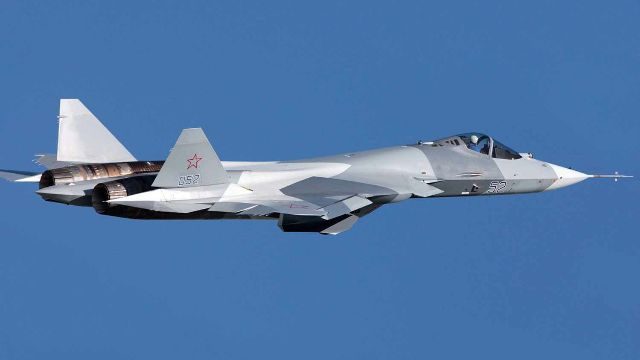
Starting April 1, the Russian state-owned arms export agency Rosoboronexport will showcase a range of military hardware at the LAAD 2025 defense and aviation exhibition in Rio de Janeiro, Brazil. Among the featured equipment are the Su-57 fifth-generation fighter jet, the S-400 air defense system, various helicopters, the T-90MS main battle tank, and naval vessels such as the Project 22160 patrol ship. This event is a significant platform for Rosoboronexport to highlight its offerings and pursue potential industrial partnerships in Latin America, a region increasingly deemed viable for defense exports.
Rosoboronexport, a subsidiary of the Rostec State Corporation, functions as Russia’s primary intermediary for military product exports. Its engagement at LAAD 2025 reflects a broader strategy to strengthen ties with Latin American nations, where Russian military technology has gained traction over the past decades. The Su-57 and S-400, in particular, are expected to attract attention, showcasing advanced technologies designed to compete with Western counterparts.
The agency has expressed a desire to enter the Latin American weapons production market, indicating plans for establishing production facilities for licensed construction. Although no agreements have been publicly confirmed, such ambitions mirror previous efforts by Russia to localize production in partner countries, which can help reduce costs and enhance bilateral ties.
Historically, Russia’s military-technical cooperation with countries like Brazil dates back to 1994, and significant agreements, like the one related to Mi-35M helicopters in 2008, highlight established partnerships. Other regional customers include Venezuela and Peru, which have acquired various Russian military hardware over the years.
Establishing local production capabilities would require substantial investment and political alignment, making the feasibility of such ventures complex. While some Latin American nations have expressed interest, they face diverse political environments and defense budget constraints. Previous successful initiatives, such as the co-production of weapon systems with India, might serve as a model, albeit with inherent challenges due to the region’s circumstances.
The appeal of Russian military equipment often lies in its affordability and versatility compared to Western alternatives, making it attractive to Latin American countries. However, to establish a production presence, there is a need for a supportive labor market, supply chains, and political will, which may vary significantly across nations.
As LAAD 2025 unfolds, Rosoboronexport’s goals extend beyond merely displaying hardware; discussions aimed at fostering cooperation with Brazil and other regional partners are anticipated. The outcomes of these interactions remain uncertain, but the agency’s order portfolio, valued at $57 billion as of late 2024, suggests that it is well-positioned to pursue its objectives in the region. This event marks a critical step in Russia’s strategy to enhance its influence in Latin America through military cooperation.
The content above is a summary. For more details, see the source article.









