


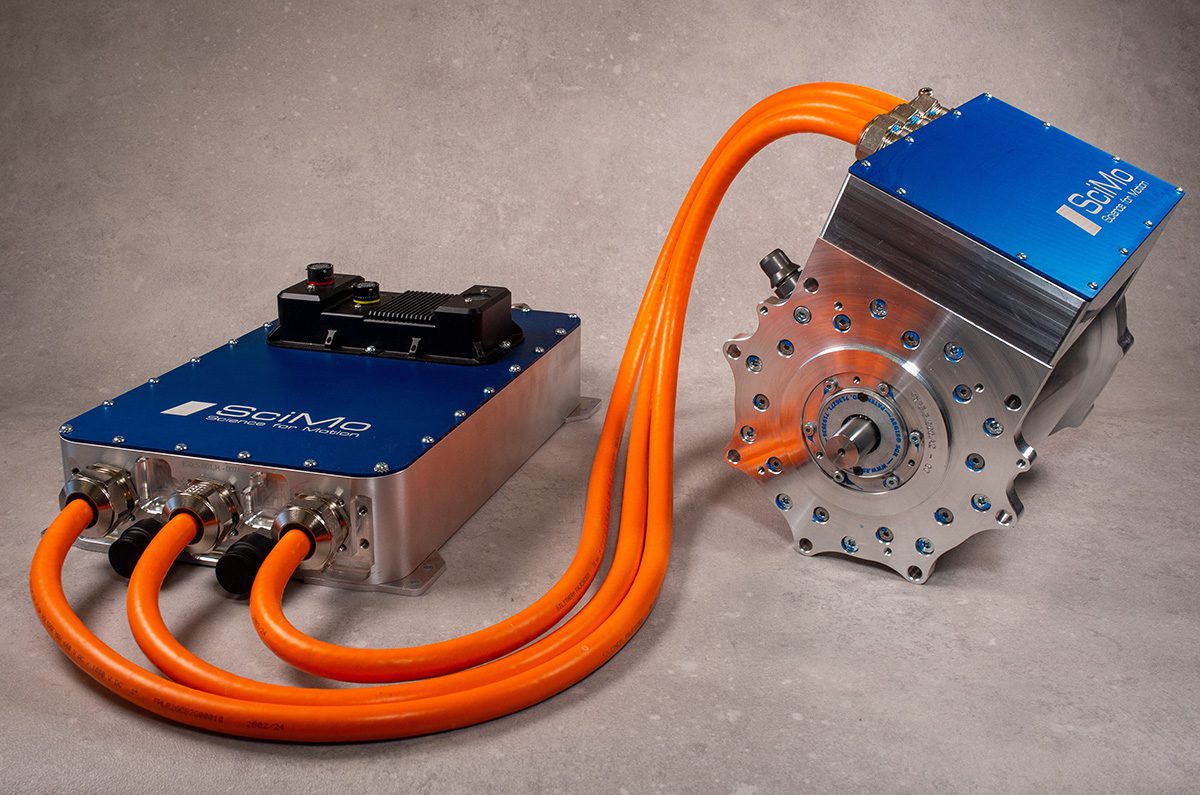
Key Takeaways
- SciMo is revolutionizing electric motor engineering with its unique winding technology, achieving copper filling factors above 70%.
- The company has successfully automated its production process, significantly reducing manufacturing costs and time.
- SciMo targets high-performance sectors such as motorsports and aviation, where weight and power density are crucial.
Advancements in Winding Technology
In electric motor engineering, copper plays a vital role, particularly in winding architecture, which engineers manipulate to optimize power density, efficiency, cooling, and manufacturability. Traditional motors often utilize round wires, which result in substantial unused space, leading to limitations in performance. Dr. Florian Kassel, co-founder of SciMo, noted that only about 40% of the volume in these motors is copper, restricting their effectiveness.
Higher copper density in stators can lead to reduced size and weight of motors while enhancing performance. However, larger motor diameters can create trade-offs in other areas such as rotor dynamics and mechanical stress, especially in high-rpm applications.
One innovative solution in the industry is the hairpin technology, which uses thick, rectangular copper bars inserted into stator slots. While effective, this design introduces higher AC losses at elevated frequencies, prompting engineers to explore alternatives.
SciMo has adopted a novel method involving thinner rectangular flat wires with a distributed winding architecture. This strategy not only pushes the copper filling factor above 70% but also mitigates some of the drawbacks associated with larger-section hairpin conductors. The compact design enhances efficiency and minimizes high-frequency losses, particularly at elevated RPMs.
Moreover, the geometric placement of SciMo’s conductors contributes to better thermal management. The arrangement allows for improved heat dissipation from the winding, addressing the challenge posed by traditional round-wire bundles that can trap heat.
SciMo claims its motors can deliver peak power densities of up to 17 kW/kg, making them suitable for dynamic applications like motorsport, where weight and output are critical. The motors weigh around 20-30 kg each, with total system outputs reaching equivalent levels of 2,000 horsepower.
Automating Production and Scaling Up
Founded in 2017 by three PhD students from the Karlsruhe Institute of Technology, SciMo initially faced challenges in production. Manual processes made manufacturing cumbersome and time-consuming. However, securing €2 million in funding in 2022 allowed for semi-automation, reducing production time to one week. Now fully automated, the process halves manufacturing costs.
SciMo’s winding line employs robotics and sophisticated software for precise wiring of stators. Despite longer production times compared to traditional methods, this flexibility proves advantageous, enabling quick adaptations for different motor specifications without extensive tooling changes.
The advanced manufacturing techniques position SciMo to access new markets that were previously unattainable due to high labor costs associated with manual processes. This innovation is particularly beneficial in high-end automotive applications, where manufacturers are willing to pay a premium for enhanced power density.
Future Prospects and Industry Impact
The automation of SciMo’s winding process not only streamlines production but also enables the company to target cost-sensitive markets while preserving the high performance of their motors. The potential for economic transformation looms large, as conventional motors rely heavily on materials that account for approximately 70% of their cost.
Looking forward, SciMo aims to leverage advanced magnetic materials and lower-loss electrical steels to enhance performance further. The company seeks to maintain an edge in high-performance applications while pursuing scale within the electric motor sector.
The timeline ahead appears promising, as SciMo works to expand its market presence and streamline operations, signaling an exciting phase in electric motor engineering.
The content above is a summary. For more details, see the source article.









