

Key Takeaways
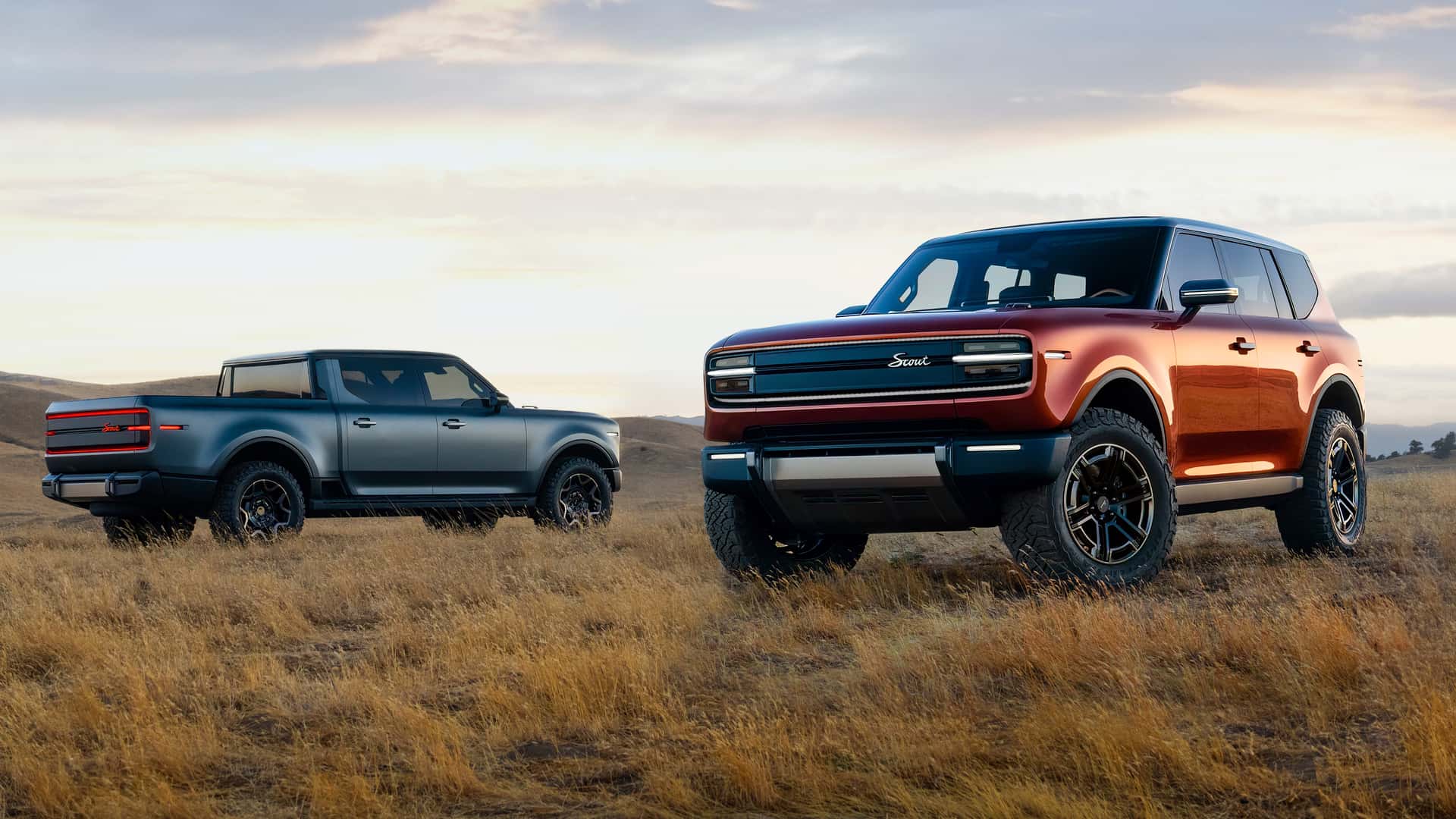
- Scout Motors’ new Terra truck and Traveler SUV will feature both fully electric and extended-range electric vehicle (EREV) models.
- The fully electric versions will offer 350 miles of range, while EREVs will have a total of 500 miles, including 150 miles of electric-only driving.
- Scout is rapidly progressing with its $2 billion plant in South Carolina, aiming for production of its first EVs by the end of 2027.
Innovative Electric Vehicles from Scout Motors
Scott Keogh, President and CEO of Scout Motors, recently discussed the company’s upcoming electric vehicles on the YouTube program Jay Leno’s Garage. The Terra truck and Traveler SUV will feature innovative battery technologies, catering to both fully electric and EREV markets. The two models will employ distinct battery chemistries to meet varying consumer needs.
The fully electric versions will utilize nickel-manganese-cobalt (NMC) battery packs, promising an estimated range of 350 miles on a single charge. For the EREVs, which include a gasoline-powered generator as a backup, a smaller lithium-iron-phosphate (LFP) battery pack will be employed. While typically less energy-dense than NMC packs, LFP batteries are gaining traction in the EV market due to their lower costs and enhanced durability.
The EREVs will feature an electric-only range of 150 miles, a significant improvement over conventional plug-in hybrids, which usually offer 30-50 miles. This range aligns well with average daily driving distances in the U.S., estimated at under 40 miles. When combined with a full tank of gas, the total driving range will extend to 500 miles, reducing range anxiety for drivers. Moreover, the gas engine will only function to charge the battery and assist with towing, ensuring the vehicle runs primarily as an electric model.
Keogh emphasized that Scout aims to simplify the driving experience, allowing customers to focus on operating the vehicle without concern for the power source. The vehicle can switch automatically between electric and hybrid modes, offering versatility based on driving conditions and user needs.
In addition to vehicle innovation, Keogh highlighted the progress of Scout’s $2 billion plant in Columbia, South Carolina. Construction is advancing rapidly, with major components like the body shop and assembly area being enclosed. This is a notable achievement for a brand that was only recently revived, with Keogh stating that “steel is going up” and prototypes are already under testing.
The company is also expanding its workforce significantly, now employing over 800 individuals, including 350 in South Carolina and additional staff at its Michigan Innovation Center. Keogh characterized the effort as ambitious but manageable, indicating a strong commitment to bringing the new Scout vehicles to market.
Scout Motors is distinguishing itself from other automotive startups by focusing on classic elements such as a bench seat option in the front, traditional key fobs, and physical buttons within the vehicle’s interior. Customers will also have a choice of three roof styles: solid, glass, or a folding canvas option dubbed the Cabana top.
Production of the first Scout EVs is set to begin by the end of 2027, aided by the resources and expertise of the Volkswagen Group, which supports the automaker’s endeavors. This partnership offers Scout the blend of innovative startup culture and traditional automotive manufacturing practices, enabling a unique approach to electric vehicle production.
The content above is a summary. For more details, see the source article.