


Key Takeaways
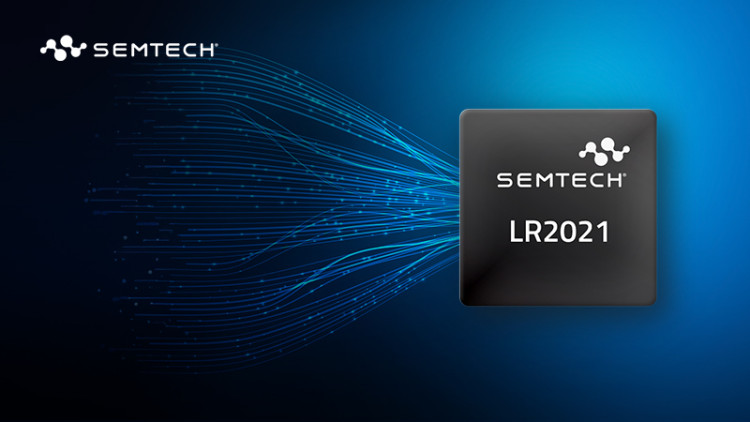
- Semtech Corporation has launched the LR2021, the first chip in the LoRa Plus family, designed for enhanced IoT connectivity.
- The chip supports various frequency bands and modulations, features backward compatibility, and enables long-range communication for AI-powered edge devices.
- Available for customer sampling in April 2025, the LR2021 is set to simplify IoT applications for manufacturers while ensuring cost-effectiveness.
Groundbreaking Connectivity with the LR2021 Chip
Semtech Corporation, a leader in high-performance semiconductor solutions and Internet of Things (IoT) systems, has unveiled the LR2021, marking the introduction of the LoRa Plus family of chips. This innovative transceiver integrates a fourth-generation LoRa IP, allowing it to function across terrestrial and SATCOM networks in various frequency bands, including Sub-GHz, 2.4 GHz ISM, and licensed S-band.
The LR2021 is built with backward compatibility in mind, ensuring it works seamlessly with existing LoRa devices and LoRaWAN protocols. This compatibility is essential for manufacturers as it simplifies the integration of new technologies into their products. Its design includes enhanced physical layer modulations for fast long-range communication (FLRC) and supports a range of low-power wireless protocols, such as Amazon Sidewalk, Meshtastic, W-MBUS, Wi-SUN FSK, and Z-Wave, when combined with third-party technology stacks.
This transceiver answers the rising demand for AI-enabled edge devices by delivering low power consumption, extended range, and excellent penetration capabilities. It’s specifically tailored for applications requiring reliable sensor data transmission, including gunshot detection, glass break sensing, license plate recognition, and fall detection, all while operating efficiently on small batteries that last for years.
The LR2021 boasts impressive data rates of up to 2.6 Mbps, facilitating not only sensor data transfer but also audio streaming and image transmission. The advanced RF and analog architecture allows for multi-region deployment with a single-SKU design, concentrating on high integration to reduce bill of materials (BOM) costs, PCB footprints, and power consumption, making it a strong advancement from previous LoRa transceivers.
Shahar Feldman, Semtech’s senior product marketing director for LoRa ICs, stated, “The LR2021 revolutionizes IoT connectivity by addressing key challenges for AI-powered deployments of any scale.” He reinforced the chip’s versatility for utilities and smart home applications necessitating both long-range connectivity and performance enhancement. With a heightened range of acceptable data rates, the chip can support diverse applications from small payloads to high-definition image transfers, paving the way for a new generation of intelligent IoT devices.
Key features of the LR2021 include:
– Enhanced compatibility with Sub-GHz, 2.4 GHz ISM bands, and licensed S-band radio frequencies.
– Support for multiple low-power wireless protocols through a multi-PHY configuration.
– Data rates ranging from FLRC at 2.6 Mbps to LoRa at 200 kbps, along with other modulation types enabling versatile application compatibility.
– A low-noise, multi-spreading factor (SF) receiver boasting exceptional LoRa sensitivity down to -142 dBm at SF12/125 kHz.
– Energy-efficient transmitter outputs ranging from +22 dBm to -10 dBm and improved frequency offset tolerance.
The LR2021 is part of Semtech’s award-winning LoRa Connect portfolio, empowering producers to build globally-compatible sensors using a single hardware design. This approach not only encourages backward compatibility with legacy devices but also future-proofs applications in a cost-effective way through high-level integration.
Semtech plans to begin customer sampling of the LR2021 in April 2025, with opportunities for industry partners to preview the innovations at upcoming events. These include Embedded World in Nuremberg, Germany, India Smart Utility Week in New Delhi, and DistribuTECH in Dallas, Texas.
The content above is a summary. For more details, see the source article.









