


Key Takeaways
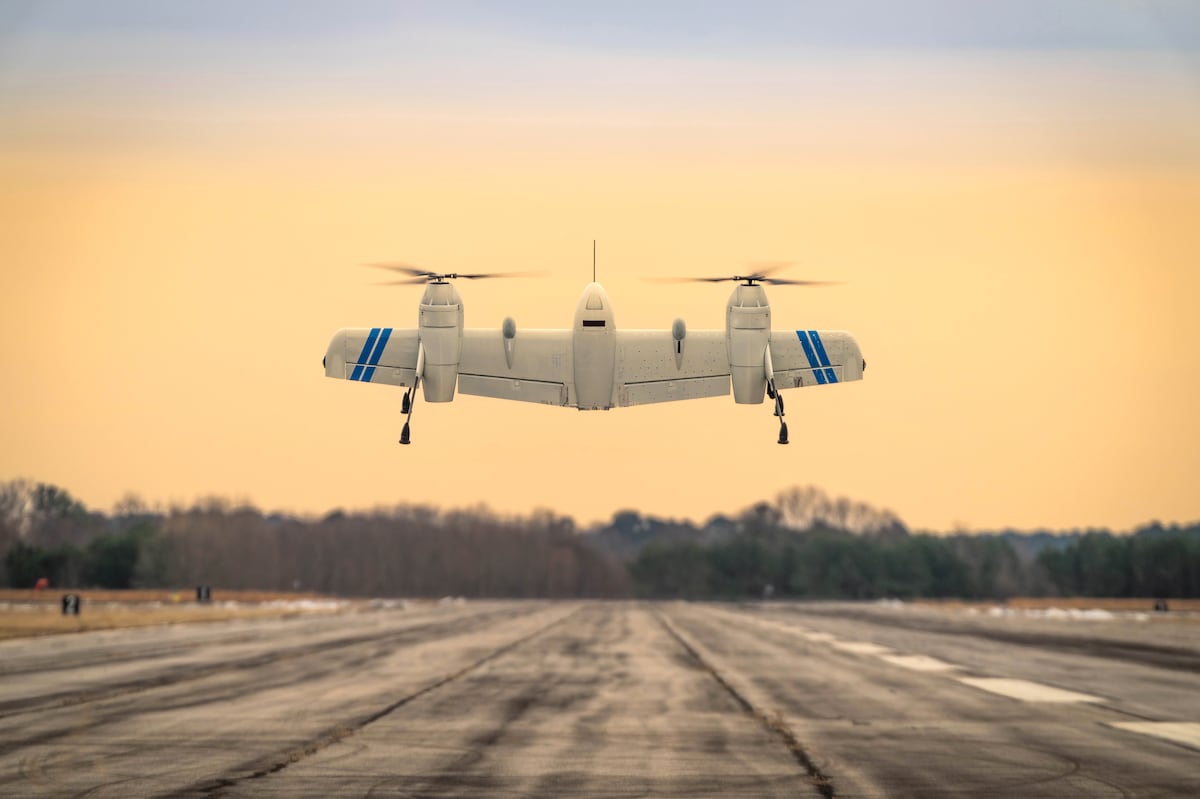
- Lockheed Martin’s Sikorsky has successfully flight-tested a versatile unmanned aircraft capable of transitioning between helicopter and airplane modes.
- The 115-pound drone features a rotor blown wing design and reached a cruise speed of 86 knots, proving its efficiency and control in various flight conditions.
- Future applications include search and rescue, surveillance, and potential long-range missions with larger variants.
Innovative Drone Development by Sikorsky
Lockheed Martin’s Sikorsky has made significant strides in unmanned aircraft technology, announcing successful flight tests of a novel drone system capable of functioning like both a helicopter and an airplane. This 115-pound, battery-operated aircraft, featuring a twin prop-rotor design, was developed by Sikorsky’s rapid prototyping group, Sikorsky Innovations. The drone’s design targets enhanced speed and range compared to traditional helicopters.
The development process spanned a year, culminating in over 40 successful take-offs and landings. The aircraft, which boasts a 10.3-foot composite wingspan, effectively demonstrated complex transitions between helicopter and airplane flight modes. According to reports, it executed 30 transitions during testing, affirming its innovative rotor blown wing capability. Rich Benton, Sikorsky’s vice president, highlighted that the system is engineered to fly faster and farther than conventional helicopters.
Sikorsky Innovations Director Igor Cherepinsky noted the success of recent flight tests, emphasizing new control laws developed specifically to streamline the transitions between hovering and high-speed cruising. He stated, “The data indicates we can operate from pitching ship decks and unprepared ground when scaled to much larger sizes.” The drone registered a top cruise speed of 86 knots, showcasing its operational robustness.
Looking ahead, Sikorsky envisions diverse applications for this aircraft, pointing to roles in search and rescue operations, firefighting monitoring, and humanitarian response efforts. Larger iterations of the drone are being considered for advanced intelligence, surveillance, reconnaissance missions, as well as for manned-unmanned team operations.
Sikorsky also plans to integrate its MATRIX flight autonomy system across all variants of the drone, further enhancing its operational capabilities. Additionally, the company is advancing its 1.2-megawatt hybrid-electric tilt wing demonstrator, dubbed HEX, which aims to support longer-haul flights with passenger or cargo capacity. An initial test of HEX’s hover capability is anticipated in 2027.
This technological progress follows a challenging period for Sikorsky, which recently faced the U.S. Army’s cancellation of its Future Attack Reconnaissance Aircraft (FARA) program. The company previously competed with a coaxial rotor blade aircraft, Raider X, but lost out on Army contracts. The setbacks have not deterred Sikorsky from promoting its innovative X2 coaxial helicopter technology, however. The company remains active in pursuing next-generation helicopter contracts, including projects with Italy and NATO concerning rotorcraft development.
Overall, Sikorsky’s advancements in unmanned systems and hybrid technologies reflect a commitment to pushing the boundaries of flight capability and efficiency in aerospace applications.
The content above is a summary. For more details, see the source article.









