


Key Takeaways
- Peacekeeping personnel worldwide dropped to 78,633 in 2025, marking a 17% decline from 2024 and a 49% decrease since 2016.
- A funding crisis within the United Nations, exacerbated by geopolitical tensions, is threatening the future of multilateral peacekeeping operations.
- Sub-Saharan Africa hosts the majority of deployed peacekeeping personnel, while crucial gaps are emerging as UN-led efforts diminish.
Decline in Global Peacekeeping Forces
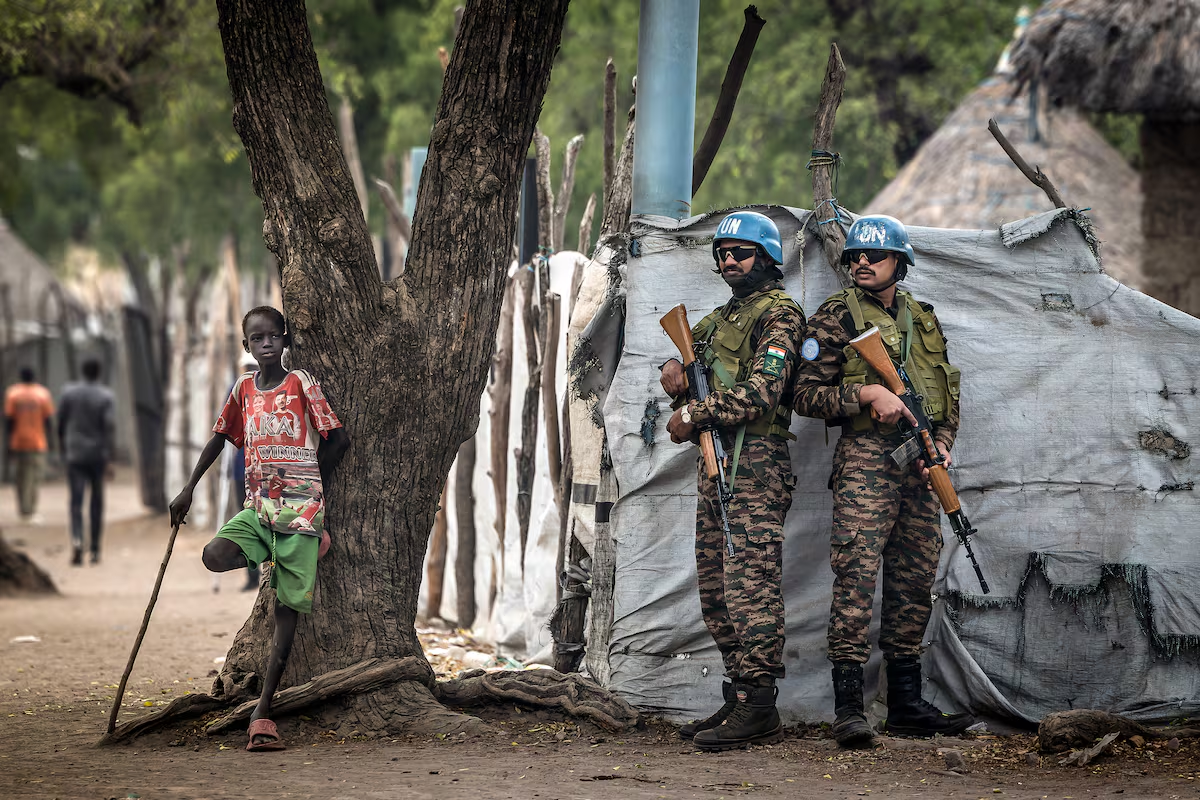
Global peacekeeping operations have reached their lowest levels in 25 years, with the total number of military personnel deployed dropping to 78,633 as of December 2025. This reflects a 17% decrease from the previous year and a staggering 49% reduction since 2016, according to research by the Stockholm International Peace Research Institute (SIPRI).
The decline in personnel is largely attributed to a funding crisis at the United Nations, driven by delays or non-payments from major donor countries. SIPRI’s report warns that if these trends continue, the effectiveness of multilateral conflict management, especially by institutions like the United Nations, will be severely compromised. Jaïr van der Lijn, director of SIPRI’s peace operations and conflict management program, cautioned that such a scenario could lead to an increase in conflicts and worsen impacts on civilian populations as nations stray from established global norms.
The pressure on multilateral conflict management is intensifying due to various factors. SIPRI noted that Russia’s involvement in African conflicts is undermining regional security governance. At the same time, the United States, under the Trump administration, has actively challenged multilateral frameworks, aiming to eliminate specific UN operations, including the UN Interim Force in Lebanon (UNIFIL).
In terms of finances, the UN peacekeeping budget experienced a shortfall of $2 billion by July 2025. The budget approved for 2025-2026 is the lowest in over a decade, set at $5.38 billion. While the UN continues to lead in peacekeeping missions—accounting for 18 operations and 67% of personnel—regional organizations also manage numerous operations. However, these regional groups often lack the necessary capabilities for effective peacebuilding and face their own financial constraints, making it difficult for them to fill the gap left by diminishing UN leadership.
Significantly, sub-Saharan Africa is home to 70% of deployed peacekeeping personnel, while the Middle East and North Africa represent 15%, and Europe, 12%. The top two ongoing multilateral peace operations are the UN Multidimensional Integrated Stabilization Mission in the Central African Republic (MINUSCA) and the UN Mission in South Sudan (UNMISS).
The data shows that the largest contributors of military and police personnel to multilateral peace operations are primarily from the Global South, with Uganda leading at 4,657 troops, followed by substantial contributions from Nepal, Bangladesh, and India.
The report also highlights growing tensions regarding the future of UNIFIL, with calls from the U.S. to terminate the mission despite ongoing ceasefire violations between Israel and Lebanon. The funding shortfalls and the shrinking budget for peacekeeping operations indicate a diminishing role for the UN in global conflict management. SIPRI emphasizes that financial constraints, geopolitical divisions, and difficult negotiations within the UN Security Council are complicating efforts to sustain current operations and garner support for new ones.
The content above is a summary. For more details, see the source article.









