


Key Takeaways
- Researchers from Jilin University and UNC developed an energy-efficient strategy to reduce data processing delays during peak usage.
- The two-step control system improves real-time data flow in smart cities, ensuring reliable services during emergencies.
- This innovative approach outperforms conventional methods in balancing energy efficiency with system stability.
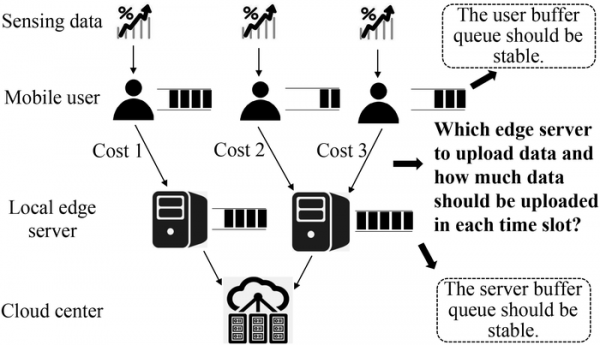
Smartphones and wearables generate real-time data essential for smart-city services, including traffic management, air quality monitoring, and crowd density analysis. However, when too many devices transmit data simultaneously, networks can become congested, resulting in slowdowns and accelerated battery depletion. This can hinder critical communication during emergencies, such as earthquakes or severe weather, where timely alerts and updates are vital for public safety.
To address these issues, a team of researchers from Jilin University and the University of North Carolina has developed a strategy aimed at enhancing the efficiency and responsiveness of urban data networks during peak hours. Their approach allows devices to conserve energy while maintaining performance, ensuring essential services like navigation and pollution alerts remain functional even under high demand.
Innovative Data Management Methods
The proposed solution employs a two-step smart control system akin to urban traffic management. Initially, the system assesses the activity levels of mobile devices and nearby servers, determining optimal data transmission schedules to avoid overloads. This is accomplished using Lyapunov optimization techniques. Afterwards, the system categorizes the types of data—such as videos, images, or text—and directs them to appropriate servers employing the Kuhn–Munkres algorithm. This dual approach not only reduces energy consumption but also enhances service reliability during high-traffic periods.
Demonstrated Success in Performance
In comparative tests against traditional methods, the new strategy exhibited a superior performance balance between energy efficiency and system stability. While some existing methods aimed at reducing energy usage, they led to increased server queues, risking slowdowns. In contrast, the researchers’ approach maintained manageable queue lengths and consistent performance, confirming its reliability under substantial data loads. As cities increasingly rely on real-time data from countless connected devices, maintaining operational stability and efficiency remains a formidable challenge. This research presents a forward-looking solution that prioritizes both energy savings and real-time responsiveness, crucial for the sustained growth of smart cities.
The complete study is published in a peer-reviewed journal and is available via DOI: 10.1007/s11704-024-40620-6.
The content above is a summary. For more details, see the source article.









