

Key Takeaways
- Smart has evolved from its origins as a unique urban vehicle into a modern electric-focused brand under Geely and Mercedes-Benz.
- The new Smart #2, expected to debut in 2026, aims to redefine urban mobility with a tech-centric approach.
- Smart faces increased competition in the microcar segment, targeting a youthful market in Europe and China.
Evolution of Smart Cars
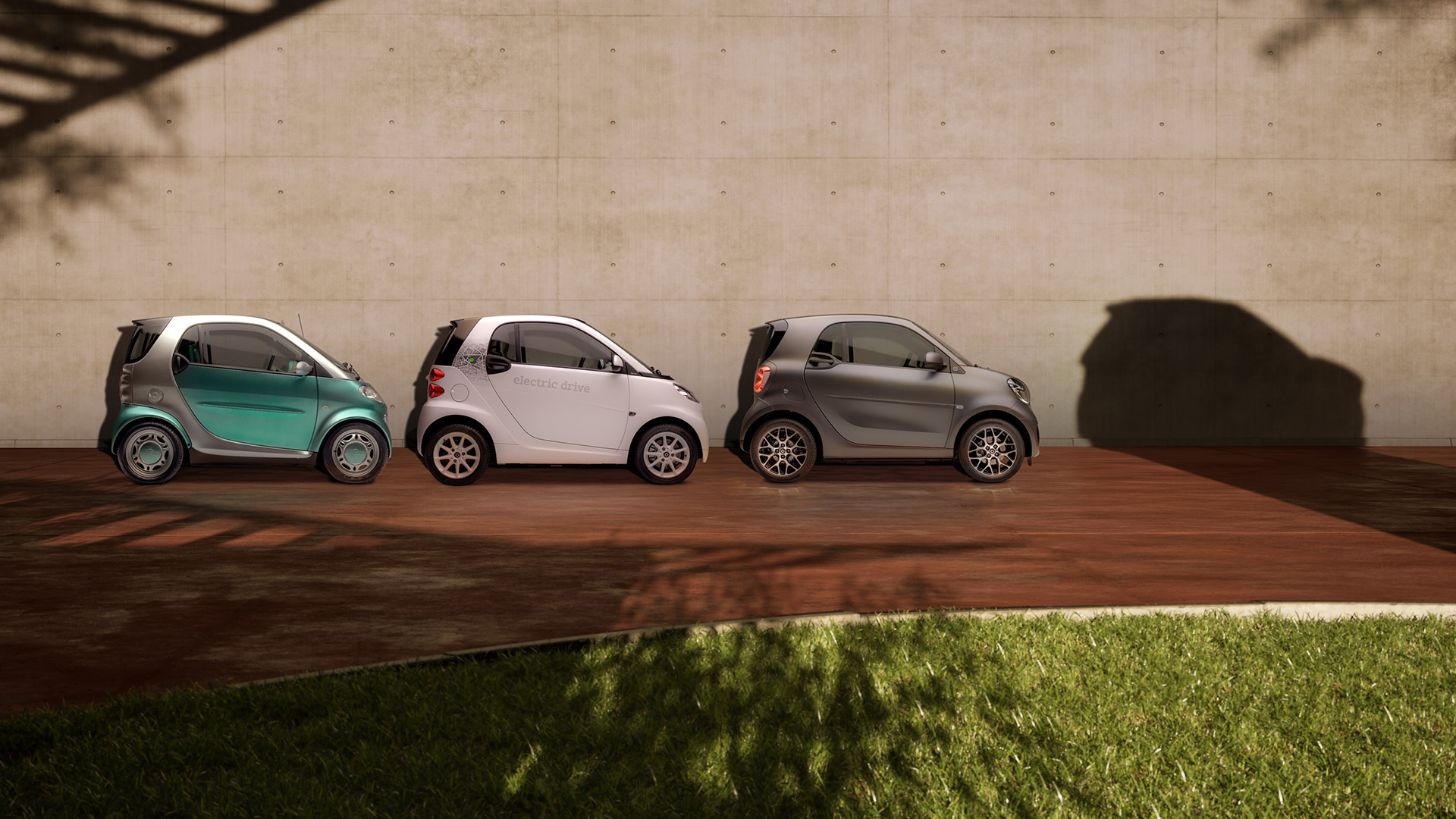
Smart established itself as a pioneer in the modern city car segment, beginning with Nicholas Hayek’s vision for a compact ‘Swatchmobile’ aimed at congested urban areas. This dream led to a partnership with Mercedes-Benz in 1994, resulting in the launch of the original Smart City-Coupé in 1998.
Smart cars, notably the two-seater ForTwo, embraced a playful and colorful design, which, while not a commercial powerhouse, cultivated a dedicated following. The second generation introduced an electric drivetrain in 2007, and by 2018, the ForTwo was officially rebranded as the Smart EQ Fortwo, totaling around 1.7 million sales.
After a shift in strategy in 2020, Mercedes-Benz partnered with China’s Geely Group, transitioning Smart into a more conventional electric vehicle brand aimed at a younger audience. The lineup now includes models like the Smart #1 SUV, Smart #3, and the upcoming Smart #5 SUV.
Anticipating the Smart #2
Details about the impending Smart #2 remain scarce. While it is unlikely to resemble the 2017 Smart Vision EQ Fortwo, Mercedes-Benz continues to influence its design. The model promises a modern, tech-savvy electric vehicle built in China, aligning with Smart’s established curvy and futuristic aesthetic. According to Dirk Adelmann, Smart’s European CEO, the #2 aims to enhance urban mobility in cities such as Rome, London, and Paris.
Current speculation suggests unclear seating arrangements for the #2, though it will face stiff competition from microcars like the Fiat Topolino and Citroën Ami, as well as innovative entrants like the Microlino. The rising trend of premium small cars, exemplified by bespoke options like the remastered classic Mini, indicates a growing market for compact vehicles.
As urban drivers increasingly question the practicality of larger SUVs in European cities, the Smart #2 has a promising outlook. Its compact form positions it as a favorable alternative for those seeking efficient urban transportation solutions in an evolving automotive landscape.
The content above is a summary. For more details, see the source article.