


Key Takeaways
- Samsung’s SmartThings app now integrates with Samsung Health to enhance personalized health management through smart devices.
- New features allow automated routines that adjust environmental factors for optimal sleep based on user data.
- Sleep tracking is increasingly popular, with a focus on using AI to provide meaningful insights rather than overwhelming statistics.
Samsung recently announced a major update to its SmartThings app during the CES press conference in Las Vegas. The new version (3.28.25) includes expanded support for Matter 1.4, energy management devices, intercom functionality, and enhanced Routine features. Significantly, it integrates directly with the Samsung Health app, allowing smart gadgets to work collaboratively toward improving user health.
Jonathan Gabrio, Head of the Connected Experience Center at Samsung, emphasized the challenge of making sense of the increasing data generated by technology. He believes that technology, especially artificial intelligence (AI) and the Internet of Things (IoT), can help derive actionable insights from this data—specifically regarding sleep, which he considers a crucial area for wellness improvement.
The updated SmartThings app enhances user routines by enabling devices to adjust settings automatically based on real-time data regarding sleep habits and environmental conditions. For instance, users can set up a “sleep Routine” that alters room temperature, humidity, and lighting to optimize sleep quality. Unlike traditional routines based on fixed schedules, the new update tailors adjustments according to actual biological cues, such as when the user is winding down for the night or waking up.
Samsung’s technology tracks a variety of factors that contribute to an ideal sleep environment—such as temperature (recommended between 61-65 degrees Fahrenheit or 16-18 degrees Celsius), light levels, and CO2 concentration—aiming to create conditions that promote better sleep. A new Sleep Environment Report displays patterns collected over a few days, while a Routine Creation Assistant utilizes generative AI to create customized routines that adapt to user preferences without requiring excessive user input.
Sleep-related features have gained traction, with sleep tracking usage increasing by 17% among younger users of Samsung’s wearable devices since 2020. Approximately 30% of these users actively utilize sleep tracking features, highlighting a widespread interest in sleep health. Meanwhile, Vanessa Hill, a sleep researcher, notes that despite accumulating data, foundational knowledge about healthy sleep—namely, needing 7-9 hours of sleep—has largely remained unchanged. However, understanding sleep health has evolved to emphasize consistency and regularity over mere duration.
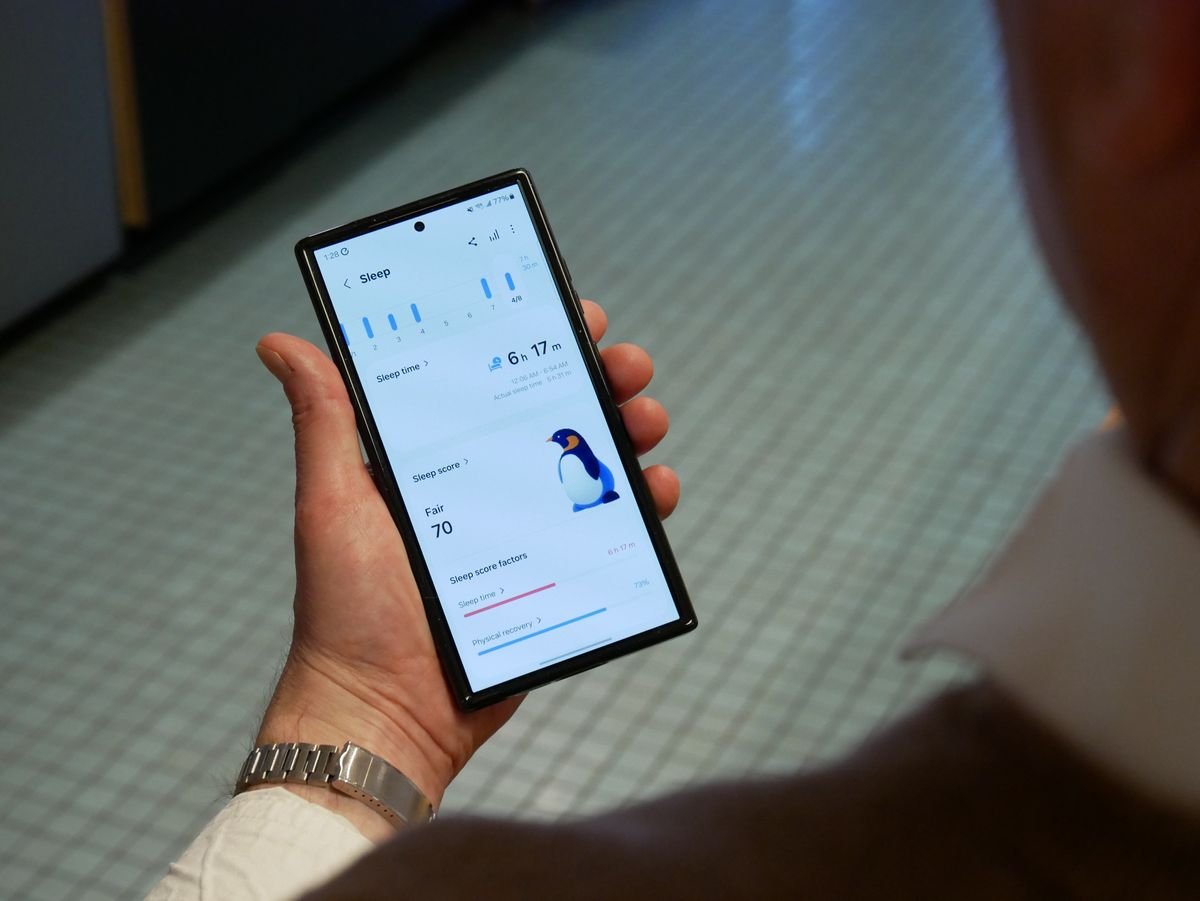
Hill warns against obsessing over detailed sleep metrics, which can lead to anxiety and negatively impact sleep patterns. Instead, she advocates for using AI to simplify health data analysis, offering personalized insights that promote healthier behaviors. Samsung’s SmartThings app aims to make adherence to new routines easier through gamification, assigning users playful avatars that categorize their sleep patterns. The automated systems are designed to enhance the likelihood of sticking to healthier habits, ultimately leading to improved sleep quality.
With these advancements, Samsung is positioning itself at the intersection of technology and wellness, making strides toward a more connected and health-conscious future. By leveraging AI and existing smart home ecosystems, Samsung seeks to foster an environment where individuals can achieve a restorative night’s sleep, taking personalized health management to new heights. Dreamland may just be a tap away.
The content above is a summary. For more details, see the source article.









