


Key Takeaways
- South Dakota has enacted a bill blocking the use of eminent domain for carbon dioxide pipelines, impacting Summit Carbon Solutions’ plans.
- The legislation aims to protect landowners’ rights amid their concerns over involuntary land easements for the project.
- Summit Carbon Solutions plans to continue its project in states supportive of carbon capture investments despite the regulatory challenges in South Dakota.
Legislation Impacts Carbon Pipeline Project
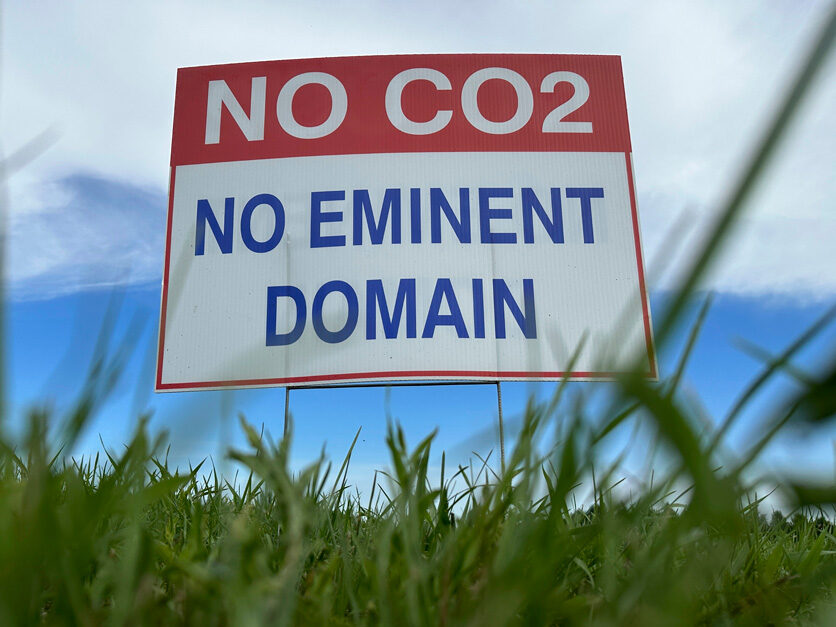
South Dakota Governor Larry Rhoden has signed a new law that prohibits the use of eminent domain for pipelines intended to carry carbon dioxide, significantly complicating plans by Summit Carbon Solutions for a pipeline project. This pipeline aims to transport liquefied carbon dioxide over 2,500 miles through several states, including Iowa, Nebraska, Minnesota, and South Dakota, linking 57 ethanol plants to a storage site in North Dakota. The project is designed to help these plants reduce their carbon intensity and potentially qualify for federal and state financial incentives, including a federal tax credit of $85 per ton for permanently stored CO2.
Local landowners have raised concerns about potential use of eminent domain, which would allow Summit to access land without property owners’ consent if voluntary easements are not approved. Earlier, the South Dakota Public Utilities Commission had already rejected Summit’s original mapping plan which fueled further opposition to the project. Governor Rhoden emphasized community sentiment against involuntary easements in his letter accompanying the bill, stating, “I have said many times that Summit needs to earn back trust from South Dakota landowners. Unfortunately, once trust is lost, it is a difficult thing to regain.”
The new law received bipartisan approval, passing in the state Senate with a vote of 23-12 after successfully clearing the state House. While the legislation introduces major hurdles for Summit, Rhoden believes it provides an opportunity for the company to reset relations with landowners. The law allows for voluntary easements to continue, theoretically easing tensions and fostering trust.
In response, Summit expressed disappointment, arguing that the state has shifted the rules during the project’s progression. The company stated, “This kind of regulatory uncertainty creates real challenges — not just for our project, but for the ethanol plants in South Dakota that now face a competitive disadvantage compared to their counterparts in neighboring states.” Despite the setbacks in South Dakota, Summit affirmed its intention to advance its initiatives in more welcoming states.
Landowner representative Brian Jorde described the bill’s passage as “an epic victory,” credited to nearly four years of activism from local residents. Jorde suggested that companies can succeed in South Dakota without resorting to eminent domain, referencing the successful development of solar and wind energy projects in the area. He recommended that Summit pause its activities in South Dakota and reconsider its approach to regain community trust, implying that a genuine reset could potentially foster more support from local landowners.
“The question remains whether they can swallow some pride and have an actual reset,” Jorde remarked. “If they did do that, there certainly are some folks out there that would be receptive to that, but they have some repair work to do and there’s no indication yet at least that they’re interested in that.”
The content above is a summary. For more details, see the source article.









