


Key Takeaways
- South Korea’s new AEW&C aircraft will utilize Bombardier’s Global 6500 airframe, with L3Harris as the lead integrator.
- The project has a budget of KRW3.1 trillion ($2.2 billion) and aims for completion by 2032.
- The selected Phoenix AEW&C platform outperformed competitors like Boeing’s E-7A and Saab’s GlobalEye in key evaluation criteria.
Next-Generation AEW&C for South Korea
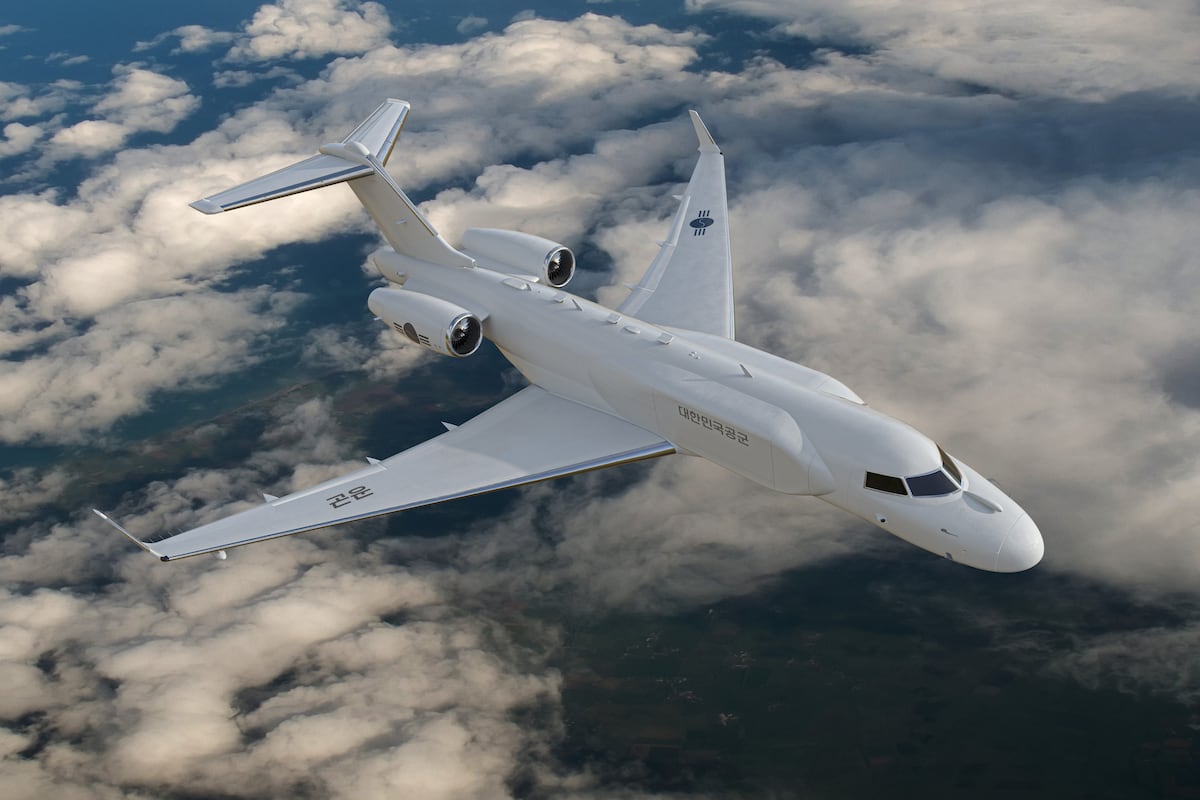
South Korea has officially chosen L3Harris Technologies to develop its next-generation Airborne Early Warning and Control (AEW&C) aircraft, which will be based on Bombardier’s Global 6500 airframe. The announcement was made on September 30, with plans to sign a contract by November.
This initiative, supported by a budget of KRW3.1 trillion (approximately $2.2 billion), is aimed at enhancing the Republic of Korea Armed Forces’ air surveillance capabilities to better address escalating aerial threats. A spokesperson for L3Harris stated that the project will improve the Republic of Korea Air Force’s (ROKAF) comprehensive air control abilities.
Although L3Harris has not disclosed extensive details about the Phoenix AEW platform, initial modifications for the first two aircraft will occur in Texas. This will be followed by radar integration in Israel, utilizing Elta’s ELW-2085 system, known for its 360° coverage and previously used in Israeli and Italian AEW aircraft. Korean Air is set to lead the development of the remaining two aircraft domestically, ensuring ongoing support through alliances with various Korean defense contracting firms.
Notably, L3Harris’ Phoenix AEW&C platform surpassed two major competitors: Boeing’s E-7A and Saab’s GlobalEye. The ROKAF currently operates four E-737 Peace Eye AEW aircraft, delivered in 2011-12, but opted against acquiring the E-7A, which has recently faced skepticism from the U.S. Air Force.
Saab’s proposal did use the same Global 6500 airframe, but featured the company’s Erieye-ER radar in cooperation with its local partner, Korea Aerospace Industries. However, L3Harris emerged as the leading choice due to superior marks in operational suitability, cost-effectiveness, and collaboration with local defense manufacturers. The company claims it can maintain operational availability rates exceeding 95%.
While Saab’s proposal performed better in contract conditions and acquisition costs, DAPA determined that L3Harris’ cumulative score was the highest, ultimately influencing the selection for this critical defense project. The Phoenix AEW&C program signals a significant step forward for South Korea’s military modernization and enhances national security in an increasingly complex regional landscape.
The content above is a summary. For more details, see the source article.









