Key Takeaways
- SpaceX successfully launched its Starfall capsule to demonstrate a new cargo delivery system for materials in low Earth orbit.
- The Starfall capsule can transport a 1-tonne payload and is designed exclusively for cargo, featuring a dual-part structure for safe re-entry.
- Other companies, including Varda Space Industries and Space Forge, are also exploring space-based manufacturing, but operate on a smaller scale compared to SpaceX’s Starfall.
Launch of SpaceX’s Secretive Starfall System
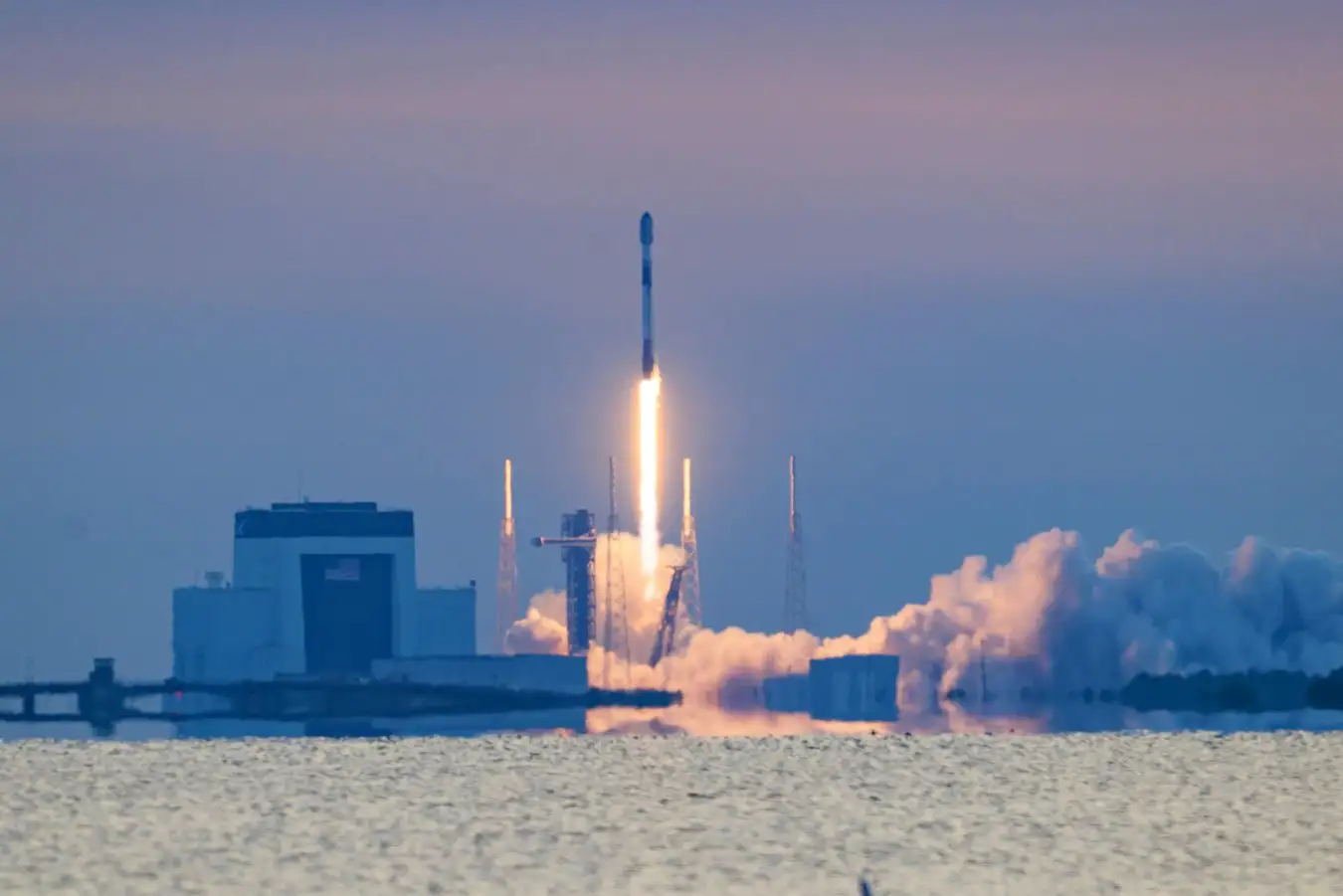
SpaceX launched its Starfall delivery system, sending a demo capsule into low Earth orbit from Cape Canaveral, Florida, at 6:50 am local time. This mission aims to establish a new cargo delivery method for materials manufactured in microgravity, potentially useful for pharmaceuticals and semiconductor alloys. The Falcon 9 rocket successfully returned to a floating platform in the Atlantic after launch.
While specific details about the Starfall mission remain scarce, an assessment by the US Federal Aviation Administration (FAA) released in May provided some insight. It indicated that Starfall is intended for the transport and delivery of goods in space, facilitating both scientific research and in-space manufacturing. Approved for two re-entry vehicle landings, the project hints at SpaceX’s broader ambitions in cargo transport.
The Starfall capsule is distinct from SpaceX’s crewed vehicles, focusing solely on cargo delivery. It features a windowless, cylindrical design about 3 meters wide and less than 1 meter tall, accommodating a payload of up to 1 tonne. The capsule’s innovative structure includes an upper compartment for the payload and a carbon fiber heat shield beneath, equipped with compressed gas mechanisms to ensure a safe landing back on Earth.
Following the rocket’s successful launch, updates regarding the Starfall capsule’s performance in orbit are still pending. It is crucial to note that its return is set for a splashdown in the Pacific Ocean, approximately 1,300 kilometers from California’s coastline.
SpaceX is not the only player in the field of space-based manufacturing. Smaller companies, like Varda Space Industries, are also attempting to produce materials in low Earth orbit, focusing on pharmaceuticals, while the Welsh company Space Forge seeks to manufacture semiconductors and alloys. However, their operations are considerably smaller than Starfall, with Varda’s containers measuring around one meter in width and carrying up to 300 kilograms.
Moreover, Starfall aligns with SpaceX’s contracts with the US military, contributing to broader initiatives like the Pentagon’s Rocket Cargo project. This program aims to utilize SpaceX’s Starship rocket for rapid supply delivery to remote locations. Given the nature of Starfall’s capabilities, it could complement these efforts by facilitating smaller delivery missions. The military is also exploring partnerships with other companies, including Jeff Bezos’s Blue Origin and New Zealand’s Rocket Lab, to diversify cargo delivery options from space.
As SpaceX advances its Starfall project, the implications for both commercial and military applications could reshape the landscape of space logistics and manufacturing, marking a significant step in leveraging low Earth orbit for practical uses on Earth.
The content above is a summary. For more details, see the source article.