


Key Takeaways
- Supernova Industries Corp secured a $2 million contract to 3D print military-grade energetic materials for U.S. defense.
- The company’s innovative Viscous Lithography Manufacturing (VLM) process allows for new formulations lacking in traditional manufacturing.
- U.S. military demand for explosive materials is surging, prompting efforts to increase domestic production capabilities.
Contract to Revolutionize Military Manufacturing
Supernova Industries Corp has entered a significant partnership to develop military-grade energetic materials through advanced 3D printing technology. This pilot program aligns with U.S. aims to strengthen its defense industrial base. Roger Antunez, the company’s founder and CEO, emphasized the potential of their technology to overcome limitations faced by conventional manufacturing processes in producing components like solid rocket motors, explosives, and pyrotechnics.
Established in Austin, Texas, in 2024, Supernova Defense & Space aims to concentrate on the innovative production of energetic materials. According to the company, traditional manufacturing techniques for these materials, vital to defense systems, often restrict performance capabilities. The proprietary Viscous Lithography Manufacturing (VLM) technique introduces necessary advancements to enhance safety, improve material consistency, minimize waste, and tap into new performance potentials.
Supernova has reported success in creating simulant energetic materials and is in the process of developing actual energetic formulations, which could represent a landmark achievement in additive manufacturing. VLM is described as a novel additive manufacturing method that utilizes a transparent film to apply high viscosity materials to a build platform, allowing for uncured materials to solidify through light exposure. Unlike typical processes that require low viscosity resins, VLM’s capability to handle a broader range of material viscosities enables novel formulations, including those necessary for energetic materials.
The contract, valued at $2 million, has been awarded through the American Center for Manufacturing & Innovation’s Critical Chemicals Pilot Program, backed by the Pentagon’s Information Analysis Center to enhance the Defense Department’s manufacturing capacity.
Victor Boelscher, overseeing federal programs at ACMI Federal, remarked that 3D printing of energetic materials is crucial for the production of weapon system components essential for national security. ACMI’s program is intended to bolster the Defense Industrial Base (DIB) resilience by quickly adapting commercial solutions for military use.
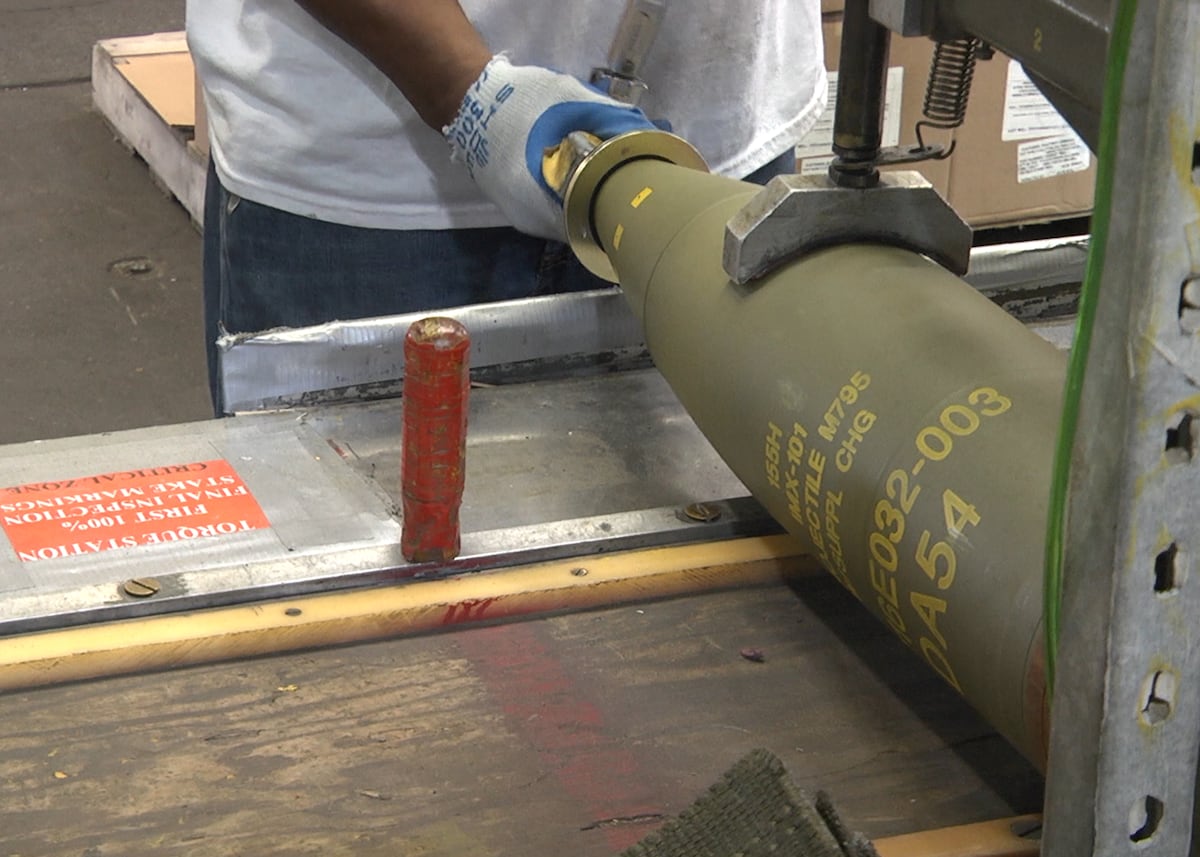
The surge in demand for explosive materials is prompting the Department of Defense to scale up production amidst a race to replenish munitions supplies, especially following support rendered to Ukraine. The U.S. Army is aiming to increase its production of 155mm munitions to 100,000 units monthly by the end of 2025. Doug Bush, the Army’s acquisition chief, has expressed concerns about the availability of explosives like IMX-104 or TNT for these shells, noting that current domestic production capabilities fall short. Consequently, the Army has had to turn to international allies for supplies.
To counter reliance on foreign sources, the Army is also investing in rebuilding its domestic explosive manufacturing infrastructure. A recent contract awarded to REPKON USA-Defense LLC aims to construct a new production facility for explosive materials in Graham, Kentucky. This strategy supports the overarching goal of achieving a resilient and self-sufficient U.S. defense manufacturing ecosystem.
The content above is a summary. For more details, see the source article.









