

Key Takeaways
- Texas farmers will receive approximately $963.5 million of the $9.7 billion market relief package for crop price declines.
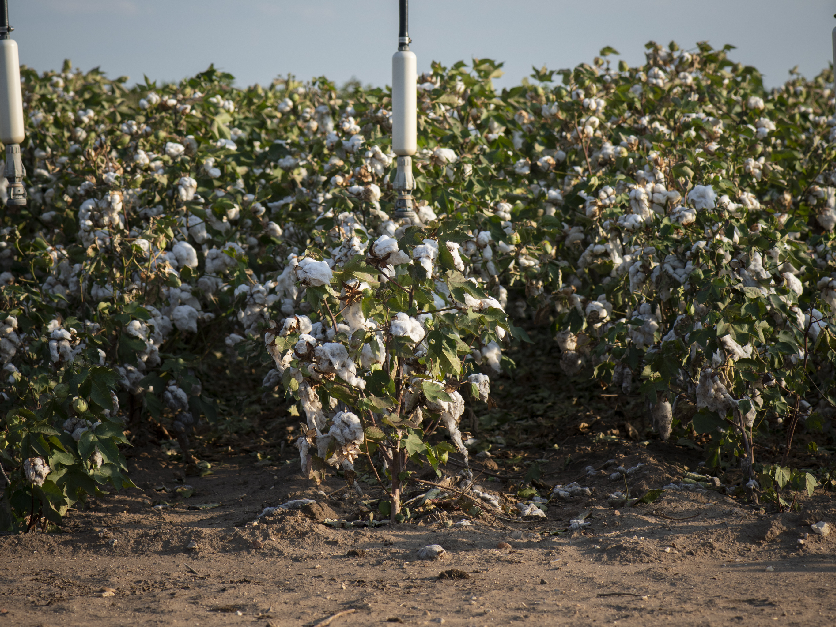
- Payments are based on crop-specific rates, with cotton receiving the highest at $87.26 per acre.
- The legislation includes additional disaster assistance and extends the 2018 farm bill for another year.
Market Relief Payments Overview
Texas farmers are set to receive a substantial portion of the $9.7 billion in market relief payments authorized by Congress in its year-end funding bill. An analysis from the University of Missouri indicates that Texas, as the leading cotton producer, will benefit most, with farmers receiving approximately $963.5 million. Other significant recipients include Iowa ($845.7 million), Illinois ($790.2 million), Kansas ($786.9 million), Nebraska ($625.4 million), and Minnesota ($615.5 million).
The payments aim to help row crop producers remediate losses from recent declines in market prices while providing support as lawmakers work on a new farm bill. Specifically, the funding distribution is based on predetermined payment rates for various crops, with cotton growers securing the highest compensation of $87.26 per acre. Other crops will receive the following rates per acre: oats at $77.66, peanuts at $76.30, rice at $69.52, sorghum at $42.58, corn at $42.51, wheat at $30.69, soybeans at $29.50, and barley at $21.76.
These payments are calculated based on either 26% of the economic loss for each eligible crop or a minimum payment rate, which equates to 8% of the product of the statutory reference price times the Price Loss Coverage program yield. For certain crops like barley, peanuts, and rice, the payment will be the greater of the two calculation methods. Economic loss is defined as the disparity between the USDA’s estimated production costs and the expected gross returns per acre.
When analyzing the overall distribution of funds, corn growers will receive the most significant share, totaling $3.8 billion, followed by soybean producers at $2.6 billion. Wheat farmers are next in line with $1.5 billion, while cotton growers will receive $974.8 million deduced from the analysis.
In addition to these relief payments, the legislation enacted on December 21 provides $21 billion in support for losses due to hurricanes and other natural disasters. Moreover, it extends the current 2018 farm bill for another year, ensuring continuity in agricultural policy and assistance.
Overall, these measures are designed to bolster the agricultural sector during challenging economic times, providing essential support to farmers facing volatile market conditions.
The content above is a summary. For more details, see the source article.