

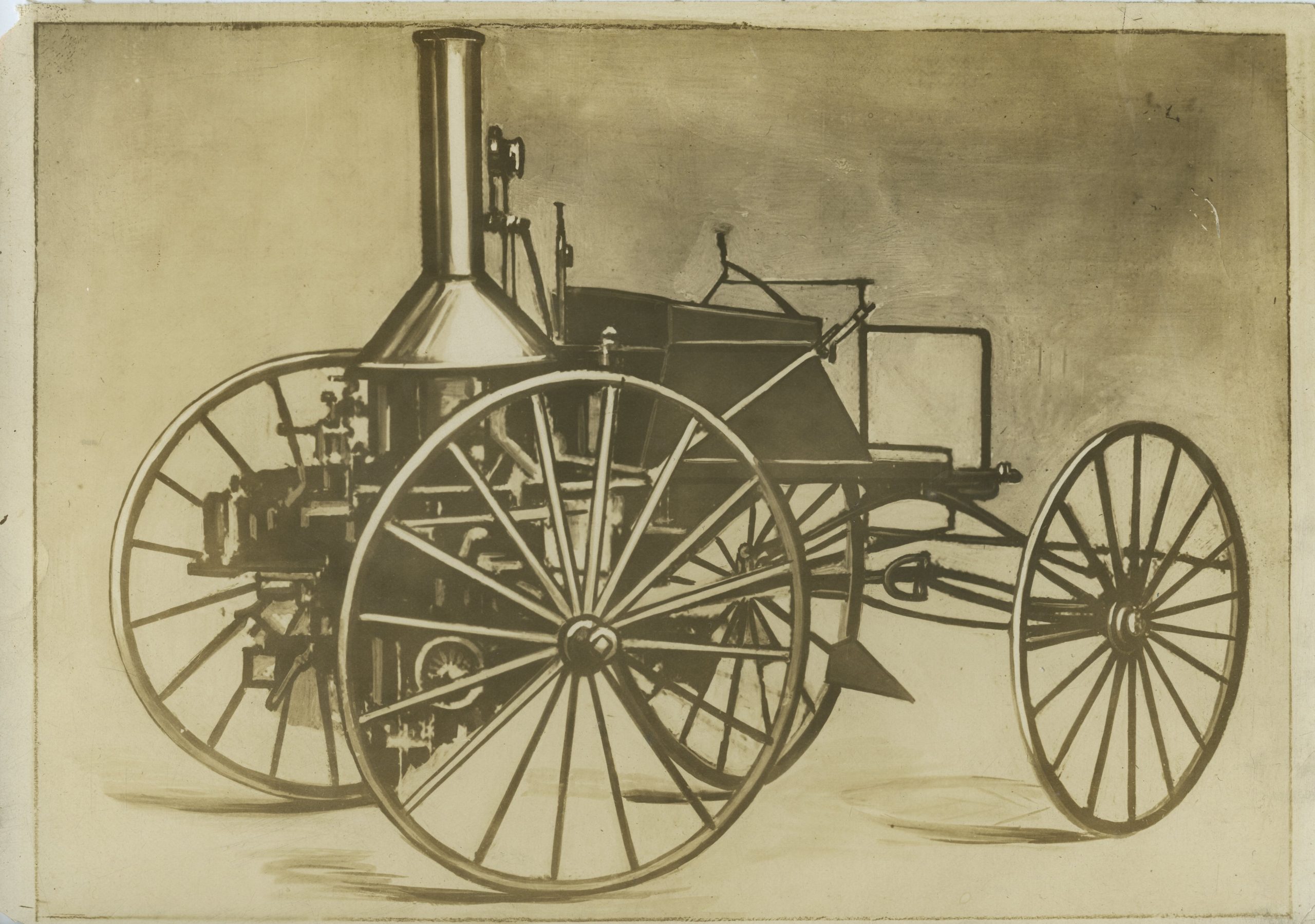
Key Takeaways
- Reverend Dr. John Wesley Carhart created the Spark, America’s first self-propelled vehicle, in Racine, Wisconsin.
- Despite its innovative design, the Spark faced local backlash and was ultimately destroyed by Carhart.
- Carhart’s work paved the way for future automotive developments, earning him the title “The Father of Automobiles” at a 1908 exposition.
In Racine, Wisconsin, Reverend Dr. John Wesley Carhart designed the Spark, the first light self-propelled highway vehicle in the United States, in the late 19th century. Though it did not achieve commercial success, the invention marked a significant moment in automotive history. Carhart, originally a Methodist minister turned inventor, developed a passion for steam-powered machines while serving in New York. He patented an oscillating valve for steam engines in 1869, showcasing his ingenuity.
In 1871, after moving to Racine with his family, Carhart envisioned a steam-powered carriage during his recovery from an illness. With assistance from his physicist brother and support from local merchant George Slauson, Carhart constructed a workshop where the vehicle could come to life. The J. I. Case Company cast the necessary metal components, and by 1873, the Spark was complete, driven by a two-cylinder steam engine capable of reaching speeds of five miles per hour.
Unfortunately, the vehicle’s debut did not go as planned. The noise produced by the engine and the disruption to the town’s tranquility led to public disapproval, even resulting in threats to Carhart’s safety. Ultimately, he decided to dismantle the Spark, acknowledging the technological limitations of the time, such as the absence of liquid fuel and modern materials.
Despite the Spark’s lack of acceptance, it inspired the Wisconsin legislature to award a $10,000 prize for the invention of a practical automobile. This contest eventually encouraged innovations, leading to successful automobiles like “The Oshkosh,” which made a notable journey from Green Bay to Madison in just nine days.
Carhart was later recognized for his contributions. In 1908, he received the title “The Father of Automobiles” at an International Automobile Exposition in Paris, where he was awarded cash and a certificate for his pioneering work. Although the Spark was eventually dismissed as a failure, Carhart’s ideas significantly influenced automotive advancements. In 1957, a marker was installed in Pritchard Park, honoring Carhart’s legacy and the historical importance of his invention.
Carhart passed away in 1914, having made strides in various fields including medicine and literature, yet he retained a lasting connection to his early passion for invention. The Spark remains a cornerstone in the development of the modern automobile, exemplifying the spirit of innovation that characterized the era.
The content above is a summary. For more details, see the source article.