


Key Takeaways
- The Ford Crown Victoria, particularly the 1998-2011 model, became iconic as a cop car and taxi despite its outdated design.
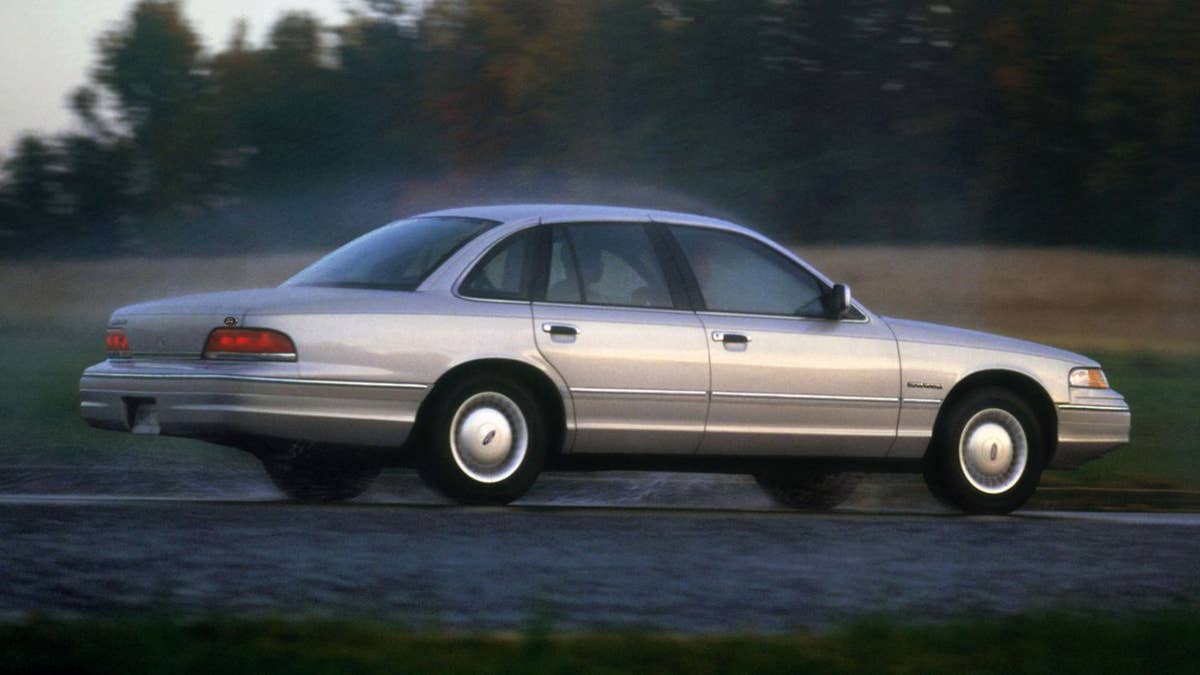
- The Aero Vics of the early ’90s laid the groundwork for the later success of the Crown Victoria, selling over 630,000 units.
- Future Ford sedans may bring a new-age Crown Victoria, aiming to retain its signature large and rear-wheel-drive traits.
From Ordinary to Iconic
The Ford Crown Victoria is often seen as an ordinary car, characterized by its V8 engine and rear-wheel drive, yet it has earned a beloved status among fans across the globe. Though the Crown Victoria’s production lineup ran until 2011, the most recognized version, from 1998 to 2011, was predominantly utilized as a police cruiser and taxi. Its profile became permanently ingrained in public consciousness, overshadowing its predecessors and variants, particularly the 1990s Aero Vics.
In the 1950s, the Crown Victoria name first appeared with limited use. It resurfaced in 1980 when it was designated as the top trim of the downsized Ford LTD. After further simplification in 1992, the Ford LTD Crown Victoria was rebranded, signaling a significant shift in design philosophy at the time. The new model marked a departure from the boxy look of its predecessors, adopting a more aerodynamic and smooth design reminiscent of the Ford Taurus.
During a time when American automakers were pivoting away from traditional large sedans, the early ’90s proved to be a turning point for the Crown Victoria. Despite initial skepticism regarding their production longevity, both Ford and GM saw steady demand that justified their continued existence. The Crown Victoria’s aerodynamic “Aero Vic” design featured a six-window arrangement and slim headlights, achieving better sales than competitors like the Chevrolet Caprice.
Underneath its contemporary exterior lay a chassis rooted in the 1970s Panther platform, which had undergone significant updates over the years to improve ride quality and driving dynamics. The introduction of the 4.6-liter Modular V8 engine was also a highlight, providing a respectable 190 hp, and went up to 210 hp with dual exhaust options. These specs may seem modest by current standards, but they reflected the performance expectations of their era.
Initially, the Aero Vics found moderate success, consistently selling over 100,000 units per year and totaling approximately 630,000 during their production run from 1991 to 1997. However, they often lived in the shadow of the Chevrolet Caprice, which had built a storied legacy, particularly due to its performance-oriented 5.7-liter LT1 engine. While the Aero Vics enjoyed a moment of popularity following the Caprice’s discontinuation, this was fleeting as the modern Crown Victoria gained traction.
The long-lasting impact of the first-generation Crown Victoria remains significant, forming the foundation for the subsequent models that cemented its legacy. As Ford contemplates reintroducing sedans, there’s potential for a modern interpretation of the Crown Victoria. Though the revival should ensure it retains its essence as a large, rear-wheel-drive vehicle rather than transforming into a crossover, the fascination with this iconic name continues to endure.
The content above is a summary. For more details, see the source article.









