


Key Takeaways
- The Tomorrow Mobility World Congress highlighted a focus on optimizing existing urban infrastructure rather than introducing new transportation modes.
- Innovative startups showcased digital solutions for sustainable urban mobility, including carpooling apps and alternative fuel vehicle conversions.
- Participants emphasized the importance of partnerships and effective economics to achieve net-zero targets in urban transport.
Insights from the Tomorrow Mobility World Congress
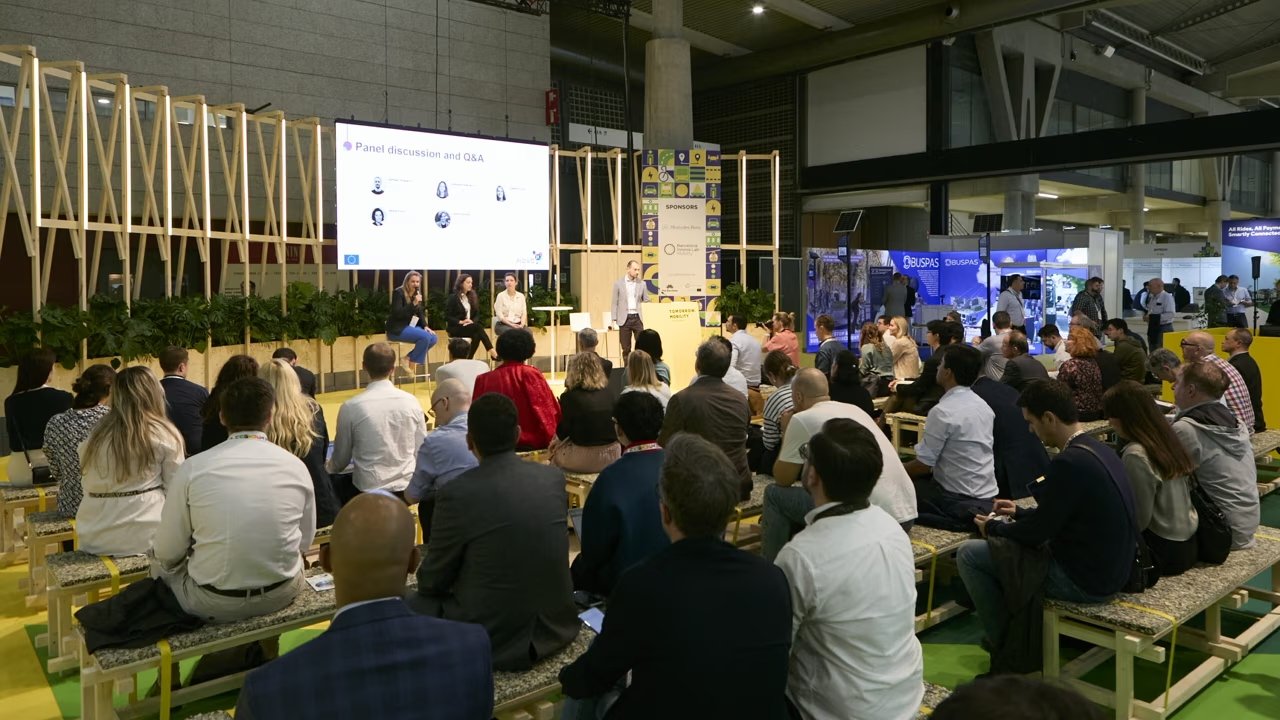
The Tomorrow Mobility World Congress held in Barcelona brought together industry leaders, government officials, and tech experts to discuss the future of urban mobility over three key days. A notable trend observed was a shift in emphasis from developing completely new transportation modes—like electric vertical takeoff and landing (eVTOL) vehicles and hyperloop systems—to improving and modernizing existing urban infrastructure.
Conversations ranged from the urgency of achieving net-zero emissions to building partnerships and enhancing the economic viability of new mobility solutions. Numerous startups presented their innovative approaches to creating greener cities through retrofitting and technology-driven enhancements of transportation systems.
Several standout startups made an impact at the event:
**Karos (France)** is transforming daily commutes with a carpooling app that uses AI and geolocation to match users based on their preferences. The platform provides optimized itineraries, including intermodal travel options by integrating with local public transport networks. Users can select carpool proposals with ease while drivers receive compensation for their contributions.
**EVARM (Spain)** specializes in converting professional vehicles to alternative fuels, promoting reduced emissions and lower operational costs. Their solutions cater to various sectors, including water treatment and corporate sanitation.
**Zeabuz (Norway)** has developed an autonomy platform for vessels, evolving into a leader in autonomous urban ferry technology. Their solutions support new designs and retrofits for existing vessels, leveraging cognitive capabilities similar to human mariners. In June 2023, they launched the first autonomous urban ferry service in Stockholm.
**Nemi (Spain)** enhances public transport accessibility in low-density areas with their software solution that promotes flexible bus services. This technology allows local authorities to improve fleet usage and passenger experience through on-demand services and better communication between users and operators.
**Parkunload (Spain)** aims to simplify urban parking, particularly for freight vehicles, through a platform that optimizes the management of parking zones. Using Bluetooth technology, it ensures accurate zone detection and real-time enforcement, aiding cities in reducing illegal parking and improving traffic flows.
These developments showcased at the Congress reflect a collective movement towards innovative, sustainable urban transport solutions designed to meet contemporary challenges.
The content above is a summary. For more details, see the source article.









