

Key Takeaways
- President Trump warns of potential tariffs, urging businesses to produce in the U.S. to avoid additional costs.
- Canada and Mexico may face 25% tariffs, while a 10% tariff on China is being considered.
- Trade tensions are highlighted at the World Economic Forum, with calls for cautious responses to potential tariffs.
Trump Signals Potential Tariff Actions at Davos
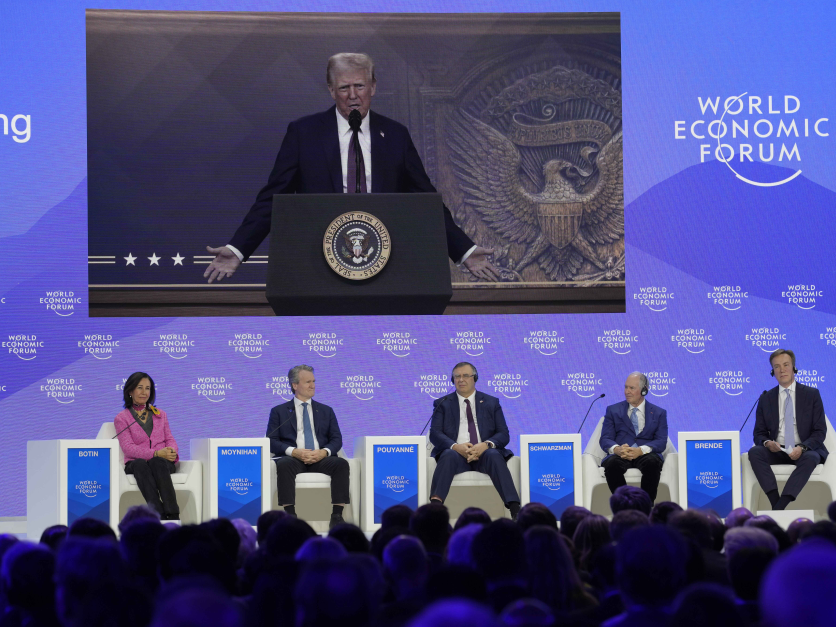
During a virtual address to high-profile leaders at the World Economic Forum in Davos, Switzerland, President Donald Trump outlined a tough stance on trade, warning of impending tariff measures if businesses do not manufacture products in the U.S. He emphasized, “Come make your product in America, and we will give you among the lowest taxes of any nation on Earth,” and made clear that tariffs would be imposed on goods not produced domestically. Trump predicted that these tariffs could yield trillions in additional revenue.
Trump’s comments suggest that Canada and Mexico could be facing new tariffs of 25% beginning February 1, alongside a potential 10% tariff on China. He has previously floated the idea of a universal tariff ranging from 10-20% on all imports to the U.S. The president reiterated his commitment to ensuring fair treatment in trade, claiming that virtually every nation has taken advantage of the U.S.
In a following Q&A session, Trump expressed his frustration with the U.S. trade deficits and specifically criticized relationships with significant trading partners, including the European Union (EU) and Canada. He accused the EU of failing to accept U.S. agricultural products and vehicles, leading to an annual trade deficit exceeding $100 billion. Trump threatened to impose tariffs on the EU unless they increased their imports of U.S. oil and gas.
Canadian officials have prepared to retaliate against any new tariffs, indicating they might impose export taxes on oil and gas. Notably, Canada supplies about half of U.S. oil imports and over 90% of its natural gas. However, Trump minimized U.S. reliance on Canadian imports, stating, “We don’t need their oil and gas. We have more than anybody.”
The discussions at the World Economic Forum are heavily influenced by Trump’s tariff threats, with global industries bracing for potential trade conflicts. France’s trade minister, Laurent Saint-Martin, asserted that Trump’s possible re-election should prompt EU leaders to strengthen trade relationships with Southeast Asia and Latin America.
During a panel on Thursday, World Trade Organization (WTO) Director-General Ngozi Okonjo-Iweala urged calm in the face of potential tariff escalations. She warned that retaliatory measures could lead to “catastrophic” economic consequences and advised member nations to explore diplomatic avenues instead of hastily imposing tariffs as countermeasures.
Overall, Trump’s focus on tariff actions and trade policies continues to dominate discussions among global economic leaders, as they navigate the complexities of international trade relationships amidst concerns of retaliation and economic fallout.
The content above is a summary. For more details, see the source article.