


Key Takeaways
- President Trump’s executive order reallocates disaster preparedness responsibilities from FEMA to state and local governments.
- The order mandates a national resilience strategy to be published within 90 days, lacking specific funding strategies for local initiatives.
- Amid increasing natural disasters, experts emphasize the need for federal support to bolster local disaster management efforts.
New Approach to Disaster Preparedness
President Donald Trump’s recent executive order aims to enhance the role of state and local governments in disaster preparedness, shifting responsibilities away from the Federal Emergency Management Agency (FEMA). Issued on March 19, the order emphasizes a policy where states, localities, and individuals are expected to take a more proactive approach to national resilience and preparedness, addressing threats such as cyberattacks, wildfires, hurricanes, and “space weather.”
However, the order does not outline how local governments should finance their preparedness efforts without federal assistance. It commits the administration to publish a national resilience strategy within 90 days, promising additional guidance on these expectations.
Since taking office, the Trump administration has pursued a significant reduction in the size of the federal government, impacting FEMA notably through budget freezes and workforce reductions. Trump has openly questioned the agency’s necessity, hinting at a potential overhaul. Reports indicate substantial cuts to FEMA staffing and rescinded funding approvals, raising concerns about the agency’s ability to respond effectively to disasters.
Some experts interpret the order as a more moderate stance towards FEMA compared to previous rhetoric, noting that the Biden-Harris administration had previously called for increased local preparedness through a national resilience strategy in January 2021. Despite this, U.S. Homeland Security Secretary Kristi Noem has reaffirmed intentions to “eliminate” FEMA, which raises alarms among disaster management professionals.
In the context of rising natural disasters—27 significant weather and climate events were recorded in 2022, with 2023 seeing an uptick to 28—questions surrounding FEMA’s potential downsizing are especially concerning. Carrie Speranza, president of the U.S. Council of the International Association of Emergency Managers, voiced her support for reforming FEMA but stressed that federal backing is crucial for effective disaster management. “To serve our communities effectively, disaster management must be federally supported, state-administered and locally executed,” she stated before the House Committee on Homeland Security’s Subcommittee on Emergency Management and Technology.
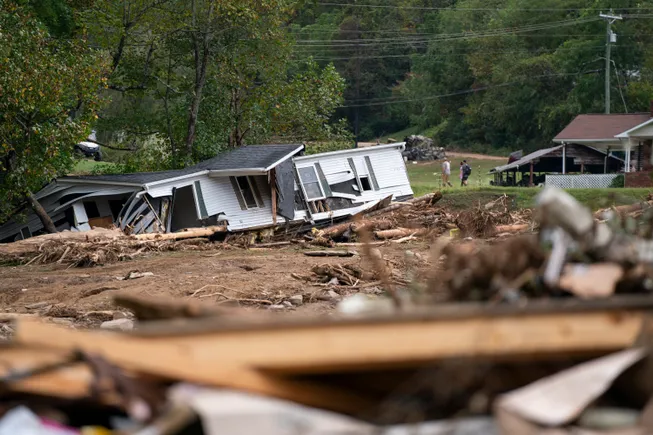
The urgency of a robust federal response has been underscored by the recent challenges posed by Hurricane Helene, which has been reported as the deadliest hurricane in the contiguous U.S. since Hurricane Katrina in 2005. Asheville, North Carolina, was particularly hard hit, suffering over $1 billion in damages to publicly owned properties. Mayor Esther Manheimer noted that FEMA provided substantial assistance, including over $318 million for more than 145,000 households and $11.7 million for the repair of essential infrastructure.
Manheimer highlighted the financial aftermath of the storm, which has left a severe impact on local revenue affecting small businesses and educational systems. “This financial strain is another layer of the recovery challenge,” she remarked, reflecting the community’s resolve to overcome the obstacles posed by this disaster.
As discussions continue regarding the federal role in disaster response and preparedness, the Biden-Harris administration’s past initiatives and Trump’s recent executive order signal pivotal shifts in how the U.S. approaches disaster management in the future.
The content above is a summary. For more details, see the source article.









