


Key Takeaways
- New research indicates solar energy projects will use only a small fraction of Arkansas farmland, estimated at 0.2% by 2026.
- Solar leasing offers economic benefits for farmers, with potential earnings of $2,500 per acre per year.
- Concerns about solar impacting agriculture are largely unfounded, as dual-use systems like agrivoltaics are gaining traction.
Research on Solar Development in Arkansas
Research from the University of Arkansas reveals that the expansion of solar energy infrastructure will minimally impact agricultural land. Led by Michael Popp, a professor of agricultural economics, the study suggests that even under a significant increase in solar capacity, only a tiny fraction of farmland—between 22,000 and 35,000 acres—would be repurposed for solar energy by the end of 2026. This represents about 0.2% of the state’s total farmland.
Popp’s team noted that if solar capacity reached 15,000 megawatts, it would still only occupy approximately 137,000 acres out of 13.7 million, or less than 1%. The findings counter the concerns of rural communities fearing that solar projects could disrupt the agricultural landscape. In Arkansas, opposition has centered more on wind energy rather than solar.
Farmers often lease their land for solar development, which can bring in substantial financial returns. Solar leases can yield up to $2,500 per acre annually, presenting an attractive economic opportunity for landowners. However, these arrangements require that the land cannot be used simultaneously for crop production, unless innovative agrivoltaics systems are implemented. This method allows livestock, like sheep, to graze around solar panels and has shown potential for some crops, though results vary.
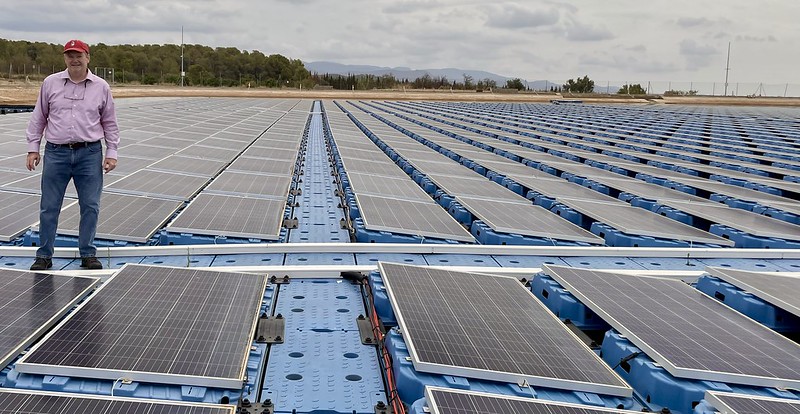
The paper also discusses floating solar systems that can be placed above irrigation setups, enabling farmers to cultivate water-intensive crops, such as rice, while generating solar energy. In recent years, solar energy installations in Arkansas have accelerated. Entergy has installed 17 large-scale systems since 2019, contributing to the state’s increasing reliance on renewable energy. In 2023, renewable sources, including solar, supplied approximately 9% of Arkansas’s energy needs.
Despite a slow down in commercial and residential solar growth due to revised net-metering rules, utility-scale solar projects have surged since 2020. While farmland leasing for solar may affect rental rates and land prices in the long term, the overall conclusion is positive. The research emphasizes that photovoltaic systems, agrivoltaics, and floating solar installations will not threaten Arkansas’s agricultural industry. Instead, they provide opportunities for farmers to diversify their income and enhance irrigation practices.
The content above is a summary. For more details, see the source article.









