Key Takeaways
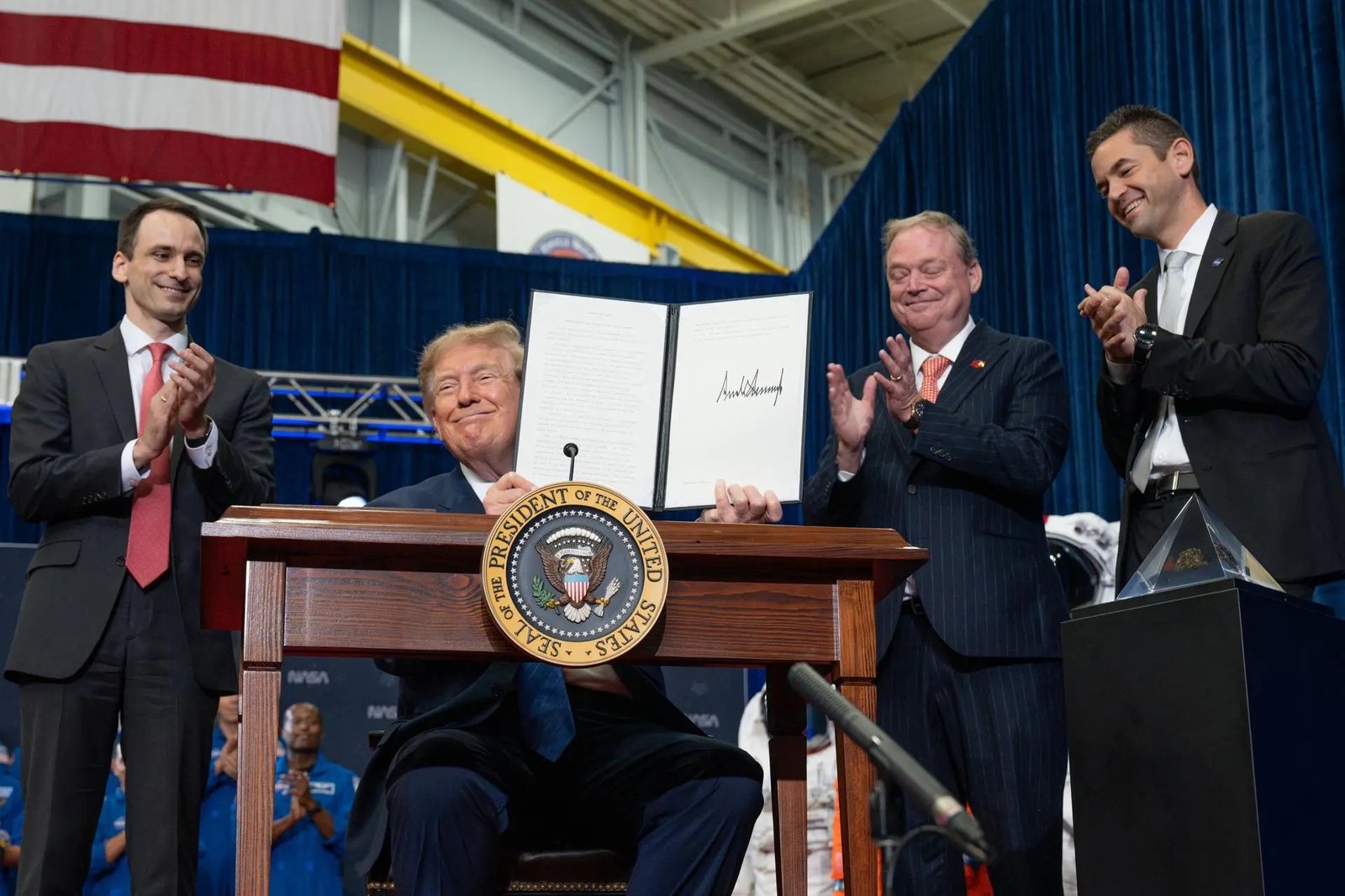
- President Trump signed an executive order to enhance U.S. space capabilities, establishing the United States Space Academy focused on education and leadership.
- The U.S. aims for space dominance, prioritizing national security, commercial interests, and strategic military operations in its space policy.
- The 1967 Outer Space Treaty asserts that outer space is a common heritage, emphasizing global cooperation and preventing unilateral claims or militarization.
U.S. Space Strategy Implementation
On August 28, 2026, President Trump signed an executive order designating outer space as essential for U.S. national security and economic growth. This move included the establishment of the United States Space Academy, aimed at merging technical education with leadership development. The U.S. military supports this initiative, which marks a clear intent to reinforce U.S. dominance in space.
The U.S. has a long history of crafting space strategies, starting with the Eisenhower administration’s 1958 policy. The most recent strategy focuses on prioritizing U.S. interests, emphasizing collaboration between national security and commercial sectors, while ensuring American companies remain at the forefront of space technology. Furthermore, it seeks to unify military efforts for unrestricted operations in space.
In 2018, the U.S. restructured its space strategy, making space security a core aspect of national defense. The establishment of the U.S. Space Command and eventually the U.S. Space Force aimed to support a dedicated system for space military operations. The Space Force was formally created on December 20, 2019, and it is organized into commands designed for various operational roles in space. This restructuring highlights a shift towards comprehensive space militarization.
In addition to military capability, the U.S. faces challenges in developing specialized talent. Traditional military and academic institutions are not equipped to cultivate the skilled professionals needed for modern space operations. The new Space Academy aims to address this gap, fostering military personnel, scientific researchers, and professionals for the commercial sector. This initiative seeks to create a sustainable talent pipeline to support U.S. strategic aims in space.
The advancements in U.S. space policy raise significant concerns regarding international cooperation. The 1967 Outer Space Treaty defines outer space as the common heritage of humankind, mandating that exploration serve all nations’ interests. However, the U.S. efforts toward militarization could provoke other nations to enhance their defenses, potentially igniting a new arms race in space and escalating global tensions.
The establishment of the Space Academy marks a pivotal step in solidifying U.S. space dominance, complementing existing military structures. While fostering technological innovation and training professionals, the strategy’s overarching focus on unilateral supremacy could threaten the collaborative spirit that is essential for sustainable space exploration.
In conclusion, rejecting hegemonic ambitions and promoting cooperation among nations is crucial for ensuring that space remains a shared domain. Prioritizing peaceful exploration can lead to mutual benefits and the advancement of human civilization.
The content above is a summary. For more details, see the source article.