


Key Takeaways
- Uber will launch autonomous vehicles in Austin next month, with Atlanta set to follow in summer 2024.
- The CEO emphasized the importance of safety, cost-effectiveness, and federal regulations for the success of robotaxis.
- Uber faces competition from Tesla, which plans to start its own driverless ride-hailing service in Austin in June 2024.
Uber Accelerates Autonomous Vehicle Rollout
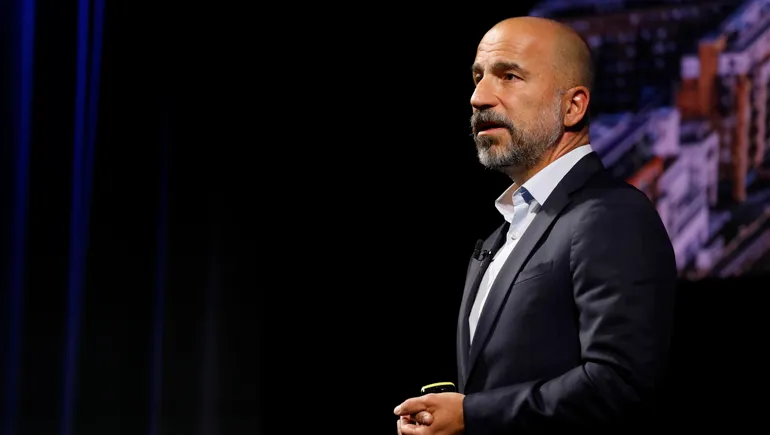
Uber’s CEO Dara Khosrowshahi recently announced plans for the introduction of autonomous vehicles (AVs) in Austin, Texas, starting next month. Residents can now join an interest list to be among the first riders in this initiative. Following Austin, Atlanta is anticipated to launch its AV service in summer 2024. Khosrowshahi noted that Uber is collaborating with Waymo, a partnership already established in Phoenix since late 2023.
During Uber’s earnings call on February 5th, Khosrowshahi remarked that 2024 could mark a significant turning point for the autonomous vehicle industry as technology matures and more people experience driverless rides. He underlined that Uber’s primary focus remains on executing its AV strategy efficiently.
Both Uber and its competitor Lyft have outlined strategies to enhance the presence of robotaxis in their fleets. Khosrowshahi elaborated on Uber’s plans, revealing that the company is exploring the acquisition of depots and electric vehicle charging facilities to support a fleet of EV robotaxis. In Phoenix, offering riders the option to choose autonomous vehicles has seen positive reception, with customer interest increasing after their first experience.
Despite the positive outlook, Khosrowshahi cautioned that profit generation from robotaxis would take time. He highlighted that the cost of an AV, such as a Waymo robotaxi, exceeds $200,000, significantly more than expenses for human-driven vehicles. To ensure the feasibility of robotaxis, Khosrowshahi pointed out three essential conditions: AVs must demonstrate superior safety compared to human drivers, they need to become financially viable, and a uniform national regulatory framework must be established.
Currently, robotaxi operations vary under 35 state regulations, but changes may be forthcoming. U.S. Representative Bob Latta has signaled intentions to introduce bipartisan legislation for federal regulations soon. Support for uniform federal regulation also comes from the Autonomous Vehicle Industry Association, whose CEO, Jeff Farrah, affirmed the necessity of consistent guidelines.
Khosrowshahi also discussed the complexities of managing an AV fleet, particularly in balancing customer demand that fluctuates throughout the day, week, month, and year. Seasonal peaks often occur in December and March, while demand can dip during summer months. To address these variations, Khosrowshahi suggested a mixed fleet approach combining robotaxis with human drivers using their vehicles, allowing for consistent service while mitigating the costs associated with maintaining a large fleet of AVs.
The competition in the driverless ride-hailing market is intensifying with Tesla planning to launch its paid driverless service in Austin by June, extending to California later this year. Tesla’s CEO Elon Musk announced plans allowing Tesla owners to rent out their vehicles when not in use, akin to an Airbnb model. This strategy could create additional pressure on Uber’s efforts to establish a self-sustaining robotaxi service.
As the industry evolves, the focus on cooperative infrastructure, regulatory alignment, and competitive strategies will be pivotal for the success of autonomous ride-hailing services.
The content above is a summary. For more details, see the source article.









