


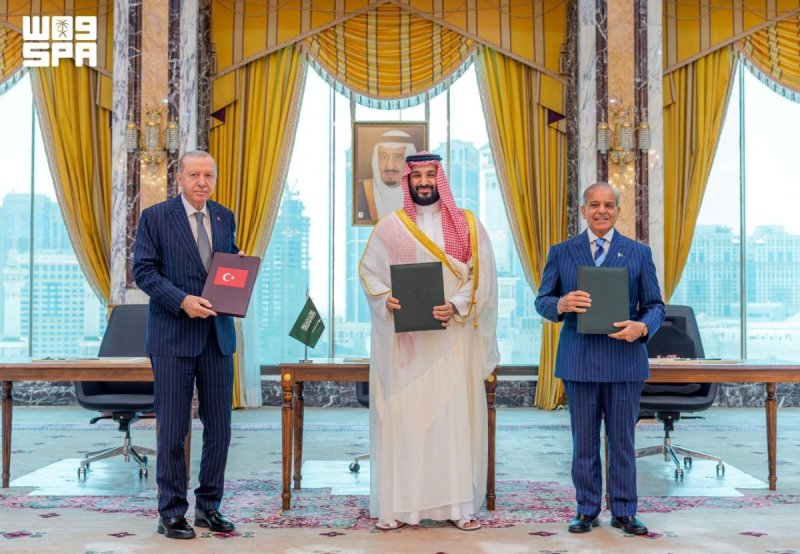
Key Takeaways
- The emerging defence partnership between Türkiye, Pakistan, and Saudi Arabia aims to enhance regional security and reduce reliance on U.S. guarantees.
- This alliance combines Türkiye’s technological capabilities, Pakistan’s nuclear deterrence, and Saudi Arabia’s financial power and strategic position.
- Rather than being an anti-Iran coalition, the partnership focuses on creating a regional deterrence mechanism amid growing security concerns in the Gulf.
Emerging Defence Partnership
The nascent defence cooperation among Türkiye, Pakistan, and Saudi Arabia signals a potential shift in the Middle Eastern security dynamic. Following the recent tensions stemming from the Iran-U.S. conflict, these nations are prioritizing regional collaboration over traditional Western security assurances. The ultimate goal appears to be the establishment of mechanisms to collectively address shared security threats.
While the specifics of their agreement remain undisclosed, the symbolic significance is substantial. The partnership aims to create a complementary deterrence strategy that exists alongside the U.S.-led security framework in the region. The effectiveness of this alliance arises from the distinct strengths of each country, rather than uniform capabilities.
Türkiye is poised to contribute its advanced defence technologies and operational military capacity, especially in drones, missiles, and electronic warfare. Furthermore, military relations between Türkiye and Pakistan are already well-established, exemplified by joint exercises like JINNAH-2026.
Pakistan, a nuclear-armed state, adds significant military manpower and operational experience to the alliance. Its extensive capabilities in both conventional and asymmetric warfare position it as a crucial member of this arrangement.
Conversely, Saudi Arabia’s pivotal role is marked by its financial strength, strategic geography, and influence over global energy systems. This potential partnership outlines a division of labour: Saudi capital supports defence initiatives spearheaded by Türkiye, combined with Pakistan’s military prominence.
The timing of this agreement correlates with rising tensions in the region, particularly concerning the Strait of Hormuz, but labeling it purely as an anti-Iran coalition would be misleading. Türkiye engages in vital economic and diplomatic ties with Iran, while Pakistan seeks to position itself as a regional mediator. As such, the alliance’s focus is on deterrence—preventing alterations to Gulf security dynamics through military actions.
Instead of signaling a break with U.S. influence, this partnership illustrates a trend toward greater strategic autonomy among these Middle Eastern nations. The three countries are not forming an alliance against the U.S.; rather, they are expressing a desire to lessen their dependence on U.S. security guarantees.
Ultimately, as the global order shifts, this emerging collaboration among Türkiye, Pakistan, and Saudi Arabia could lay the groundwork for a more autonomous regional security architecture, integrating defence technologies, military manpower, and financial resources into a cohesive strategy.
The content above is a summary. For more details, see the source article.









