


Key Takeaways
- Porsche’s Cayenne Electric features a uniquely curved touchscreen design that enhances usability while driving.
- The interface is intuitive and integrates essential functions within easy reach for the driver, improving accessibility.
- While some controls lack physical buttons, the overall design represents a step forward in in-car technology for ease of use.
Innovative Touchscreen Design in the Porsche Cayenne Electric
In recent years, in-car touchscreens have faced significant criticism, particularly in the wake of Tesla’s all-touch interface model. This backlash has prompted automakers to reconsider touchscreen functionality. Volkswagen’s CEO noted the lack of practicality in touch-sensitive sliders, highlighting the need for better design in vehicle interfaces.
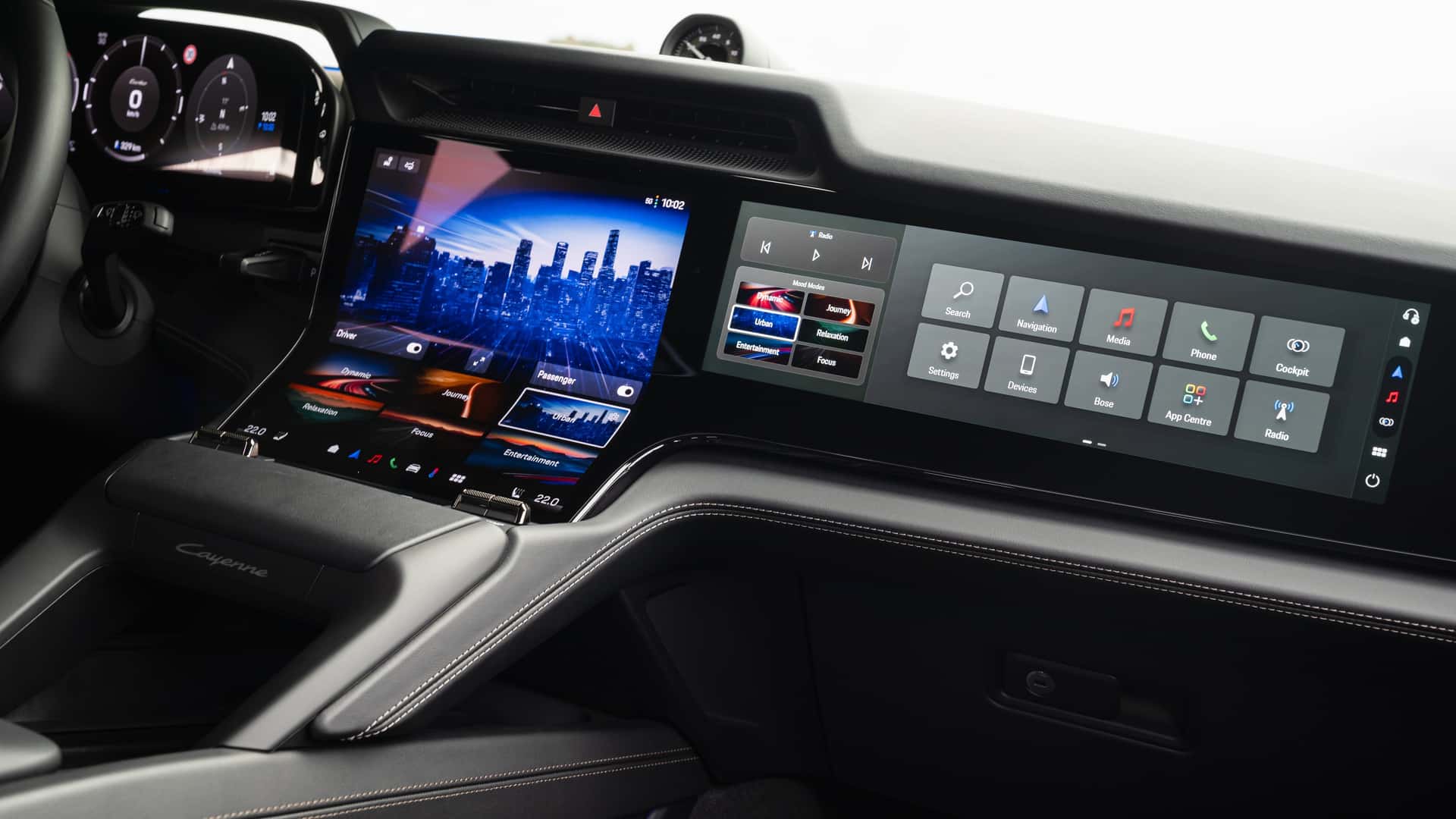
The Porsche Cayenne Electric introduces a curved touchscreen that alters the traditional flat design often seen in vehicles. This innovative layout aims to enhance user experience by making essential controls more accessible without compromising safety.
The challenge with conventional touchscreens lies not in their touch capability, but in their user experience. Typically, drivers must stretch or awkwardly position their wrists to access controls, diverting their attention from the road. The curved layout of the Cayenne’s touchscreen addresses this issue effectively. Key functions, such as climate control and media selection, are situated within easy reach, minimizing distraction while driving. By incorporating a wrist rest, Porsche ensures that the most frequently used features are more intuitive to access.
Notable features of the interface include native Google Maps integration, improving navigation accessibility and ease of use. Additionally, the center console armrest adjusts, allowing users to comfortably place their elbows while interacting with the touchscreen.
However, the design is not without its limitations. There are still touch-sensitive controls for features such as heated seats and windshield defrosting, which may not be the most user-friendly options. Despite this, Porsche retains physical rockers for climate settings, a volume roller, and hard buttons on the steering wheel, addressing some practical needs while balancing modern technology with user experience.
The Cayenne Electric represents a cautiously optimistic shift in in-car interfaces, similar to BMW’s Panoramic Vision display, which prioritize user-friendliness alongside technological advancements. This evolution signals a potential move away from oversized, impractical systems towards smarter, more intuitive touchscreen solutions.
As automakers evolve their designs, a departure from outdated tablet-style interfaces in favor of thoughtfully designed touchscreens will be welcomed by drivers. The Porsche Cayenne Electric exemplifies this future, presenting a more effective approach to in-car technology that prioritizes convenience and safety. Good riddance to the cumbersome dashboard tablets of the past.
The content above is a summary. For more details, see the source article.









