


Key Takeaways
- UNSW Canberra, Voltval, and JT Solar Technology are piloting an AI-powered energy system for rooftop solar and battery storage in apartment buildings.
- The Modular Power Portal System (MPPS) aims to improve energy access for over 2.5 million apartment residents in Australia, overcoming existing barriers to solar adoption.
- The project, supported by a $1.2 million grant, will validate a multi-site pilot to establish the system’s effectiveness and scalability.
Innovative Energy Solutions for Apartment Dwellers
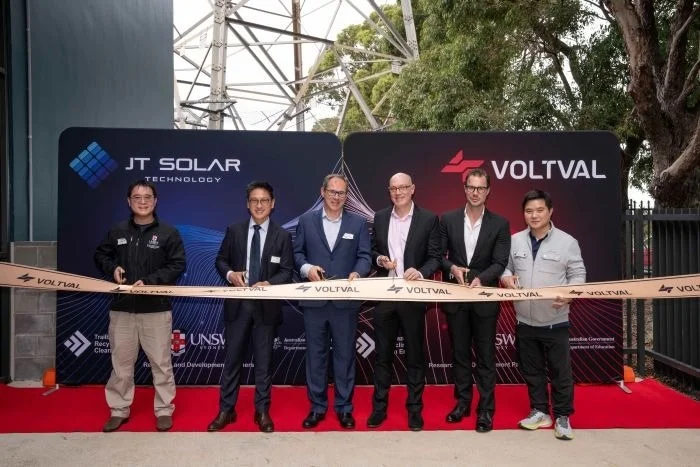
Researchers at UNSW Canberra, in collaboration with industry partners Voltval and JT Solar Technology, are launching a pioneering pilot of an AI-driven energy system designed to enhance rooftop solar and battery storage for Australia’s apartment residents. This initiative is crucial as over 2.5 million Australians live in apartments, yet a mere 3.5% in New South Wales have access to rooftop solar.
The newly developed Modular Power Portal System (MPPS) integrates rooftop solar generation with communal battery storage, targeting the specific challenges faced by apartment buildings. These challenges include complex ownership structures and outdated metering systems, which have stymied solar adoption in high-density living environments.
The pilot program is bolstered by a $1.2 million grant from the Australian Department of Education’s Trailblazer Recycling & Clean Energy (TRaCE) program. This funding will allow UNSW researchers to add an advanced AI component to the MPPS, enhancing its capability to forecast energy generation and demand, and thereby optimize energy management across multiple households.
Dr. Ripon Chakrabortty from UNSW’s School of Systems & Computing emphasized that the AI technologies being developed will facilitate the coordination of energy resources among residents, significantly increasing renewable energy utilization and reducing operational costs by up to 30%. “The next phase of Australia’s clean energy transition depends on apartment residents having access to distributed energy benefits,” stated Associate Professor Huadong Mo, who co-leads the project.
The pilot will be conducted in various commercial and residential sites across Sydney, where it will generate real-world performance data. This data will not only validate the MPPS for these sites but also build a robust evidence base necessary for its adaptation across diverse building types.
Moreover, the partnership aims to address broader challenges in urban areas globally where similar barriers to solar energy adoption exist. Jason (Jiangang) Xiao from JT Solar Technology noted the importance of the UNSW collaboration for providing research insights and reinforcing confidence in bringing the system to market.
Key partners also involved in this initiative include Beaumont Strata Management, Ocean Building Management, Piper Alderman, SAJ Electric, Squared-X, and One Stop Warehouse. The collaboration is further strengthened by the TRaCE Lab to Market grant, which combines funding with commercialization support, ensuring a streamlined transition from prototype to market-ready solutions.
This innovative project represents a significant step toward not only improving access to renewable energy for apartment dwellers but also contributing to a more resilient and environmentally-friendly urban energy ecosystem.
The content above is a summary. For more details, see the source article.









