


Key Takeaways
- The US battery storage market achieved a record 20.2 GWh of new capacity in Q2 2026, totaling 30.8 GWh for the first half of the year.
- Utility-scale projects accounted for most growth, with Arizona leading state installations despite a decline in residential battery storage.
- Manufacturing capacity is expanding, highlighted by Tesla’s new Megafactory, as forecasts for battery storage installations rise significantly.
Record Growth in Battery Storage Market
The US battery storage market reached unprecedented levels in Q2 2026, adding 20.2 gigawatt-hours (GWh) of new capacity. The total for the first half of the year stands at 30.8 GWh, marking a 23% increase from the previous year, according to the latest “US Energy Storage Market Outlook” by the Solar Energy Industries Association (SEIA) and Benchmark Mineral Intelligence.
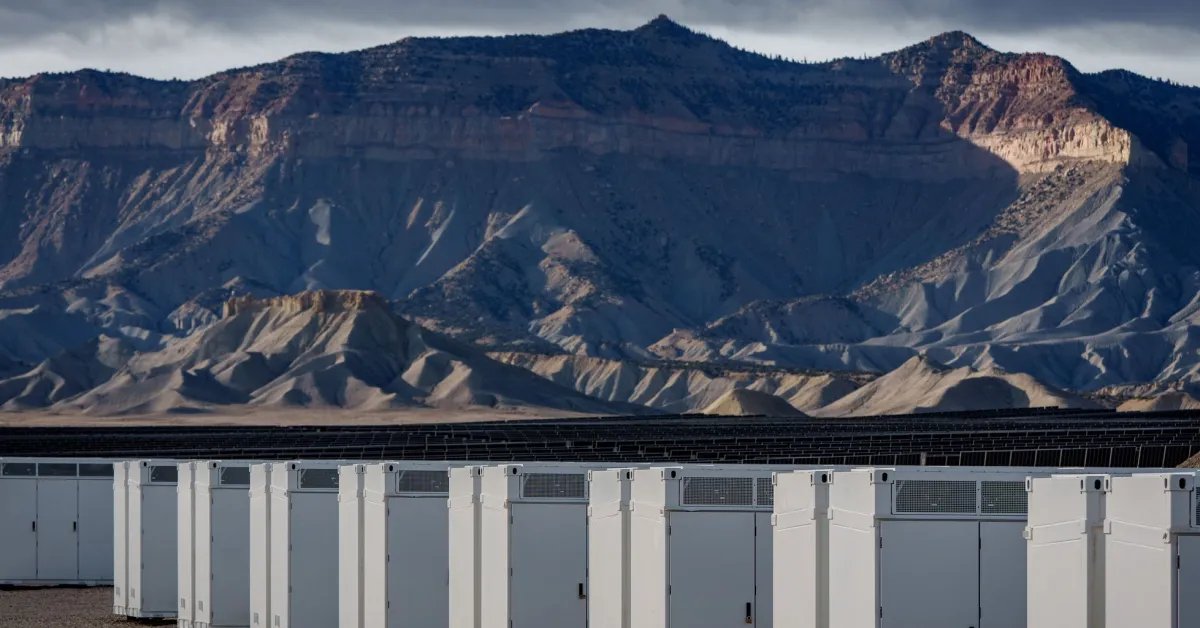
The majority of this growth came from utility-scale batteries, which contributed about 18 GWh in Q2. Significant installations included four projects in Arizona, two in California, and one in Utah. Arizona recorded an all-time high of 6.2 GWh for a single quarter, while Texas added 3.8 GWh and California 3.6 GWh. Notably, 44% of the new utility-scale capacity was paired with solar energy, with the remainder as standalone storage systems. Such systems can store energy generated during peak solar output and release it back into the grid during high-demand periods, particularly during extreme heat.
The report indicates that battery storage delivered more electricity to the US grid from January to August 2026 than in all of 2025, reinforcing its role as a reliability tool that enhances energy security and helps control electricity costs. SEIA President Tim Pawlenty emphasized the importance of this growth in meeting rising energy demands.
Diverse Growth Across States
Intriguingly, over 74% of new battery storage capacity in Q2 2026 was located in states that supported Donald Trump in the 2024 elections, with Arizona, Texas, and Utah leading the charge. The utility-scale battery capacity more than doubled from 88 GWh to 165 GWh during the first 18 months of Trump’s administration. However, the report refrains from connecting specific project decisions to any government policies.
Shan Tomouk, BESS & Energy Lead at Benchmark Minerals, noted that energy storage is rapidly expanding beyond California and Texas, with notable developments in Arizona, Nevada, Oregon, and Colorado. In response to higher-than-expected demand, Benchmark has revised its storage forecast for 2030 upwards by 11.5%, now estimating 683 GWh of total capacity.
Challenges in Residential Storage
In contrast, the residential battery storage sector experienced a decline, with only 657 megawatt-hours (MWh) added in Q2—down 27% from the previous year. This downturn was attributed to the expiration of the federal 25D residential clean energy tax credit, which incentivized many homeowners to expedite installations in 2025. Despite current setbacks, Benchmark remains optimistic about the future of home batteries as electricity costs rise.
Commercial and industrial sectors saw approximately 1.8 GWh of new installations in Q2, with data centers expected to drive further demand as they integrate batteries with onsite energy solutions to navigate grid constraints and changing power requirements.
Furthermore, US battery manufacturing expanded during the quarter, highlighted by Tesla launching its third Megafactory in Texas, capable of producing 50 GWh of Megapacks per year. Looking ahead, Benchmark anticipates that approximately 71 GWh of battery storage will be installed in 2026, projecting a 20% increase over the previous year as utilities adapt to increasing electricity demands.
The content above is a summary. For more details, see the source article.









