


Key Takeaways
- The U.S. and NATO will conduct scaled-back naval exercises in the Baltic Sea with approximately 20 vessels and 6,000 personnel.
- Despite a reduced size, the exercises are intended to demonstrate unity and strength amid heightened tensions with Russia.
- The drills, part of the annual BALTOPS exercise, emphasize the importance of securing vital sea routes for NATO, particularly for the Baltic states.
Baltic Sea Drills Amid Tensions
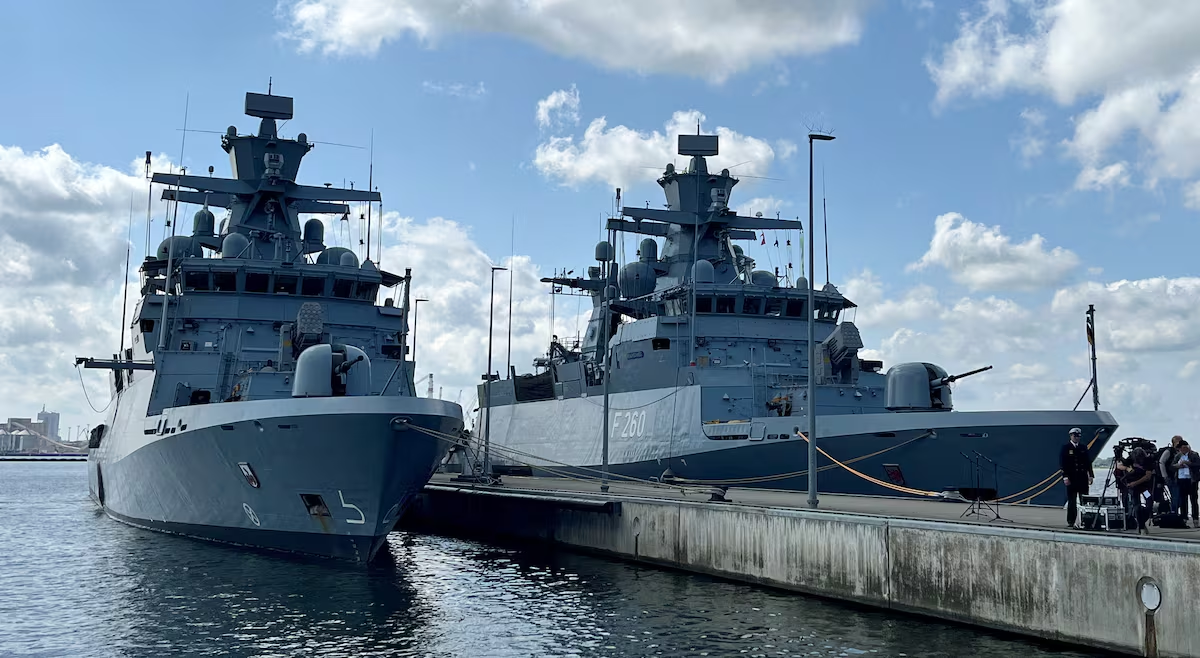
The U.S. and its NATO allies are set to commence a reduced-scale naval exercise in the Baltic Sea, aimed at reinforcing unity and strength against the backdrop of ongoing tensions with Russia. The annual BALTOPS exercise, which has been ongoing since 1971, will see participation from around 20 vessels representing 15 nations and approximately 6,000 personnel, roughly half the size of last year’s exercises.
This decrease in scale is attributed to operational constraints as Western naval forces are engaged in other regions, notably the Middle East and the Arctic. However, a senior German military official emphasized that this smaller footprint does not indicate a decrease in commitment to NATO. The U.S. will provide the flagship Mount Whitney, ensuring that BALTOPS remains the largest naval exercise in the Baltic Sea for this year.
German Rear Admiral Stephan Haisch, who oversees the multinational naval headquarters established in Rostock, underscored the political significance of the timing and scale of the exercises. He stated, “In this period, it is a sign of the alliance’s strength, that a major exercise is being conducted, under U.S. leadership, with broad NATO participation.” This exercise reflects the collective commitment of NATO members, enhancing the perception of unity despite recent criticisms aimed at the alliance by U.S. officials.
The drills will initiate in the western Baltic and will transition towards the eastern region, focusing on vital naval operations that include the resupply and protection of sea routes, particularly around the strategically important Swedish island of Gotland. These routes are seen as essential for maintaining logistical support for the Baltic states, which are only connected to NATO’s mainland by a narrow land corridor.
Admiral Haisch noted the critical nature of securing free sea lines of communication, which are fundamental for both military logistics and commercial shipping activities in a crisis. When asked about previous incidents attributed to Russia in the Baltic area, he expressed confidence that Russia would likely remain below the threshold that triggers NATO’s collective defense clause, known as Article 5. Haisch anticipates that Russia would avoid actions that could provoke a unified military response from NATO allies.
Overall, the upcoming BALTOPS naval exercises aim not only to conduct essential military operations but also to send a clear message regarding the cohesion and readiness of NATO amidst the ongoing geopolitical challenges in the region.
The content above is a summary. For more details, see the source article.









