


Key Takeaways
- The U.S. Army Pacific and Philippine Army successfully test-fired a Tomahawk cruise missile from the Typhon launcher, hitting a target in Nueva Ecija.
- The launch, part of the annual Balikatan exercise, involved approximately 17,000 troops from several allied nations.
- The missile’s successful test-firing has raised concerns among Chinese officials due to its long-range capabilities.
Successful Test-Firing of Tomahawk Missile
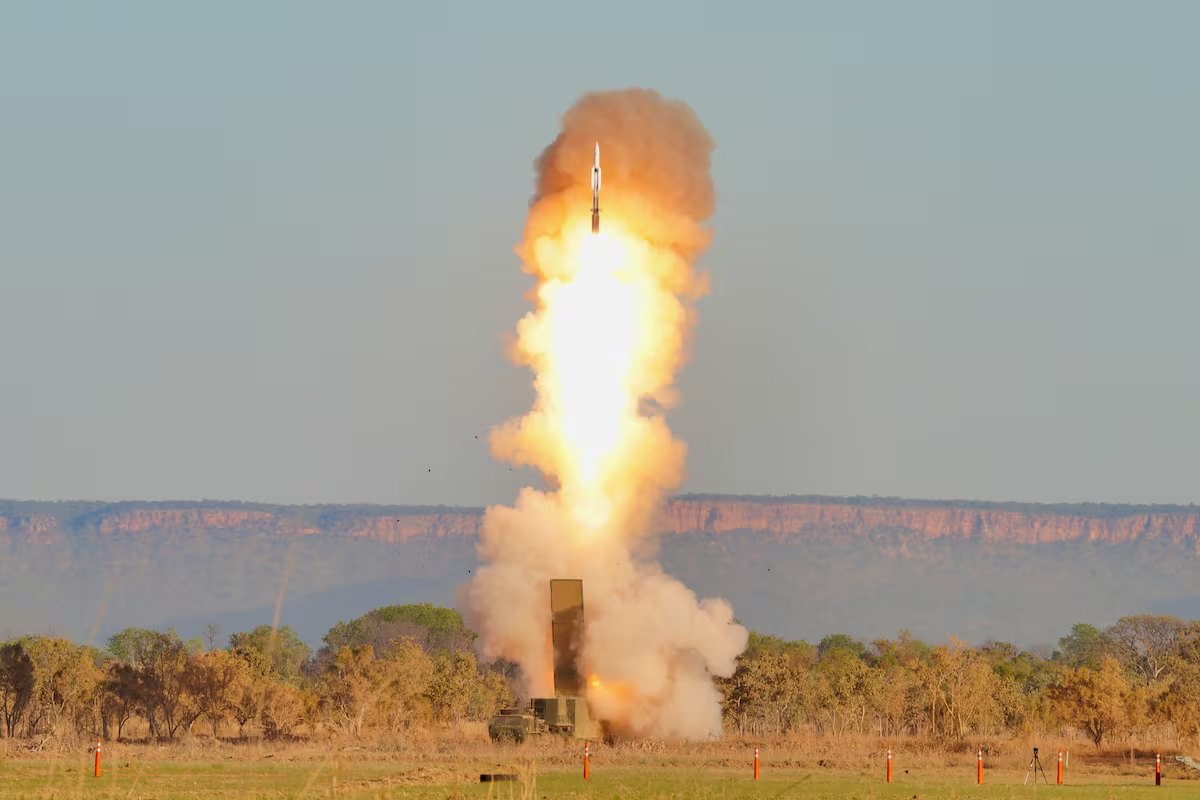
The U.S. Army Pacific’s 1st Multi-Domain Task Force, in collaboration with the Philippine Army Artillery Regiment, conducted a successful test-firing of a Tomahawk cruise missile using a Typhon launcher in the central Philippines. Launched at approximately 12:10 a.m. on May 5, it struck a designated target about 600 kilometers away in Nueva Ecija.
Col. Dennis Hernandez of the Philippine Marines described the missile’s accuracy, likening its precision to hitting a specific window from a distance. This missile launched from Tacloban traveled smoothly, directly impacting within Fort Magsaysay in Laur, Nueva Ecija, roughly one hour after launch.
This event was a key component of the ongoing Balikatan military exercises, designed to enhance cooperation between American and Filipino forces. This year, the drills involved close to 17,000 troops, including participants from Japan, Australia, France, Canada, and New Zealand, emphasizing strong international military partnerships.
The presence of the Typhon launcher and the Tomahawk missile system has drawn criticism from Chinese authorities, concerned about its long-range strike capabilities. Philippine officials highlighted that training on this advanced missile system is vital for future military acquisitions.
Initially, there were uncertainties regarding the timing of the missile test. Local defense officials had anticipated a launch on May 4 or 5, but U.S. military representatives indicated potential delays due to unspecified challenges. Ultimately, the launch aligned with a planned maritime strike event in Ilocos Norte, featuring advanced missile systems from Japan and the U.S.
Prior to the missile launch, the Philippine Coast Guard issued navigational warnings in Eastern Visayas, advising locals to exercise caution due to ongoing activities related to the Balikatan exercises. A subsequent notice alerted residents to missile activities involving the Tomahawk Land Attack Missile system (TLAM).
Col. Hernandez emphasized that utilizing the Tomahawk was dependent on real-time scenarios during the exercise. A control group monitored conditions on the ground, determining when such advanced weaponry was necessary. The specific requirements of the night’s scenario ultimately justified the missile’s deployment to support ground forces.
Overall, this test-firing exemplifies the escalating military collaboration between the U.S. and the Philippines while also highlighting regional tensions relating to defense capabilities.
The content above is a summary. For more details, see the source article.









