


Key Takeaways
- The 25th Infantry Division (25th ID) has undergone significant changes and plans further transformations, including a focus on unmanned aerial systems.
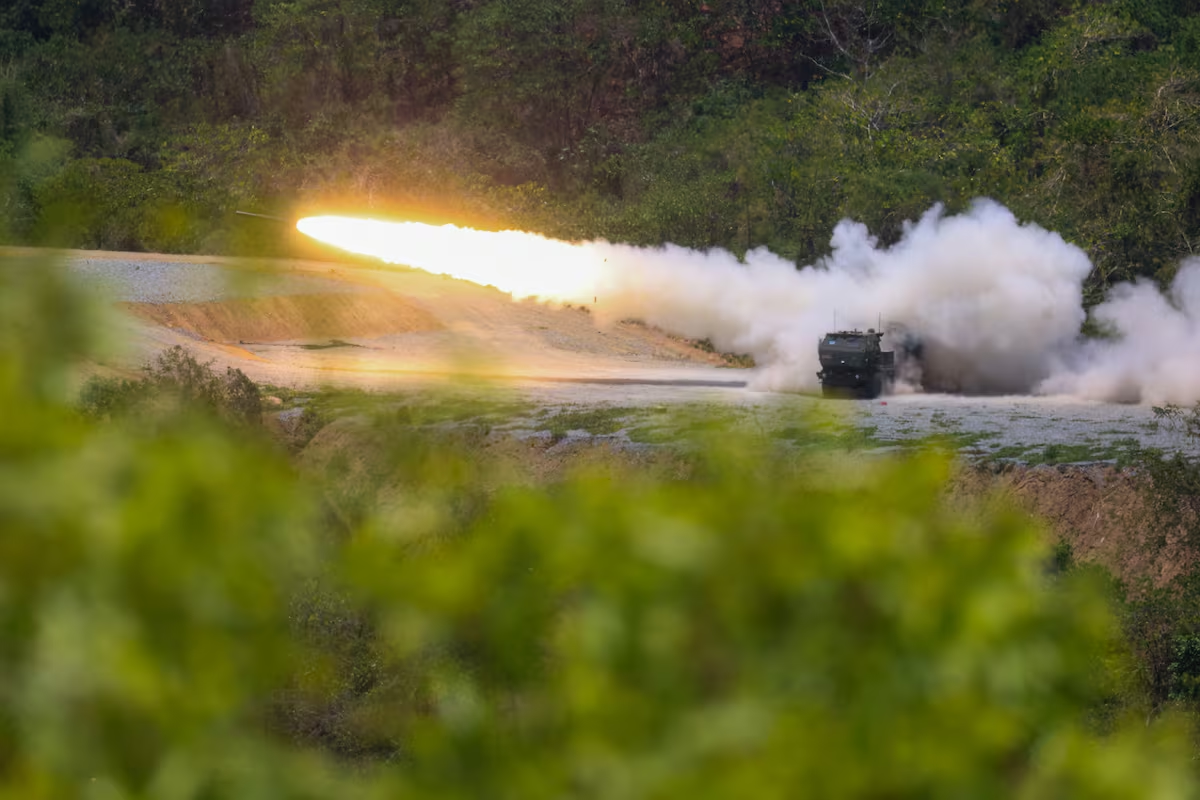
- Enhanced capabilities like HIMARS have transformed the division’s artillery and operational reach during recent military exercises in the Philippines.
- Innovative technologies, including 3D printing for spare parts, are being implemented to improve operational efficiency and sustainability.
Transformation of the 25th Infantry Division
The U.S. Army’s 25th Infantry Division (25th ID), headquartered in Hawaii, has experienced substantial transformation in recent years. Maj. Gen. James Bartholomees, commanding general of the division, discussed future changes and current advancements in an interview from the Philippines.
Bartholomees revealed that four out of the five brigades within the division have undergone significant modifications. The upcoming transformation will involve the 25th Combat Aviation Brigade (CAB), which will incorporate larger unmanned aerial systems as they become available. He noted that the relocation of the Gray Eagle company from Alaska to Hawaii is a part of this transition. Longer-range drones are seen as vital, especially to support the division’s artillery reach with systems like HIMARS.
The 25th ID was the first U.S. infantry division to receive HIMARS, a weapon that enhances operational capabilities far beyond traditional artillery systems like the M777 and M119. This upgrade has notably transformed the division’s artillery capacity. Bartholomees highlighted successful HIMARS operations during recent exercises in the Philippines, where the division tested new tactics and technologies.
The general emphasized the Army’s need for flexibility in adopting new technologies, including drones and electronic warfare systems. He commended the Infantry Squad Vehicle, which provides enhanced mobility and lethality for infantry units. By streamlining equipment, the division has improved the maneuverability of its infantry brigades, reducing their logistical burden.
Military exercises such as Balikatan and Salaknib were crucial for the division. According to Bartholomees, utilizing equipment in diverse environments helps determine their effectiveness. He also acknowledged the need for democratizing electronic-warfare capabilities across units and updating communication systems to maintain operational readiness.
Innovative approaches are essential, particularly given the logistical challenges of operating far from home, as seen in the Philippines. The Forge program, which allows soldiers to 3D print spare parts in the field, is a key development for sustaining operational effectiveness. Bartholomees stressed that this capability assists in maintaining supply lines and enhancing the division’s resilience.
The ongoing fielding of new technologies within the 25th ID represents a commitment to continuous transformation. Bartholomees affirmed the importance of discipline in managing these advancements while ensuring adaptability to evolving military needs.
As the 25th Infantry Division continues to evolve, its focus on technology and operational efficiency underscores the U.S. Army’s commitment to modernizing its forces in response to contemporary challenges.
The content above is a summary. For more details, see the source article.









