


Key Takeaways
- The U.S. has launched new strikes against Iran’s coastal defense and missile sites amid a naval blockade.
- Iran threatens to further restrict regional energy exports and has retaliated against U.S. military targets.
- Tensions escalate over control of the Strait of Hormuz, impacting global oil supply and prices.
Escalation of U.S.-Iran Hostilities
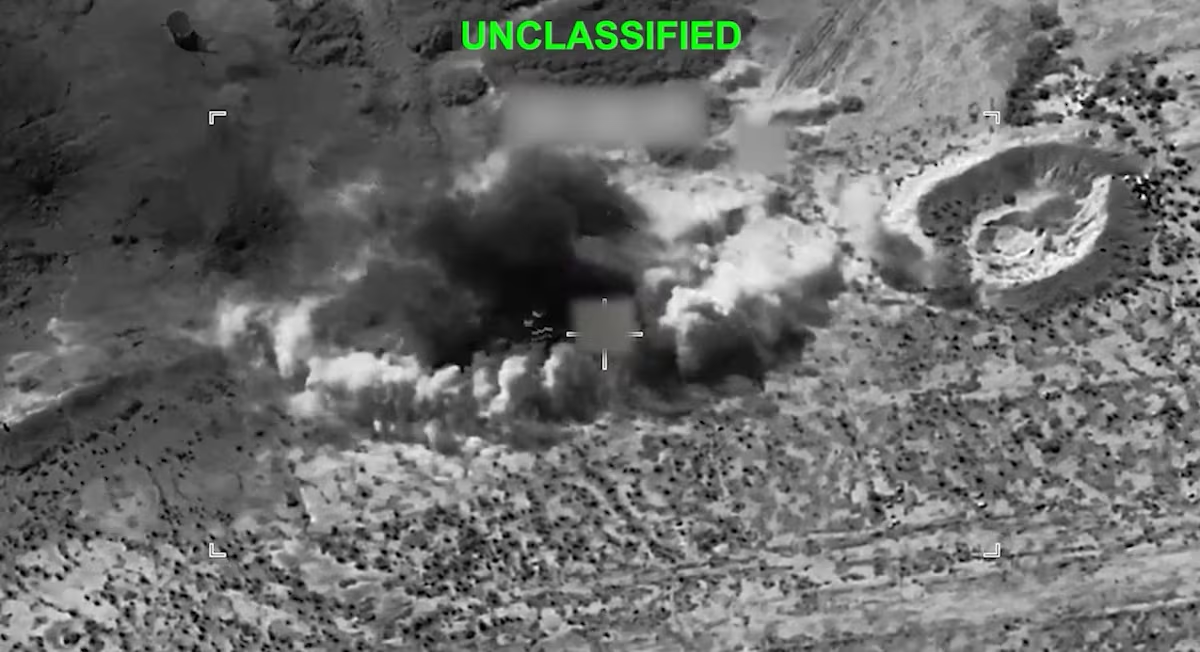
The United States conducted a series of strikes against Iran’s coastal defenses and missile storage sites on Wednesday, following the reimposition of a naval blockade on Iranian ports. This action represents an increased level of hostilities as both nations compete for dominance over the Strait of Hormuz, a key global oil and gas shipping route. According to U.S. Central Command, these strikes were aimed at degrading military capabilities that Iran has utilized to threaten commercial shipping in the area.
The U.S. military reported that the strikes began early Wednesday, with a focus on coastal defense systems located on Greater Tunb Island. These operations were executed rapidly, with the entirety of the strikes completed within about 90 minutes. Prior to this, on Tuesday, the U.S. military had executed strikes on multiple military targets near the Strait of Hormuz lasting about seven hours.
In a swift response, the Iranian Islamic Revolutionary Guard Corps claimed to have targeted U.S. military assets in Bahrain, Kuwait, and Jordan, threatening the U.S. with the closure of energy export corridors that it claims support American interests. Recent events were triggered after Iran announced the closure of the Strait of Hormuz, following seven Iranian attacks on commercial vessels over the week, resulting in casualties among crew members.
The conflict, which escalated with U.S. and Israeli strikes against Iran at the end of February, has prompted a series of retaliatory actions from Iran, mainly targeting Gulf nations hosting U.S. military bases. This escalation has led to significant disruptions in global energy supply chains, fueling concerns about rising inflation.
Meanwhile, oil prices climbed approximately 1% on Wednesday, reaching a new monthly high, as the market responds to the heightened tensions. An interim ceasefire agreement previously established for negotiations concerning Iran’s nuclear program has stalled, with both parties appearing to revert to confrontational postures reminiscent of pre-ceasefire days.
Experts suggest that while the resurgence of aggressive interactions indicates a heightened risk of further escalation, a full-scale war is unlikely. Iran may leverage its Houthi allies in Yemen to exert influence over the Bab el-Mandeb strait, presenting a potential new front against U.S. interests.
In the interim, Iran is attempting to establish control over shipping in the Strait of Hormuz, which could disrupt a historically secure maritime route. The IRGC reiterated their intent to keep the strait closed until what they termed the “end of America’s evils.”
U.S. President Donald Trump, under domestic pressures, has indicated a willingness to strike Iranian energy infrastructure if negotiations do not resume. Furthermore, the President had alluded to imposing a fee on shipping through the strait but later shifted focus to seeking investment partnerships with Gulf nations.
The ongoing conflict has had devastating humanitarian impacts, with reports indicating thousands of fatalities and millions displaced, predominantly in Iran and Lebanon. According to Iranian state media, recent U.S. strikes have resulted in civilian casualties, including reported deaths of military personnel in the southeastern region of Iran due to U.S. actions at the Bampur military base.
The content above is a summary. For more details, see the source article.









