


Key Takeaways
- The U.S. has withdrawn most troops from Nigeria after a successful operation against ISIS.
- Ongoing intelligence support will continue to aid Nigeria in countering insurgency.
- African military collaboration is emphasized as key to degrading ISIS operations regionally and internationally.
U.S. Troop Withdrawal in Nigeria
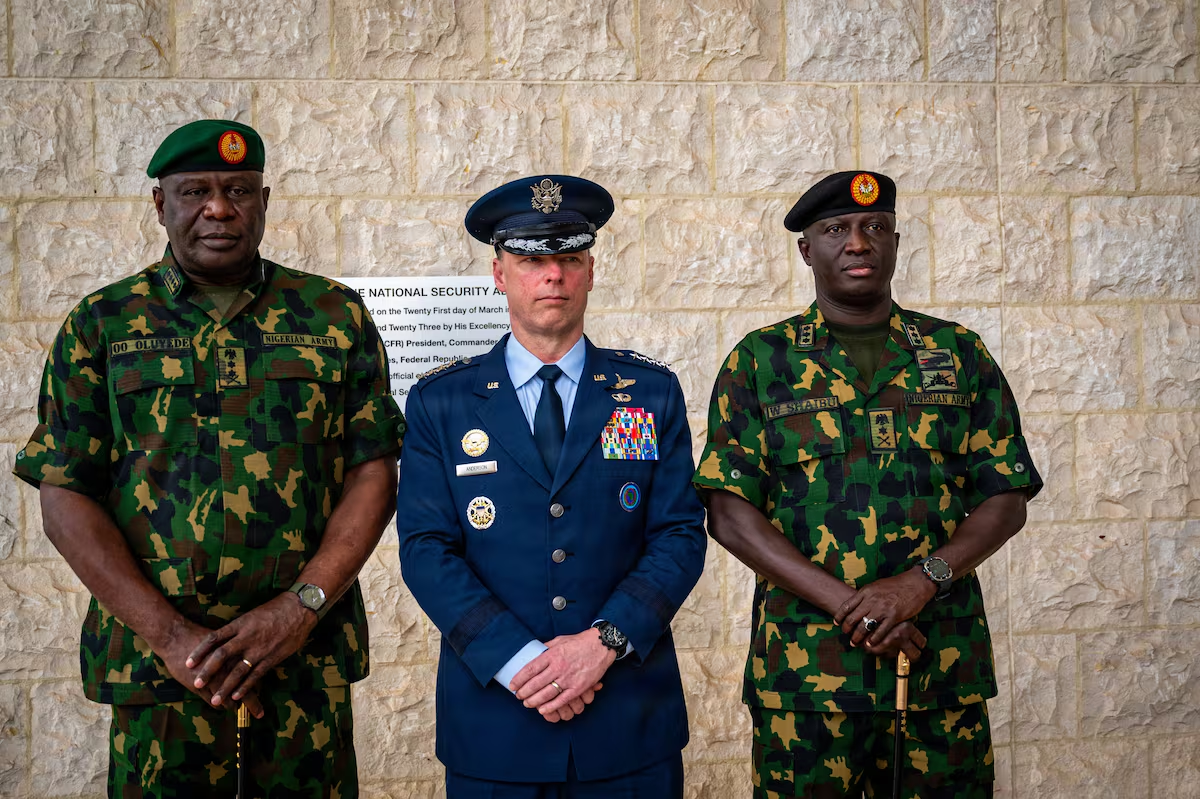
The United States has recently withdrawn the majority of its forces from Nigeria following a successful military operation against Islamic State militants. U.S. Africa Command (AFRICOM) Commander Gen. Dagvin Anderson confirmed that the U.S. will continue to provide intelligence assistance at the request of the Nigerian government.
In May, U.S. and Nigerian forces collaborated in northeastern Nigeria, resulting in the death of Abu-Bilal al-Minuki, the global second-in-command of ISIS. This operation followed a targeted U.S. strike on Christmas Day, initiated by former President Donald Trump, aimed at thwarting ISIS’s attacks on Christians in the region.
During a defense chiefs conference in Angola, Anderson highlighted the operation as a model for future U.S.-African security collaboration. “We have withdrawn much of our forces that were just there for that operation, but are continuing the partnership that Nigeria has asked for to help continue with the intelligence sharing,” he stated in a briefing following the conference.
The operation conducted in Nigeria’s Lake Chad Basin was significant, demonstrating a strategic approach where the U.S. provides specialized support while allowing African partners to lead their security initiatives. Anderson asserted that the cooperative efforts have substantially weakened ISIS’s leadership structure, with repercussions that extend beyond West Africa due to the militant group’s international connections.
The impact of the May operation has not only disrupted local ISIS commanders but has also affected their broader communications and operational capabilities. “Nigeria has been very active since that operation in May,” Anderson noted, emphasizing that Nigeria continues to target ISIS elements independently.
Nigerian military pressure, coupled with the campaign to publicize the operation’s success, has catalyzed further defections and surrenders among ISIS fighters in the northeastern region of the country. Anderson underscored the importance of these developments in combating insurgency effectively.
The three-day conference held in Angola’s capital, Luanda, was a notable gathering, attended by military leaders from 35 African nations alongside representatives from the United States and Brazil, indicating a unified front in the fight against terrorism on the continent.
The content above is a summary. For more details, see the source article.









