


Key Takeaways
- The latest U.S. Marine rotation in Australia is the first to be certified as a Special Purpose Marine Air-Ground Task Force (SPMAGTF).
- The Marine Corps is actively engaged in operations across multiple regions, demonstrating a high operational tempo and readiness.
- Interoperability with allies, particularly the Australian Army, enhances the Marines’ capabilities in the Indo-Pacific theater.
New Certification Marks Significant Change for U.S. Marines in Australia
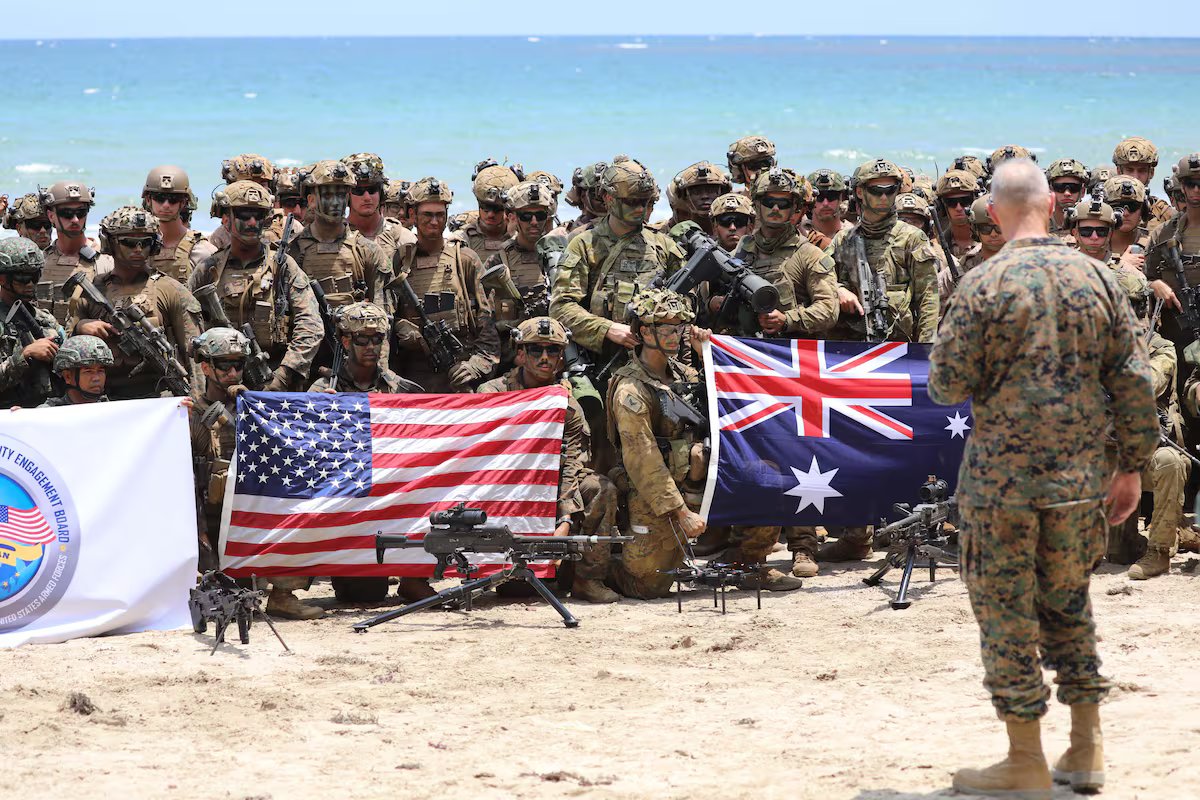
This year, the 15th deployment of U.S. Marines to Australia under the Marine Rotation Force-Darwin (MRF-D) initiative signifies a major milestone with its certification as a Special Purpose Marine Air-Ground Task Force (SPMAGTF). Colonol George Flynn, the commanding officer of MRF-D 2026, highlighted the importance of this designation, stating that it validates the unit’s credibility and ability to perform assigned tasks effectively.
The certification was completed in May during a training exercise in the Philippines, enhancing the Marines’ readiness for any crisis. Authorized to deploy up to 2,500 personnel, MRF-D typically operates with about 2,000 Marines, including troops from California’s 1/5 Marines and MV-22B Ospreys from Hawaii’s VMM-268.
Flynn emphasized the active operational tempo of the MRF-D, which is currently involved in initiatives spanning six or seven different countries. The Marines have executed 13 planned operations and exercises in various locations, demonstrating adaptability and readiness. Ongoing partnerships with the Australian Army, particularly exercises with Darwin-based 1st Brigade and Townsville-based 3rd Brigade, have bolstered operational capabilities, especially in littoral warfare.
Management of operations across diverse geographic regions poses challenges, but Flynn views them as beneficial learning experiences for the Marines. The MRF-D has maintained its readiness effectively throughout the deployment, thanks to the extensive training opportunities available in Australia. Continuous training helps the Marines sustain readiness levels rather than experiencing the degradation typically seen in other deployments.
Flynn reported robust command-and-control capabilities, allowing the task force to communicate effectively through various systems, including satellite and high-frequency communication. The Marine Corps is also evolving its combat strategies, incorporating smaller unmanned aerial systems and logistics drones into their operations.
Furthermore, Flynn expressed the need for enhanced assets to increase mobility within the theater, emphasizing that even with current capabilities, the Marines have successfully demonstrated operational reach and potential for greater interoperability with allies.
On a personal level, Flynn noted that leading the deployment has strengthened relationships with Australian forces and other partners, highlighting the collaborative efforts to maintain a free and open Indo-Pacific theater. He reassured that the MRF-D respects the sovereignty of host nations while standing ready to assist as needed.
Each deployment lasts for six months, with the current initiative set to conclude in October, just before northern Australia’s rainy season. Overall, this year’s deployment has not only showcased the Marines’ capabilities but also reflects a deep commitment to international partnerships and regional stability.
The content above is a summary. For more details, see the source article.









