


Key Takeaways
- President Trump announced the U.S. military’s efforts to clear the Strait of Hormuz, claiming all of Iran’s minelaying ships have been sunk.
- Reports indicated U.S. Navy vessels were present in the strait, but Iran’s military denied any such incursions.
- Concerns over Iranian threats have disrupted shipping through the strait, affecting global oil markets and causing an increase in U.S. gasoline prices.
U.S. Military Actions in the Strait of Hormuz
On Saturday, President Donald Trump declared via social media that the United States military has commenced clearing operations in the Strait of Hormuz. In his post on Truth Social, he claimed that “all 28” of Iran’s minelaying vessels had been sunk, implying a significant degradation of Iranian naval capabilities. Trump’s comments came shortly after reports of U.S. Navy ships operating in the region surfaced, suggesting an increased American military presence.
An Axios journalist cited an unnamed U.S. official who stated that several American ships had crossed the strait that day. However, this was met with a swift denial from Iranian state television, which quoted an Iranian military official refuting any claims of U.S. Navy incursions. Trump’s assertions about U.S. victory over Iranian military assets, including their navy and air force, are consistent with his broader message regarding U.S. dominance in the region. The administration has emphasized the dismantling of Iran’s ballistic missile and nuclear programs as well.
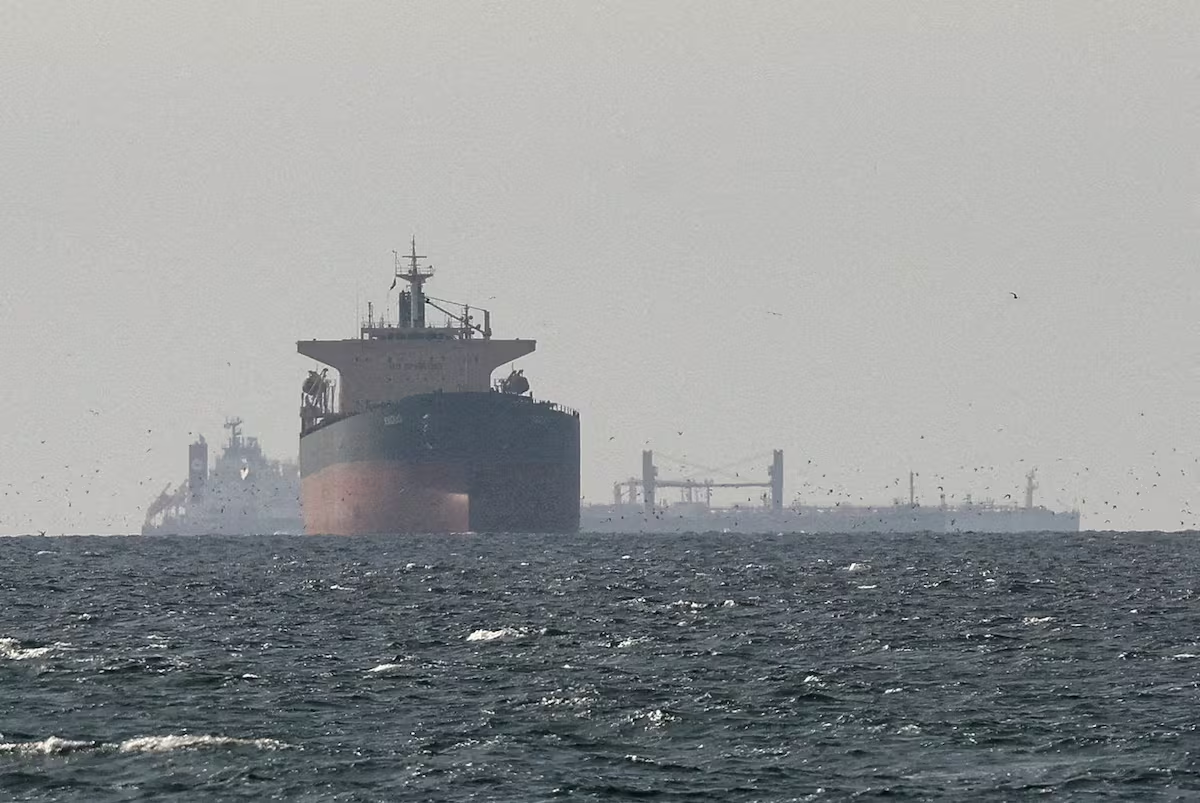
The heightened tensions and fears of Iranian attacks on shipping have led to increased vigilance in the Strait of Hormuz, a vital chokepoint for global oil transport. The situation has reached a point where the strait has been effectively closed, significantly impacting global energy markets. This disruption has led to rising gasoline prices in the United States, despite the fact that most of the oil traversing this route does not go to U.S. markets.
Amidst this turmoil, representatives from the U.S. and Iran began discussions in Islamabad, Pakistan, on the same day. These talks are taking place against a backdrop of a fragile ceasefire in ongoing conflicts in the region, indicating a possibility for dialogue even in the midst of escalating tensions.
As the situation unfolds, the implications for international trade, energy prices, and diplomatic relations in the Middle East remain significant. The United States continues to assert its military presence in the region while seeking to navigate complex negotiations with Iran.
The content above is a summary. For more details, see the source article.









