


Key Takeaways
- The U.S. Navy is seeking up to 600 Advanced Emission Suppression Missiles annually to enhance its anti-radar capabilities.
- The new Request For Information emphasizes the need for advanced features such as extended range and modern radar targeting.
- Procurement of the AGM-88G Advanced Anti-Radiation Guided Missile has been delayed, with limited production expected to resume in fiscal year 2028.
Growing Demand for Next-Generation Anti-Radar Missiles
The U.S. Navy is significantly increasing its demand for next-generation anti-radar missiles, as evidenced by a Request For Information (RFI) posted by Naval Air Systems Command on July 1. The RFI reveals the Navy’s intent to procure up to 600 Advanced Emission Suppression Missiles (AESM) annually, reflecting a notable shift in missile production requirements. Earlier in February, prior to escalating conflicts, an initial Sources Sought notice indicated a demand for up to 300 missiles per year.
The new RFI specifies the desire for a “mature design” at a technological readiness stage of at least 6, indicating the need for a fully functional prototype. The Navy aims to bolster its capabilities for neutralizing enemy air defenses in contested environments, focusing on enhanced targeting and counter-countermeasures features.
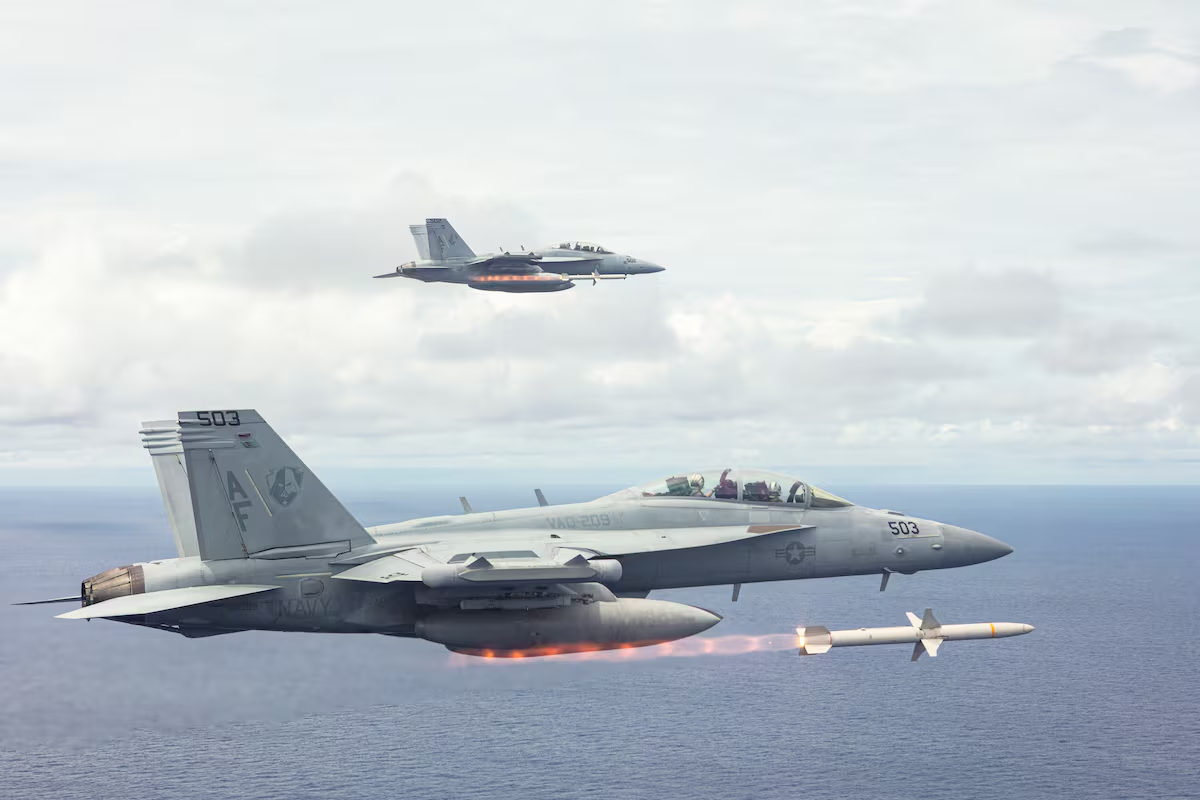
Among the essential specifications, the Navy seeks an advanced anti-radiation seeker that covers a broad frequency spectrum and can engage modern radar systems. Compatibility with existing aircraft, including the F/A-18 E/F and EA-18G, as well as the F-35, is required. Furthermore, the missile should necessitate minimal maintenance, boast a service life of at least 15 years, and achieve over 500 captive carriage flight hours.
Compared to the earlier Sources Sought notice, the RFI does not reiterate certain capabilities. Notably absent is the mention of engaging air-to-air targets, nor does it call for a missile with a longer range than current Navy inventory. The existing AGM-88 High Speed Anti-Radiation Missile (HARM), operational since the 1980s, offers a range of up to 80 miles, which varies with the launch altitude. In contrast, the AGM-88G Advanced Anti-Radiation Guided Missile Extended Range (AARGM-ER) promises an extended range but has faced developmental challenges, causing the Navy to pause its procurement. Limited production is anticipated to resume in fiscal year 2028.
Additionally, the U.S. has supplied HARMs to Ukraine for counteracting Russian air defense radars. However, Ukrainian forces are shifting towards domestically produced attack drones, likely due to concerns over the limited quantity of HARMs received.
As the U.S. Navy seeks to enhance its offensive and defensive capabilities, the development of advanced anti-radar missile systems stands as a strategic priority. The focus on technological advancements and operational readiness is expected to shape the future landscape of naval warfare and air defense strategies.
The content above is a summary. For more details, see the source article.









