


Key Takeaways
- The USS Wasp’s service life has been extended by five years, potentially impacting other Wasp-class ships.
- The Navy is conducting a study on amphibious dock landing ships to evaluate service life extensions.
- The Navy’s amphibious fleet faces readiness challenges, with a significant portion in poor condition and operational readiness dropping to 41%.
Service Life Extensions for USS Wasp
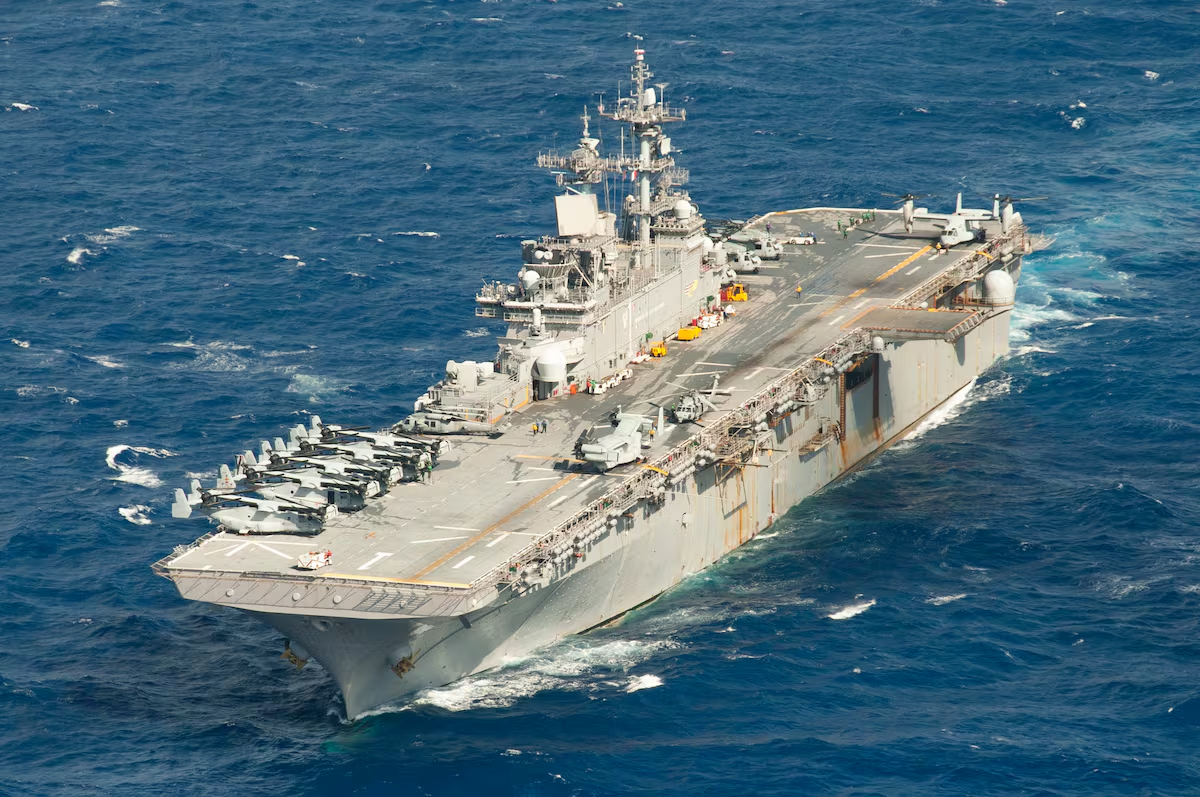
The U.S. Navy and Marine Corps have decided to extend the service life of the USS Wasp, the lead Wasp-class amphibious assault ship, by five years, prolonging its operability until 2034. This decision comes after a thorough evaluation of the Wasp-class vessels, as stated by Expeditionary Warfare Director Brig. Gen. Lee Meyer during the Modern Day Marine exposition in Washington.
Meyer emphasized that while the USS Wasp has received the service life extension, the Navy is also exploring similar initiatives for other landing helicopter dock (LHD) ships. A forthcoming study by Naval Sea Systems Command will assess the status of the amphibious dock landing ships and make recommendations about extending their operational lives.
This initiative aligns with broader efforts to maintain naval capabilities and military readiness. The goal is to sustain these amphibious ships throughout their intended 40-year lifespan, with hopes of extending some to 50 years. The USS Wasp’s extended service represents a proactive approach that the Navy and Marine Corps aspire to replicate with additional ships, although specific plans are still under review.
The context of this decision is critical, as the amphibious fleet has faced various operational challenges over recent years. In 2024, three Wasp-class amphibious warships experienced significant engineering issues at sea, leading to deployment delays, including for the USS Wasp itself.
Furthermore, the fiscal 2023 National Defense Authorization Act mandates that the Navy maintains a minimum of 31 amphibious ships, comprising at least 10 assault vessels. Despite possessing a total of 32 amphibious warfare ships, reports indicate that half of this fleet is in poor condition, highlighting maintenance and readiness problems. A 2024 report from the U.S. Government Accountability Office noted these issues, revealing that the readiness rate of amphibious ships had plummeted to 41%. The Marine Corps has previously expressed the need for a readiness rate of at least 80% to effectively execute missions.
Addressing the current fleet’s deficiencies, Marine Corps Commandant Gen. Eric Smith highlighted the inadequacies of the existing number of ships to meet demands set by combatant commanders. He supports extending the service lives of certain vessels to mitigate concerns regarding fleet shortages.
As of now, four amphibious ships, including the USS Tripoli and USS Boxer, are actively deployed around the globe, notably in the Middle East for Operation Epic Fury. Looking ahead, President Trump’s proposed fiscal 2027 defense budget includes provisions for funding a new America-class amphibious assault ship as well as one San Antonio-class amphibious transport dock to further enhance naval capabilities.
The content above is a summary. For more details, see the source article.









