


Key Takeaways
- Ukraine successfully used an underwater drone to damage a Russian submarine, highlighting new vulnerabilities for naval forces.
- The U.S. Navy is exploring advanced technologies to enhance the security of its ballistic missile submarines against emerging threats.
- Proposed solutions include active defense systems for submarines and ground convoys, as well as countermeasures against AI-driven attacks and autonomous drones.
Emerging Threats to Ballistic Missile Submarines
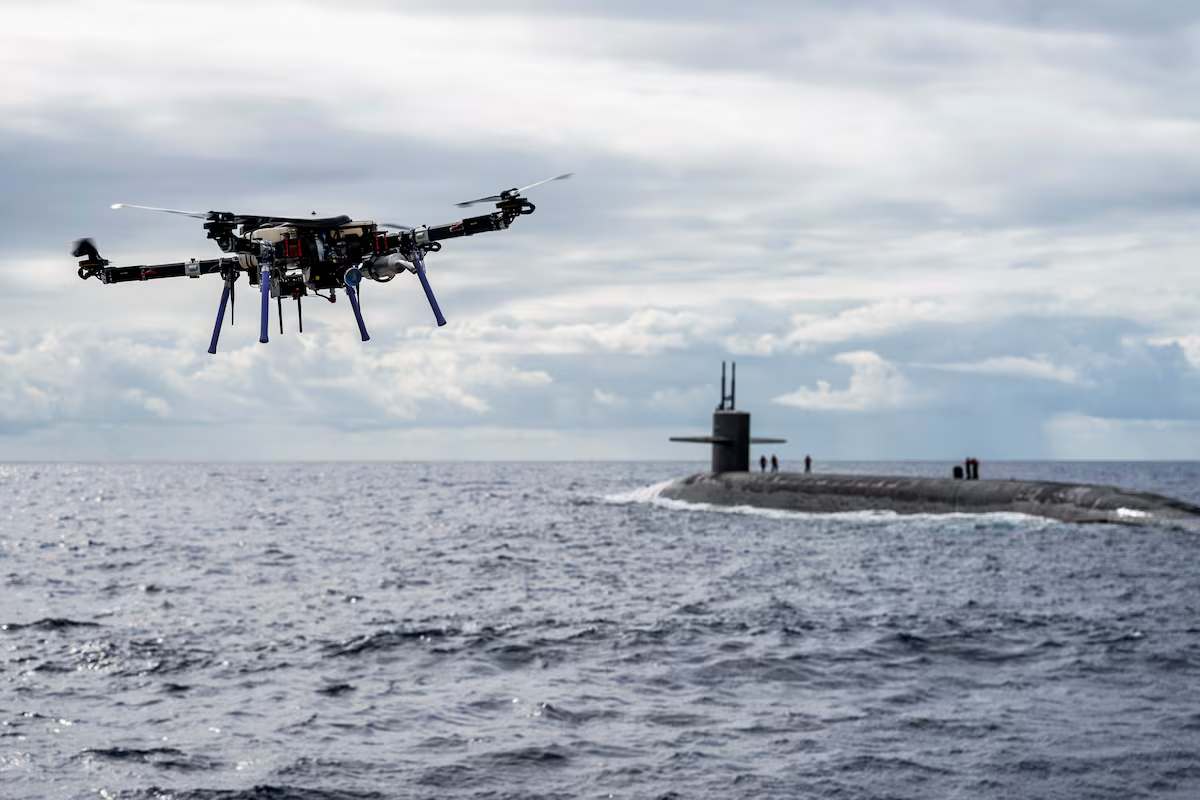
America’s ballistic missile submarines (SSBNs), typically hidden deep in the oceans, face increasing vulnerabilities when docked or navigating near ports. Recent developments have shown that these powerful vessels are susceptible to drones, mines, and advanced weaponry. In a notable instance, Ukraine reportedly used an underwater drone to damage a Russian submarine at the Novorossiysk port last year, illustrating the significant risks submarines face in less secure environments.
To address these vulnerabilities, the U.S. Navy is actively seeking improvements in defensive technologies. According to a Sources Sought announcement, the Navy aims to safeguard not only its missile submarines but also the shore infrastructures supporting them. This effort includes developing “prototype technologies to detect, track, identify, deny, and defeat unmanned systems across all domains,” focusing on scalable solutions for operations in multiple maritime environments, from ports to open oceans.
One primary initiative is to ensure the secure movement of strategic assets by developing advanced protection for submarines during their transit to and from ports. The Navy is looking to enhance maritime situational awareness and physical security measures for escorting SSBNs. This includes identifying and mitigating threats from shore-launched anti-tank guided missiles (ATGMs) and rockets, which pose risks not only to submarines but also to the truck convoys transporting intercontinental ballistic missiles (ICBMs) to submarine bases.
The proposed enhancements extend to active protection systems, which involve equipping armored vehicles with sensors and launchers capable of neutralizing incoming anti-tank rockets. The Navy is also interested in employing security robots, such as Unmanned Surface Vehicles (USVs) for patrols and Unmanned Ground Vehicles (UGVs) for perimeter defenses, which would integrate with existing response forces.
The rise of artificial intelligence has introduced new challenges, notably in the form of drone swarms and cyber warfare. The Navy is focused on developing countermeasures to disrupt autonomous systems targeting nuclear facilities, as well as strengthening networks against potential cyber-physical attacks.
Ultimately, the most effective defense for submarines lies in evasion. The Navy is seeking technologies that minimize the detection signature of subs and unmanned systems, looking for methods to reduce the generation and scattering of various signal types—whether acoustic, optical, or electromagnetic. This objective aims to maintain submarines’ stealth capabilities during both peacetime and wartime operations, thereby enhancing their overall security.
As these initiatives progress, the Navy’s commitment to protecting its strategic maritime assets reflects the evolving landscape of naval warfare and the pressing need to counter various threats in an increasingly complex maritime environment.
The content above is a summary. For more details, see the source article.









