


Key Takeaways
- The U.S. is reducing its military contributions to NATO, prompting allies to enhance their own defense capabilities.
- U.S. Air Force Gen. Alexus Grynkewich emphasized the need for European allies and Canada to increase support in aircraft and naval vessels.
- NATO officials assure that no defense gaps are expected as allies adjust their contributions to compensate for U.S. reductions.
U.S. Cuts Spark NATO Response
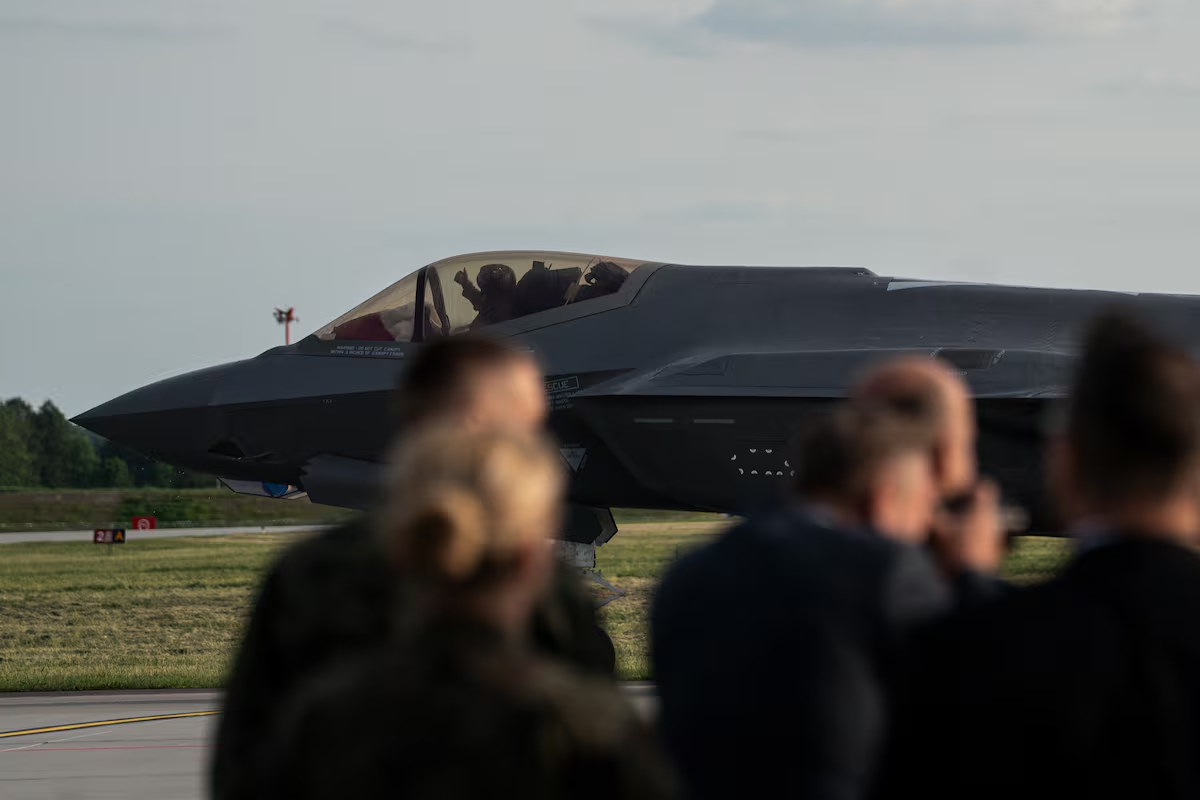
The U.S. anticipates that European NATO allies and Canada will ramp up their contributions of manned and unmanned aircraft, as well as naval vessels, in response to planned reductions in U.S. military support. This announcement came from U.S. Air Force General Alexus Grynkewich, NATO’s top commander, during a meeting on military planning in Brussels.
The U.S. decision to shrink its military capabilities available through NATO’s crisis response framework aligns with the Trump administration’s ongoing scrutiny of the alliance, particularly regarding European countries’ responsibility for their own defense. President Trump frequently criticized NATO members for inadequate spending on defense, suggesting they must assume greater responsibility for Europe’s security.
General Grynkewich revealed specific areas where the U.S. will cut back, notably in the number of operational aircraft and naval vessels. He remarked that NATO has relied excessively on U.S. forces under the NATO Force Model and underscored the need for a shift in responsibilities. As U.S. forces are redirected elsewhere, European allies must step in to fill the void.
Concerns over a potential U.S. withdrawal from NATO are mounting, exacerbated by the planned adjustments to military resources. NATO’s military spokesperson, Army Col. Martin O’Donnell, affirmed there are sufficient capabilities among allied nations to prevent defense gaps, urging them to assign available resources to NATO effectively.
Strategically, in light of reduced U.S. fighter jets—expected to drop by a third—NATO will likely require European nations to bolster their own military capabilities, including reconnaissance drones. Reports indicate that there will be fewer U.S. destroyers and no submarines available to support NATO’s crisis response framework.
The enhanced cooperation among allies will be discussed further at an upcoming NATO summit in Ankara in July, where leaders will likely outline their respective contributions to ensure the alliance maintains its readiness and unity in the face of evolving security challenges. Overall, Grynkewich’s statements underline the imperative for NATO countries to adapt quickly to sustain collective defense standards while the U.S. recalibrates its military commitments.
The content above is a summary. For more details, see the source article.









