


Key Takeaways
- The Virginia Tech Transportation Institute has commenced its Smart City project to modernize traffic control systems in Falls Church.
- Upgrades aim to enhance pedestrian safety, improve traffic flow, and increase energy efficiency, supported by a $10 million state budget allocation.
- Future phases will introduce adaptive lighting and smart parking technologies designed to reduce light pollution and streamline parking processes.
Smart City Initiative Launched in Falls Church
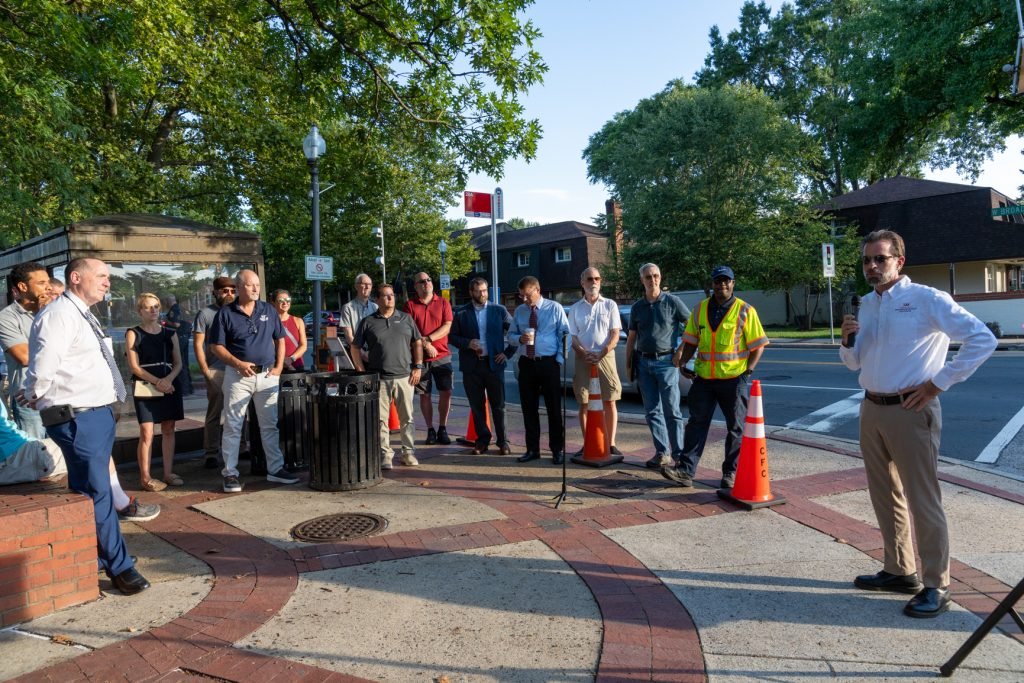
The Virginia Tech Transportation Institute (VTTI) has officially launched the first phase of its Smart City test bed near the university’s Northern Virginia Center in Falls Church. This initial phase focuses on modernizing the city’s traffic control systems, laying the groundwork for future smart technology enhancements. The upgrades are designed to improve pedestrian safety, minimize conflicts between vehicles and non-motorized traffic, optimize traffic flow, and achieve cost savings through enhanced energy and maintenance efficiency.
Mike Mollenhauer, the principal investigator for the project at VTTI, emphasized the collaboration with the City of Falls Church and the Virginia Department of Transportation (VDOT) to bring advanced traffic signal control technologies to the area. These systems will facilitate more intelligent management of intersections, thereby improving both safety and traffic efficiency along the city’s main corridors. The collaboration, revealed in 2021, is supported by a $10 million allocation from the state budget, and also includes the construction of a new road linking Virginia Route 7 to the West Falls Church Metro Transit site.
The same smart intersection technologies being deployed in Falls Church are also being tested in other locations across Northern Virginia, including major intersections in the area. Additionally, a separate smart intersection test site has been established near the Virginia Tech Innovation Campus in Alexandria.
Phase two of the project is expected to roll out from winter 2024 to winter 2025 and will include further traffic signal enhancements alongside the implementation of smart intersection technologies. This phase aims to utilize sensing capabilities to adapt traffic signal timings in real-time based on vehicle and pedestrian activity, enhancing safety by identifying conflict zones.
Future developments will also see the introduction of adaptive lighting that adjusts brightness based on real-time roadway usage. This not only improves visibility for users but also decreases light pollution and conserves energy by dimming lights during periods of low activity. Furthermore, smart parking solutions will be rolled out, enabling drivers to locate available parking through a smartphone application, thus reducing fuel consumption and emissions from vehicles searching for parking.
According to Falls Church City Council member Dave Snyder, these initiatives reflect a strong commitment from the city and regional officials to leverage technology for better transportation experiences for residents, businesses, and visitors alike.
The content above is a summary. For more details, see the source article.









