


Key Takeaways
- The tabletop game “Littoral Commander: The Baltic” simulates a potential Russian invasion of the Baltic region around 2030.
- Players use various military units and “Joint Capability” cards to strategize and gain victory points through combat and territory control.
- The game’s design highlights the complexities of modern warfare, including the interplay of detection, concealment, and public opinion.
Game Concept and Scenarios
“Littoral Commander: The Baltic” is a new tabletop wargame that explores the complexities of a potential Russian invasion of the Baltic region, set in the year 2030. Unlike traditional military training tools, this game is available to the public, allowing civilians to engage in strategies around military conflict.
The game includes 11 different scenarios, featuring conflicts not only in the Baltic states but also involving the strategic Swedish island of Gotland and the Russian enclave of Kaliningrad. Players may experience various military operations, including U.S. Marines using missiles to intercept Russian vessels.
Unit Diversity and Capabilities
In “Littoral Commander,” American forces consist of a range of units including Marine infantry, HIMARS rockets, and Navy destroyers. They face Russian troops equipped with T-90 tanks and naval infantry. Cardboard pieces on a map represent these units, each rated for attributes like firepower and range.
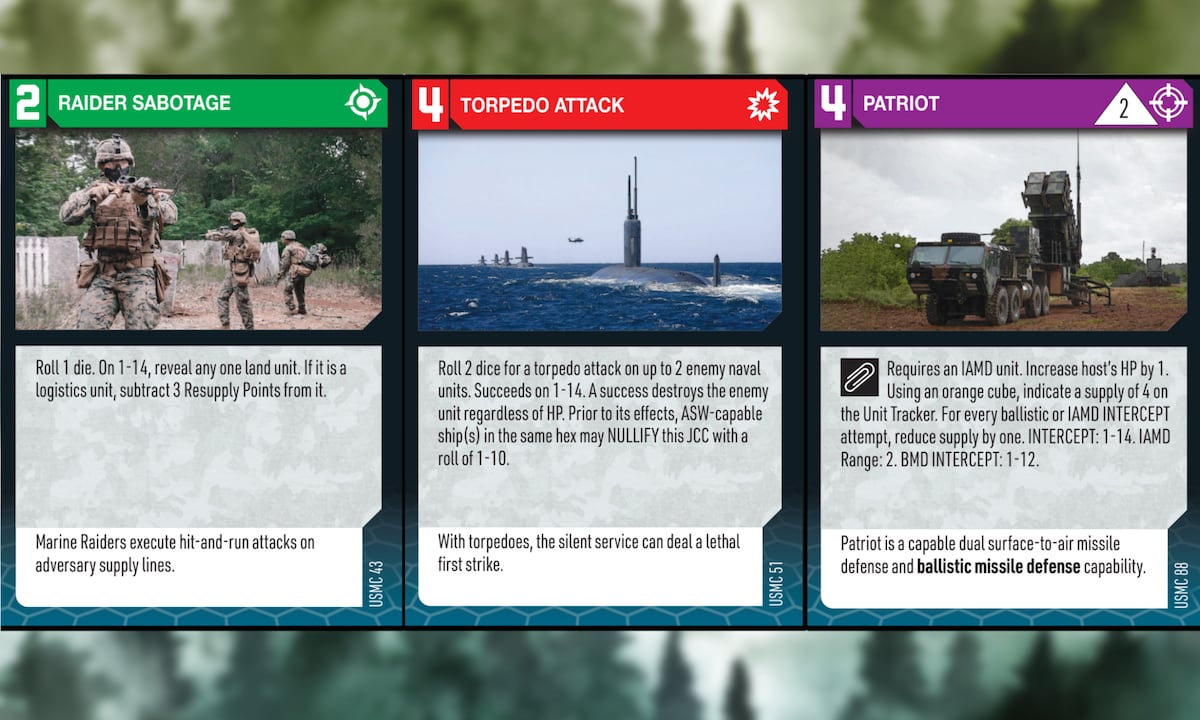
Crucially, players utilize 277 distinct “Joint Capability” cards, which represent modern military capabilities like drone strikes and cyber warfare. Players spend a set number of “Command Points” to select from U.S. or Russian decks, assembling their unique forces.
Strategy and Gameplay Mechanics
The fundamental strategy in “Littoral Commander” revolves around the principle: “What can be seen can be destroyed, so don’t be seen.” The game incorporates a layer of secrecy, with players often unaware of the enemy’s unit types until detection occurs. This underscores a cat-and-mouse dynamic, reflecting the challenge of modern warfare as illustrated in recent conflicts such as the war in Ukraine.
Players alternate actions involving movement, combat, and resupply, all while trying to amass “Victory Points.” Engaging the enemy usually comes with risks, as firing will reveal positions to potential counterattacks from the opposing side.
Challenges of Modern Warfare
Both U.S. and Russian forces face limitations on guided munitions, emphasizing the importance of careful target selection. Additionally, players must navigate public opinion by balancing military operations with humanitarian considerations, as reflected by the game’s “Influence Meter,” which rewards or penalizes players based on their actions in urban settings.
Future Developments in Wargaming
“Littoral Commander: The Baltic” is the second in its series, following earlier games that focused on U.S.-China conflicts. Its use in military training and strategy development has already reached various international armed forces. Upcoming expansions may introduce NATO and Japanese forces, increasing the depth of strategy and player engagement.
The game’s ultimate aim is to help both civilians and military leaders understand the intricacies of a potential conflict in the Baltic and better prepare for the uncertainties of future warfare scenarios.
The content above is a summary. For more details, see the source article.









