


Key Takeaways
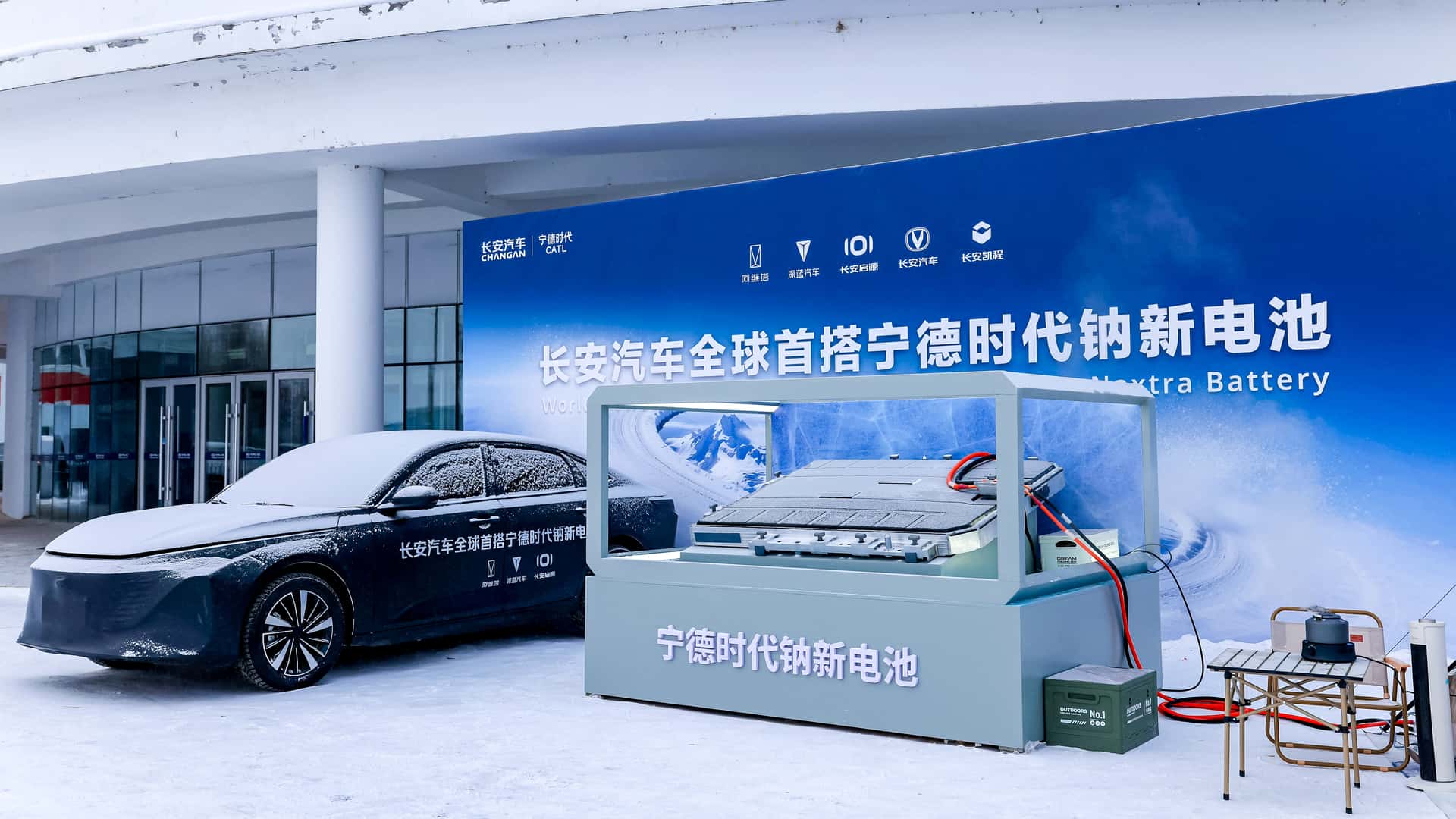
- The Changan Nevo A06 is the world’s first mass-produced car with sodium-ion battery technology.
- This battery type offers a range of approximately 250 miles and performs reliably in extremely low temperatures.
- CATL anticipates the development of a dual-battery ecosystem combining sodium-ion and lithium-ion technologies.
Innovative Battery Technology Debuts
The Changan Nevo A06 sedan, powered by CATL’s Naxtra sodium-ion battery, is set to debut in mid-2026. This marks a significant milestone as the first passenger vehicle utilizing sodium-ion technology, promising a range of about 400 kilometers (249 miles) according to the China Light-Duty Test Cycle (CLTC). If successful, this innovation could enhance electric vehicle (EV) safety and performance, especially in extreme temperatures.
The emergence of sodium-ion batteries signals a potential shift in the EV landscape, largely dominated by lithium-ion and lithium-iron phosphate (LFP) batteries currently. The Naxtra battery presents substantial advantages: it is less prone to thermal runaway and exhibits improved performance in cold weather scenarios. With sodium being more economical and plentiful than lithium, the transition to sodium-ion might also reduce production costs.
Although the Naxtra’s energy density is competitive at 175 watt-hours per kilogram—comparable to LFP but lower than nickel-rich alternatives—its design optimizes battery efficiency. By utilizing a cell-to-pack configuration, the battery achieves an impressive performance milestone, delivering significant range.
Looking ahead, CATL forecasts potential range improvements as the sodium-ion supply chain develops, with estimates suggesting ranges could reach 600 kilometers (373 miles) for standard EVs and even greater for extended-range electric vehicles (EREVs) or hybrids. This prospective increase would align well with the typical range needs in China’s market.
One of the standout features of the Naxtra battery is its capacity to perform effectively in severe cold. At temperatures as low as -30 degrees Celsius (-22 degrees Fahrenheit), its power discharge is reported to be three times that of current LFP batteries. Remarkably, in extreme conditions (down to -40 degrees Celsius or -40 degrees Fahrenheit), the battery retains over 90% of its range.
While independent assessments are necessary to validate these claims, the initial analysis of the Naxtra battery’s attributes suggests substantial benefits. Though not set to launch in the U.S. market, such technology may become crucial in regions like the Midwest and Northeast, where winter weather significantly impacts current EV battery performance.
In essence, the future of electric vehicles appears poised for transformation, embracing diverse battery technologies that cater to different consumer preferences, driving habits, and environmental conditions. Just as internal combustion engines have evolved over time, the co-existence of multiple battery chemistries factors significantly into the ongoing development of sustainable transportation solutions.
The content above is a summary. For more details, see the source article.









